
rose [Royal William]
Also known as: Information to be completed
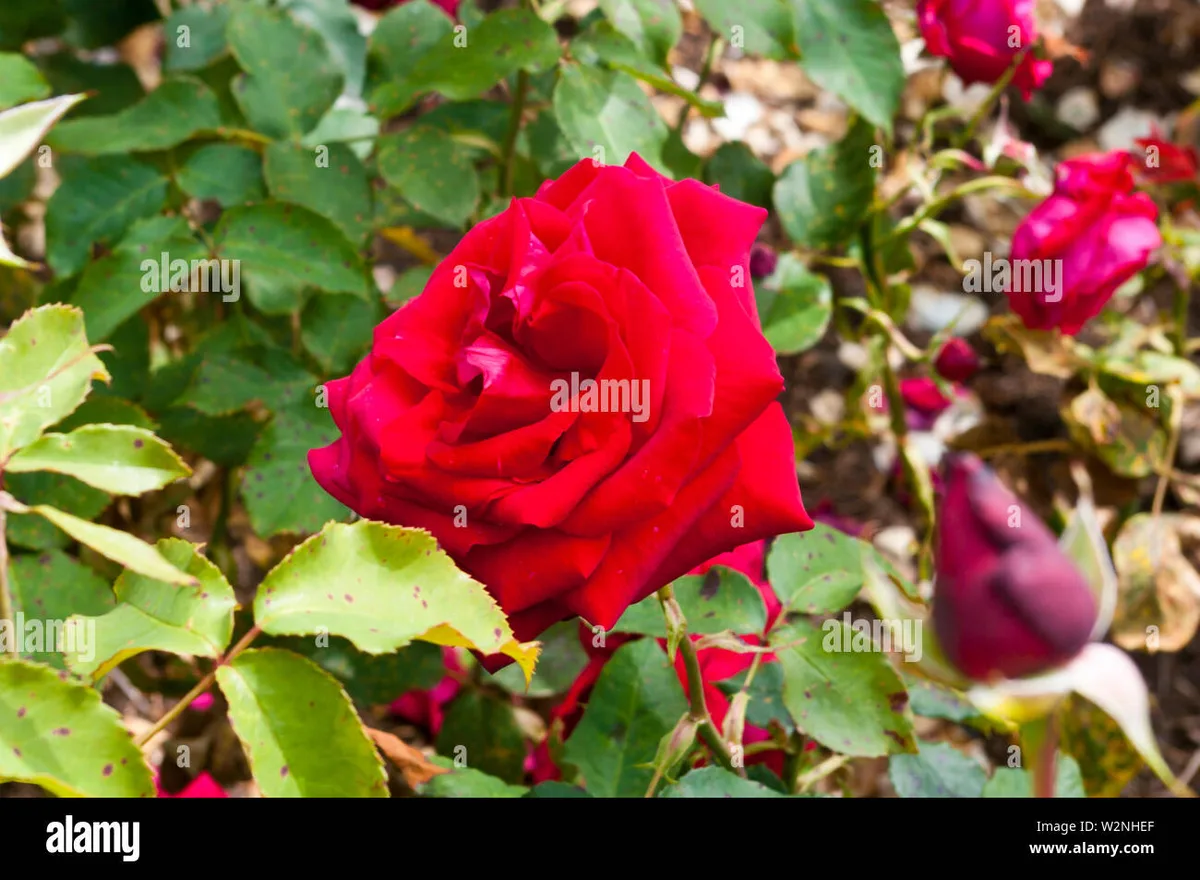
Compact, free-flowering rose about 75cm tall, with healthy, dark green foliage, and bearing fragrant, shapely, high-centred, deep red, fully double blooms opening from pointed buds, almost continously in flower from summer to autumn
Scientific classification
- Species
- rose [Royal William] (Rosa Royal William ('Korzaun'))
- Genus
- Rosa
- Family
- Rosaceae
- Order
- Rosales
- Class
- Magnoliopsida
- Phylum
- Magnoliophyta
- Fruit are ornamental - not to be eaten. Wear gloves and other protective equipment when handling
- Toxicity
- Roses · Shrubs
- Plant type
- 0.5-1 metres
- Height
- 0.5-1 metres
- Spread
- Deciduous
- Foliage
- Bushy
- Habit
- Spring · Summer · Autumn
- Season of interest
- Full sun
- Sunlight
- Information to be completed
- Ideal temperature









rose [Royal William] pictures
Toxicity
Fruit are ornamental - not to be eaten. Wear gloves and other protective equipment when handling
rose [Royal William] care guide
- Deep root watering, allow slight surface drying before watering again
- Watering
- Full sun
- Sunlight

Watering
Deep root watering, allow slight surface drying before watering again
Fertilizing
 Fertilizing
Rose fertilizer every two to four weeks from spring through late summer
Pruning
 Pruning
Remove dead, diseased and crossing stems. For hybrid tea roses, shorten strong shoots to four to six buds, about 10–15 cm above the base. For floribundas, leave strong stems longer, about 25–30 cm above the soil. Prune in late winter or early spring as growth resumes.
Propagation
 Propagation
Propagate by softwood cuttings in early to mid spring, hardwood cuttings in late summer to autumn or by chip budding in summer
Growing
 Growing
Grow in full sun with fertile, humus-rich, moist but well-drained soil. For best flowering apply a balanced fertiliser and mulch in late winter or early spring and a balanced fertiliser again in early summer. Suits container cultivation, see rose cultivation
Common pests and diseases
Diseases
May be susceptible to rose black spot, rose rust, replant disease, rose dieback, and rose powdery mildew and sometimes honey fungus. May also be susceptible to disorders rose blindness and flower balling
Pests
May be susceptible to aphids, rose leafhopper, glasshouse red spider mite, scale insects, caterpillars, large rose sawfly, rose slugworm sawfly and rose leaf-rolling sawfly. Deer and rabbits can cause damage
Explore the plant health library →




