
saxifrage 'Cranbourne'
Also known as: Information to be completed
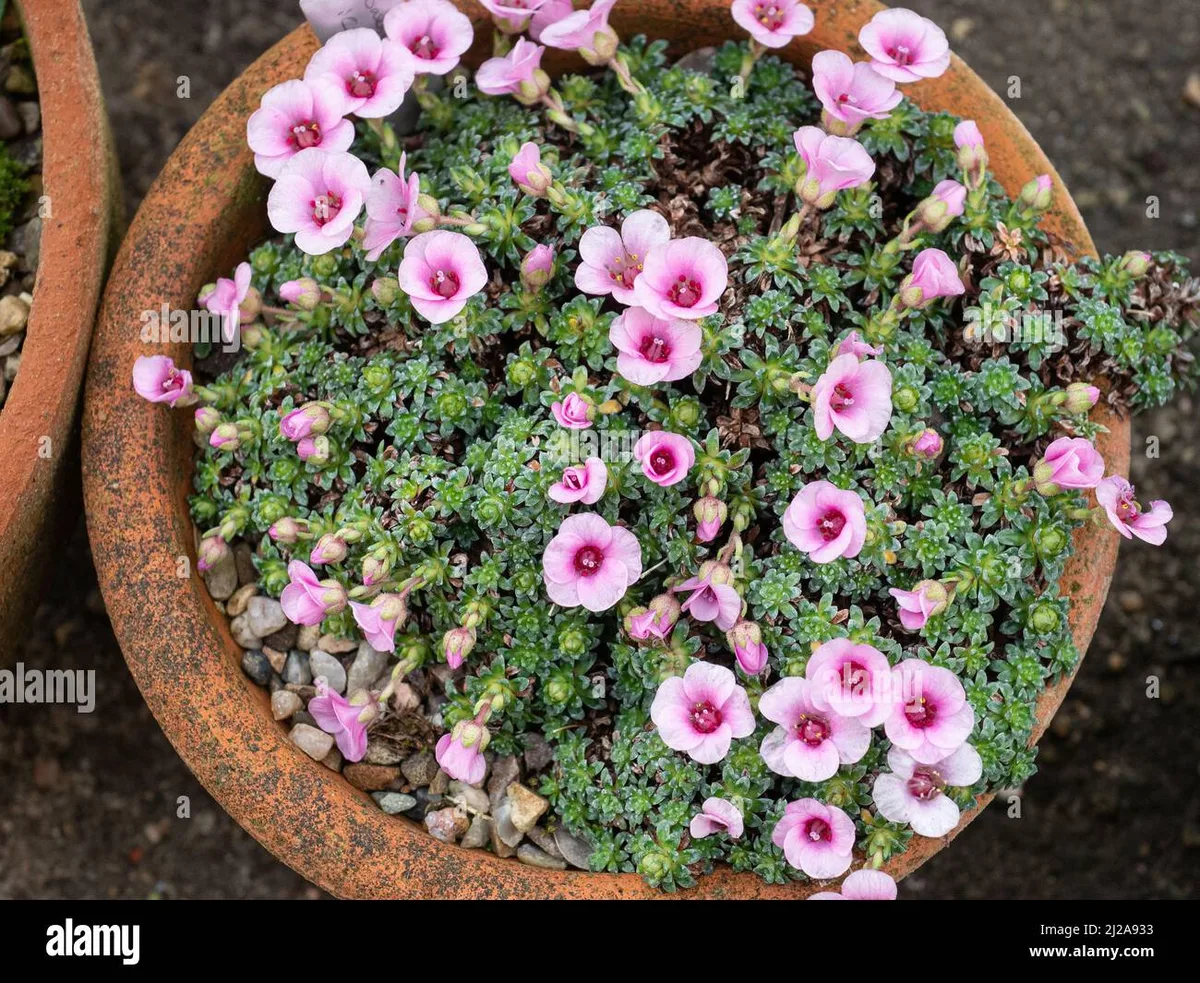
A dense, cushion-forming evergreen perennial to 5cm tall, with tiny grey-green leaves and solitary cup-shaped white flowers 2cm wide in spring
Scientific classification
- Species
- saxifrage 'Cranbourne' (Saxifraga 'Cranbourne')
- Genus
- Saxifraga
- Family
- Saxifragaceae
- Order
- Saxifragales
- Class
- Magnoliopsida
- Phylum
- Tracheophyta
- Information to be completed
- Toxicity
- Alpine Rockery
- Plant type
- Up to 10 cm
- Height
- 0-0.1 metre
- Spread
- Evergreen
- Foliage
- Matforming
- Habit
- Spring · Summer · Autumn · Winter
- Season of interest
- Full sun · Partial shade
- Sunlight
- Information to be completed
- Ideal temperature









saxifrage 'Cranbourne' pictures
saxifrage 'Cranbourne' care guide
- Moderate regular watering, allowing brief slight drying between soakings
- Watering
- Full sun · Partial shade
- Sunlight

Watering
Moderate regular watering, allowing brief slight drying between soakings
Fertilizing
 Fertilizing
Balanced perennial feed every four weeks from spring through summer
Pruning
 Pruning
None required other than deadheading
Propagation
 Propagation
Propagate by seed in autumn in containers in an open frame (don't expect cultivars to come true from seed). Individual rosettes can be detached in spring as root cuttings in late spring or early summer
Growing
 Growing
Grow in a moderately fertile, very well-drained, neutral to alkaline soil in light shade. A rock garden or crevice garden is ideal so as to keep the roots cool. Troughs, sinks or an alpine house are also ideal places in which to grow 'Cranborne'. Use shallow pans of two parts John Innes No 1 compost and one part limestone chippings
Common pests and diseases
Diseases
Usually trouble free
Pests
Aphids, slugs, vine weevil and glasshouse red spider mite may be problematic
Explore the plant health library →




