
Bodinier beautyberry
Also known as: Information to be completed
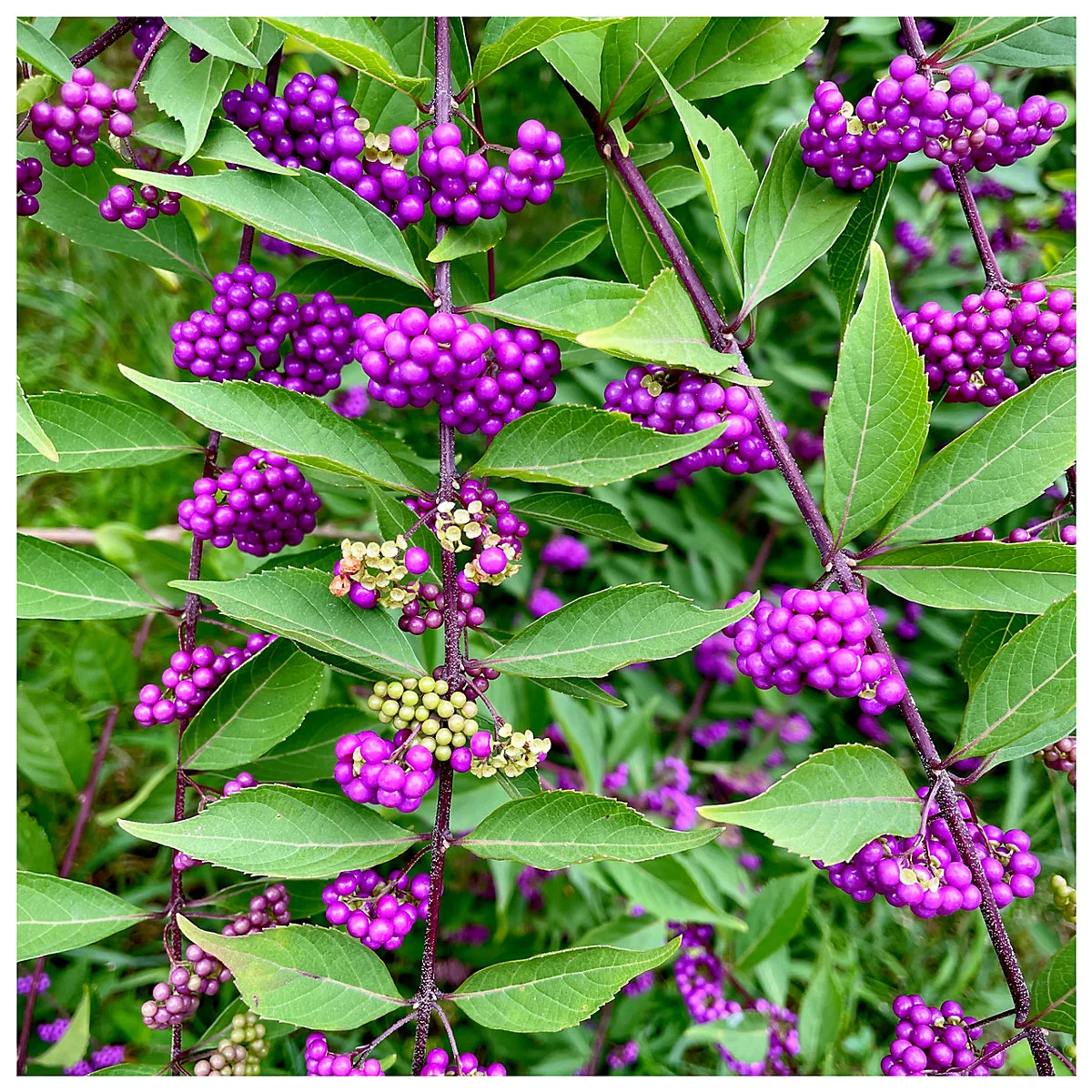
A deciduous shrub to 2.5m high, with narrowly ovate, toothed dark green leaves that tint pink and purple in autumn. In mid-summer, produces small lilac coloured flowers in clusters along the stems, these are followed in autumn by glossy, round, pale lilac berries
Scientific classification
- Species
- Bodinier beautyberry (Callicarpa bodinieri)
- Genus
- Callicarpa
- Family
- Lamiaceae
- Fruit are ornamental - not to be eaten. Wear gloves and other protective equipment when handling
- Toxicity
- Shrubs
- Plant type
- 1.5-2.5 metres
- Height
- 1.5-2.5 metres
- Spread
- Deciduous
- Foliage
- Bushy · Columnar upright
- Habit
- Autumn · Spring · Summer
- Season of interest
- Full sun · Partial shade
- Sunlight
- Information to be completed
- Ideal temperature









Bodinier beautyberry pictures
Distribution of Bodinier beautyberry
Distribution map
C and Western China
Information to be completed
Culture
Information to be completed
Toxicity
Fruit are ornamental - not to be eaten. Wear gloves and other protective equipment when handling
Quick identification of Bodinier beautyberry
Information to be completed
Bodinier beautyberry care guide
- Moderate regular watering, well drained loam prevents root waterlogging
- Watering
- Full sun · Partial shade
- Sunlight
- Information to be completed
- Ideal temperature

Watering
Moderate regular watering, well drained loam prevents root waterlogging
Fertilizing
 Fertilizing
Deciduous shrub slow feed once annually in early spring month
Pruning
 Pruning
Shorten last year's flowering stems to one or two buds from the older woody framework. Remove thin, weak and dead shoots. Prune in early to mid-spring as growth resumes; avoid winter pruning that exposes new shoots to frost.
Propagation
 Propagation
Propagate by seed, by softwood cuttings in spring, or by semi-ripe cuttings with bottom heat in summer
Growing
 Growing
Grow in fertile, well drained soil in sun or part shade. Fruits best when grown in groups; at least two plants are needed to ensure pollination and berry production
People also ask
Information to be completed
Common pests and diseases
Diseases
May be susceptible to honey fungus (rarely)
Pests
Generally pest-free
Explore the plant health library →




