
Japanese anemone 'Lady Gilmour'
Also known as: Information to be completed
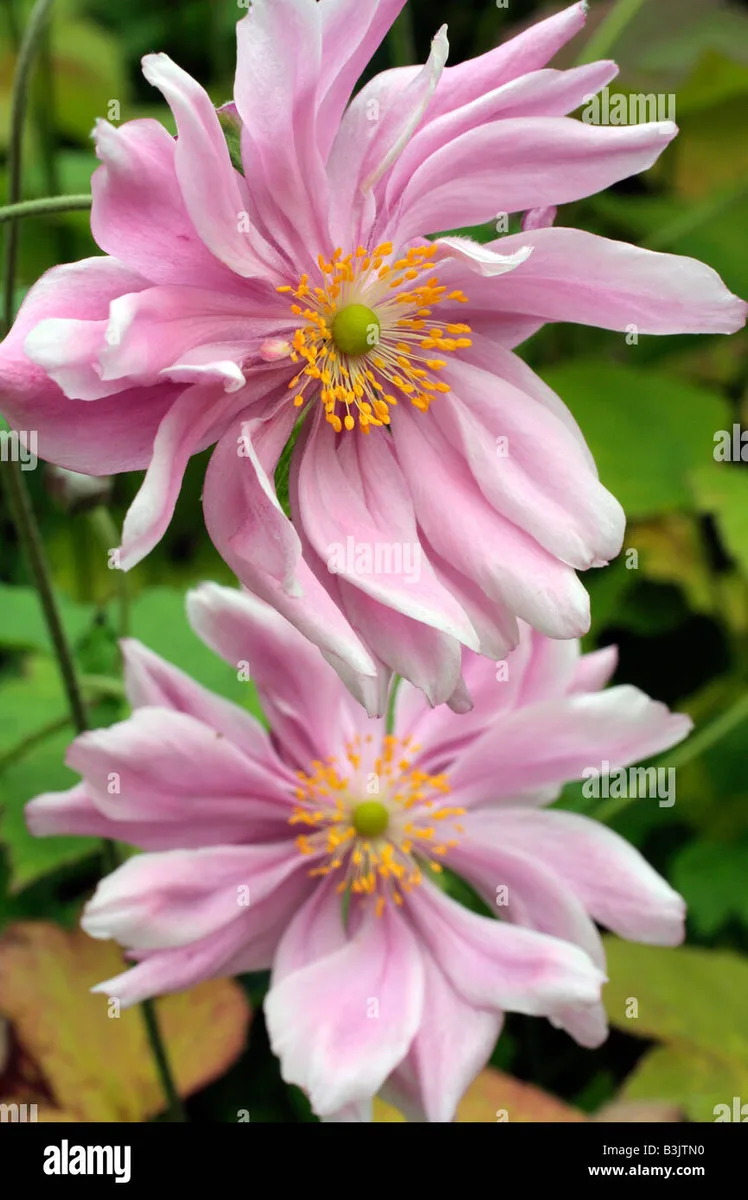
Clump-forming perennial about 1m tall, with distinctive mid-green, 3-lobed leaves that have crisped margins when young. Semi-double pale pink flowers 6cm across have about 12 narrow, somewhat twisted petals, and a central boss of yellow stamens, appear on slender stems from summer to autumn
Scientific classification
- Species
- Japanese anemone 'Lady Gilmour' (Anemone × hybrida 'Lady Gilmour')
- Genus
- Anemone
- Family
- Ranunculaceae
- Order
- Ranunculales
- Class
- Magnoliopsida
- Phylum
- Magnoliophyta
- Information to be completed
- Toxicity
- Herbaceous Perennial
- Plant type
- 1-1.5 metres
- Height
- 0.1-0.5 metres
- Spread
- Deciduous
- Foliage
- Clump forming
- Habit
- Spring · Summer · Autumn
- Season of interest
- Full sun · Partial shade
- Sunlight
- Information to be completed
- Ideal temperature









Japanese anemone 'Lady Gilmour' pictures
Japanese anemone 'Lady Gilmour' care guide
- Moderate regular watering, allowing brief slight drying between soakings
- Watering
- Full sun · Partial shade
- Sunlight

Watering
Moderate regular watering, allowing brief slight drying between soakings
Fertilizing
 Fertilizing
Balanced perennial feed every four weeks from spring through summer
Pruning
 Pruning
Cut back flowered stems in late autumn
Propagation
 Propagation
Propagate by division in early spring or autumn, or propagate by root cuttings
Growing
 Growing
Will grow in any garden soil but avoid excessive winter wet, dislikes being moved around. Can spread rapidly once established and has the potential to become a nuisance. See anemone cultivation
Common pests and diseases
Diseases
May be susceptible to Powdery mildews
Pests
May be susceptible to leaf eelworms and damage from caterpillars and slugs
Explore the plant health library →




