
meadow saffron 'Dick Trotter'
Also known as: Information to be completed
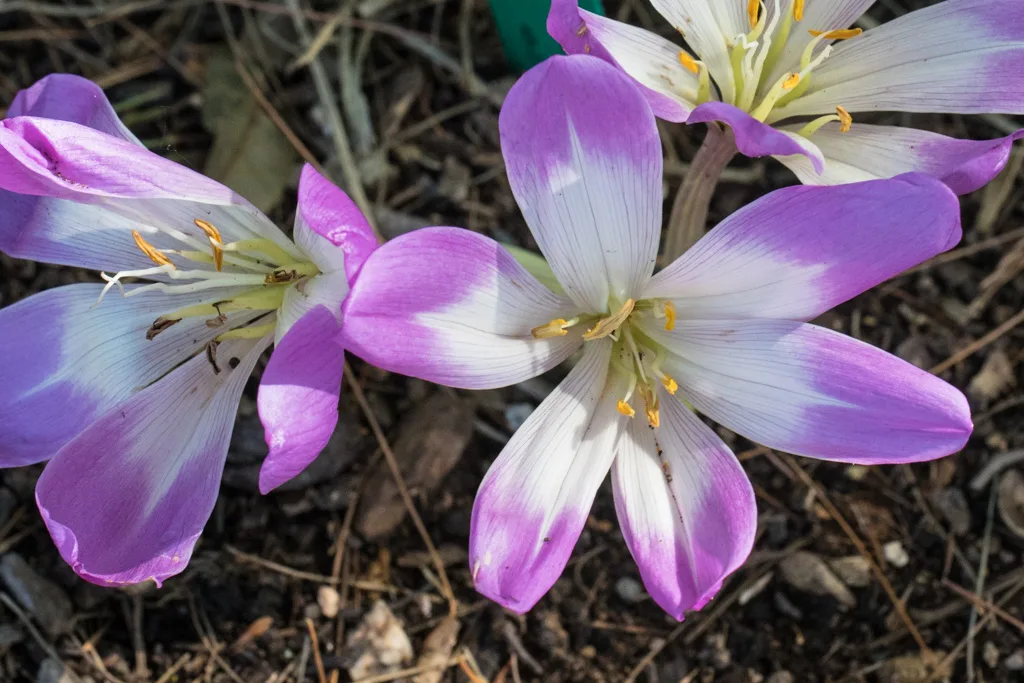
Dick Trotter' is a cormous perennial 15-20cm high with leaves about 25cm long, from winter to spring, and goblet-shaped pink-violet flowers with star-shaped greenish white centres and yellow anthers, in autumn; colchicums are a useful late-season source of pollen for honeybees
Scientific classification
- Species
- meadow saffron 'Dick Trotter' (Colchicum 'Dick Trotter')
- Genus
- Colchicum
- Family
- Colchicaceae
- TOXIC if eaten. Wear gloves and other protective equipment when handling
- Toxicity
- Bulbs
- Plant type
- 0.1-0.5 metres
- Height
- 0.1-0.5 metres
- Spread
- Deciduous
- Foliage
- Clump forming
- Habit
- Spring · Winter · Autumn
- Season of interest
- Full sun
- Sunlight
- Information to be completed
- Ideal temperature









meadow saffron 'Dick Trotter' pictures
Distribution of meadow saffron 'Dick Trotter'
Distribution map
Information to be completed
Information to be completed
Culture
Information to be completed
Toxicity
TOXIC if eaten. Wear gloves and other protective equipment when handling
Quick identification of meadow saffron 'Dick Trotter'
Information to be completed
meadow saffron 'Dick Trotter' care guide
- Moderate regular watering, avoid prolonged drought or waterlogging
- Watering
- Full sun
- Sunlight
- Information to be completed
- Ideal temperature

Watering
Moderate regular watering, avoid prolonged drought or waterlogging
Fertilizing
 Fertilizing
Balanced feed in spring and light repeat in growth season
Pruning
 Pruning
No pruning required
Propagation
 Propagation
Propagate by removing cormlets when dormant in summer; for more advice, see bulb propagation
Growing
 Growing
Using gloves to handle corms, plant 10cm deep in summer or early autumn in deep, fertile and well-drained but moisture-retentive soil in an open site in full sun; for more advice, see bulb cultivation
People also ask
Information to be completed
Common pests and diseases
Diseases
May be affected by grey moulds (Botrytis), smuts, and tulip grey bulb rot
Pests
May be susceptible to slugs
Explore the plant health library →




