
Burkwood daphne 'Somerset'
Also known as: Information to be completed
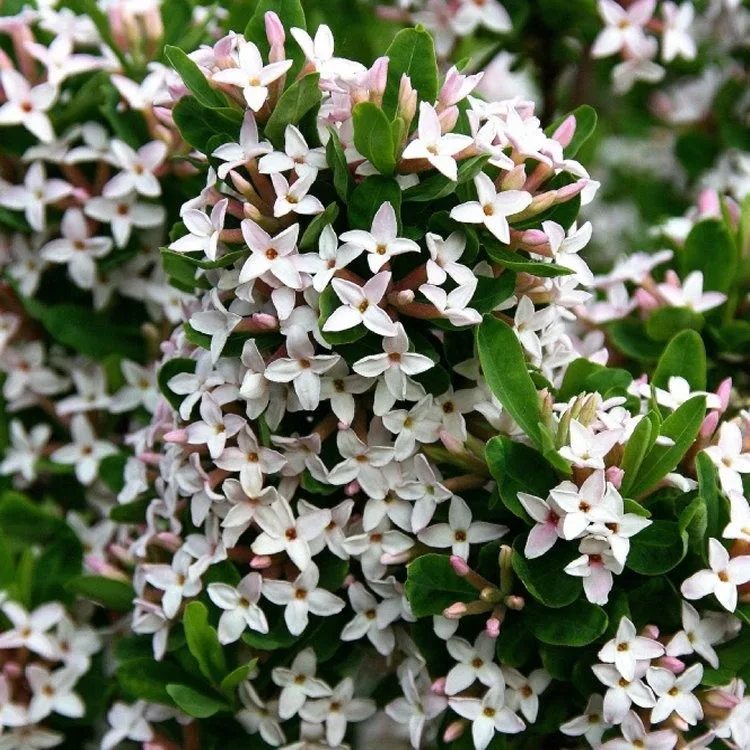
Somerset' is a compact semi-evergreen shrub of upright habit, with oblanceolate leaves and terminal clusters of small, fragrant purplish-pink flowers with paler lobes, in late spring
Scientific classification
- Species
- Burkwood daphne 'Somerset' (Daphne × burkwoodii 'Somerset')
- Genus
- Daphne
- Family
- Thymelaeaceae
- Order
- Malvales
- Class
- Magnoliopsida
- Phylum
- Magnoliophyta
- TOXIC if eaten, skin irritant. Wear gloves and other protective equipment when handling]
- Toxicity
- Shrubs
- Plant type
- 0.5-1 metres
- Height
- 0.5-1 metres
- Spread
- Semi evergreen
- Foliage
- Bushy
- Habit
- Spring · Summer · Autumn · Winter
- Season of interest
- Full sun · Partial shade
- Sunlight
- Information to be completed
- Ideal temperature









Burkwood daphne 'Somerset' pictures
Toxicity
TOXIC if eaten, skin irritant. Wear gloves and other protective equipment when handling]
Burkwood daphne 'Somerset' care guide
- Keep soil evenly moist but perfectly drained
- Watering
- Full sun · Partial shade
- Sunlight

Watering
Keep soil evenly moist but perfectly drained
Fertilizing
 Fertilizing
Light feed in spring only, avoid heavy fertilizing
Pruning
 Pruning
Usually little pruning is needed. Lightly shape if necessary, removing dead, damaged or diseased shoots. Prune after flowering.
Propagation
 Propagation
Propagate by semi-hardwood cuttings or grafting
Growing
 Growing
Grow in fertile, moist but well-drained soils. Not reliably hardy in exposed conditions. Resents transplanting
Common pests and diseases
Diseases
May be susceptible to honey fungus (rarely), phytophthora root rot, fungal leaf spot and virus diseases
Pests
May be susceptible to aphids
Explore the plant health library →




