
penstemon 'Alice Hindley'
Also known as: Information to be completed
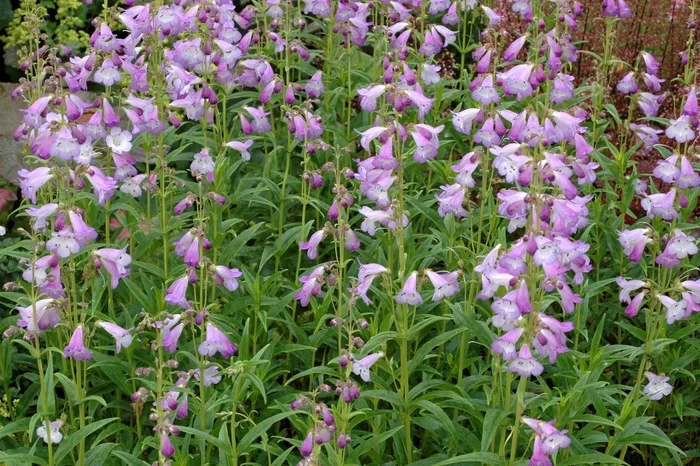
A semi-evergreen perennial to 1m in height, with rather large ovate leaves and erect racemes of narrowly bell-shaped pale mauve flowers, white within, 4cm across the spreading lobes
Scientific classification
- Species
- penstemon 'Alice Hindley' (Penstemon 'Alice Hindley')
- Genus
- Penstemon
- Family
- Plantaginaceae
- Information to be completed
- Toxicity
- Herbaceous Perennial
- Plant type
- 0.5-1 metres
- Height
- 0.1-0.5 metres
- Spread
- Semi evergreen
- Foliage
- Clump forming
- Habit
- Spring · Summer · Autumn · Winter
- Season of interest
- Full sun · Partial shade
- Sunlight
- Information to be completed
- Ideal temperature









penstemon 'Alice Hindley' pictures
Distribution of penstemon 'Alice Hindley'
Distribution map
Information to be completed
Information to be completed
Culture
Information to be completed
Toxicity
Information to be completed
Quick identification of penstemon 'Alice Hindley'
Information to be completed
penstemon 'Alice Hindley' care guide
- Moderate regular watering, allowing brief slight drying between soakings
- Watering
- Full sun · Partial shade
- Sunlight
- Information to be completed
- Ideal temperature

Watering
Moderate regular watering, allowing brief slight drying between soakings
Fertilizing
 Fertilizing
Balanced perennial feed every four weeks from spring through summer
Pruning
 Pruning
Deadhead after flowering to maintain vigour. Then cut back to base in early spring
Propagation
 Propagation
Propagate by softwood cuttings in early summer or semi-hardwood cuttings in midsummer. Propagate by division in spring
Growing
 Growing
Grow in fertile, well-drained soil in full sun or partial shade. In cold areas, protect plant overwinter with dry winter mulch
People also ask
Information to be completed
Common pests and diseases
Diseases
Generally disease free
Pests
May be attacked by slugs, snails, glasshouse red spider mite, and leaf and bud eelworms
Explore the plant health library →




