
silver tree
Also known as: South African pine
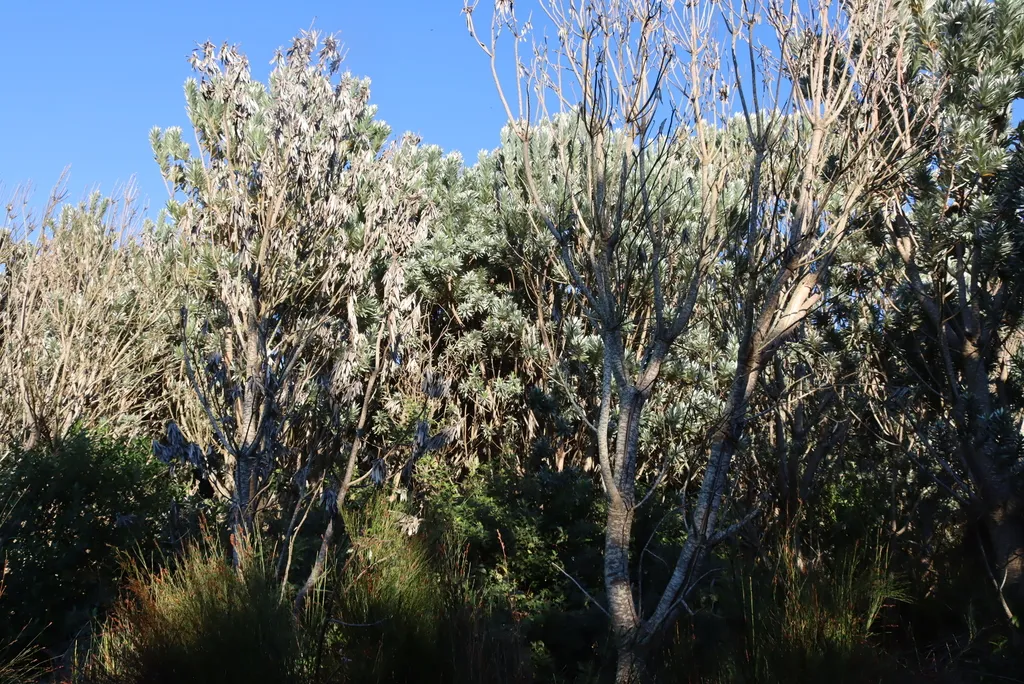
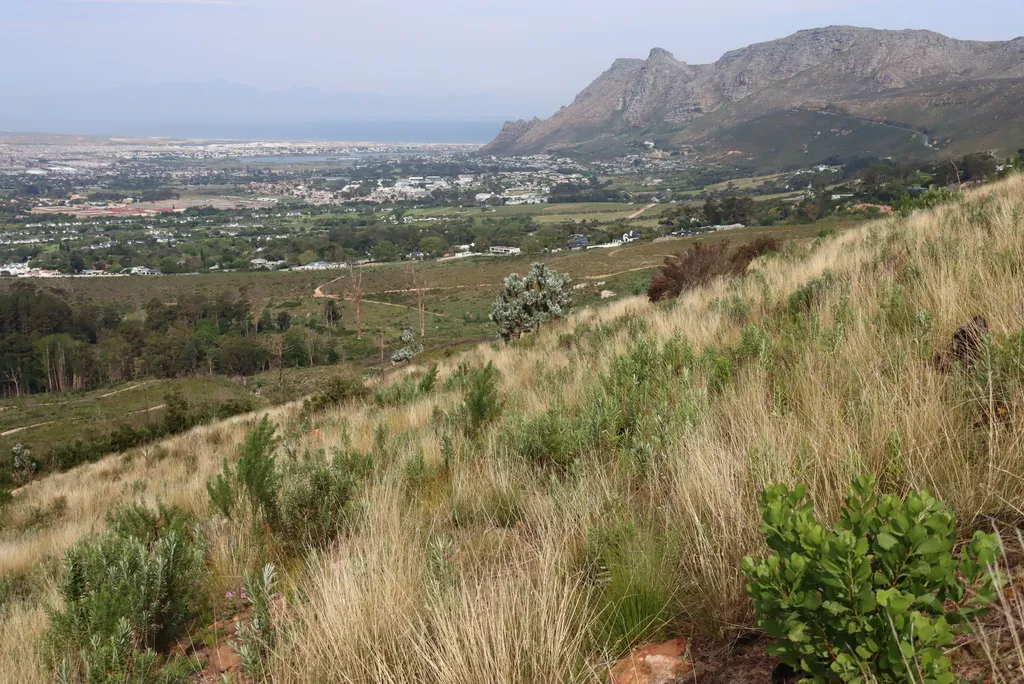
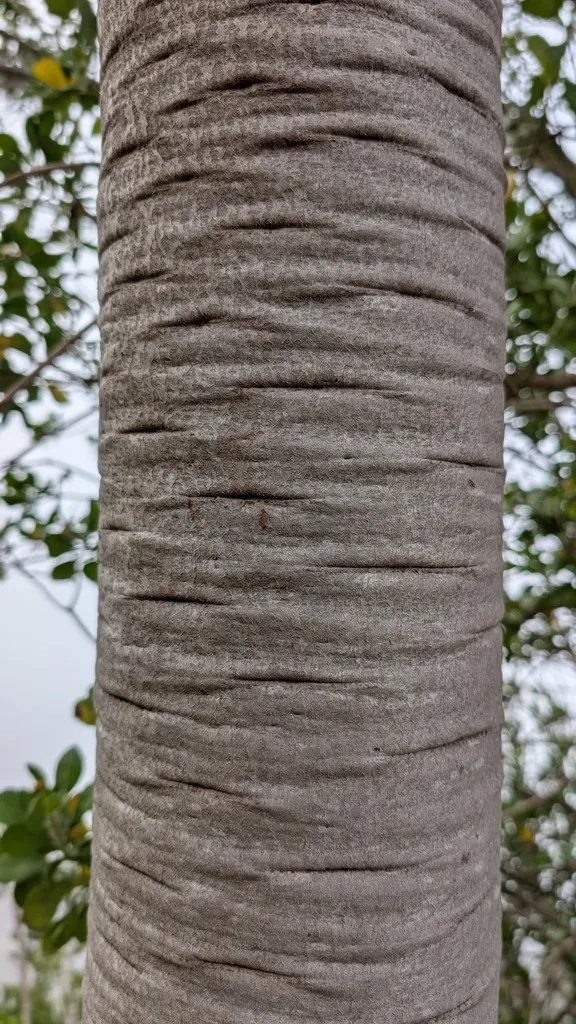
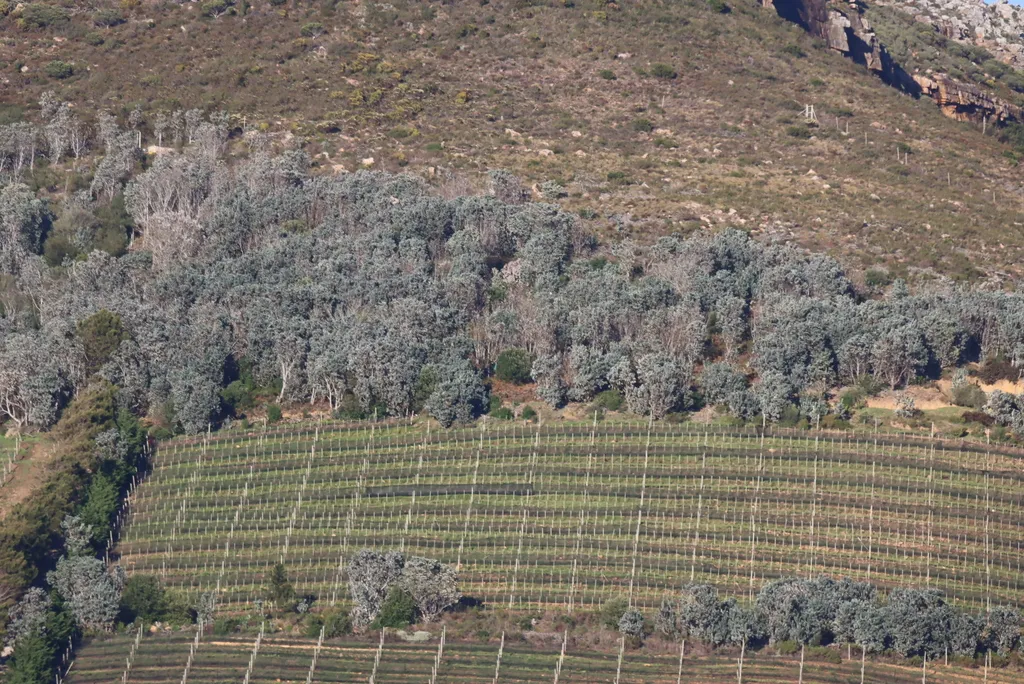
Upright, pyramidal to columnar tree with robust stems densely covered with narrow, pointed, shiny, silver-hairy leaves up to 15cm long. In spring and summer produces terminal, spherical flower heads, yellow-green on male plants, greenish silver on females. If pollinated these develop into silver cones that may remain on the plant for several years
Scientific classification
- Species
- silver tree (Leucadendron argenteum)
- Genus
- Leucadendron
- Family
- Proteaceae
- Order
- Proteales
- Class
- Magnoliopsida
- Phylum
- Magnoliophyta
- Information to be completed
- Toxicity
- Trees
- Plant type
- 8-12 metres
- Height
- 2.5-4 metres
- Spread
- Evergreen
- Foliage
- Bushy
- Habit
- Spring · Summer · Autumn · Winter
- Season of interest
- Full sun
- Sunlight
- Information to be completed
- Ideal temperature









silver tree pictures
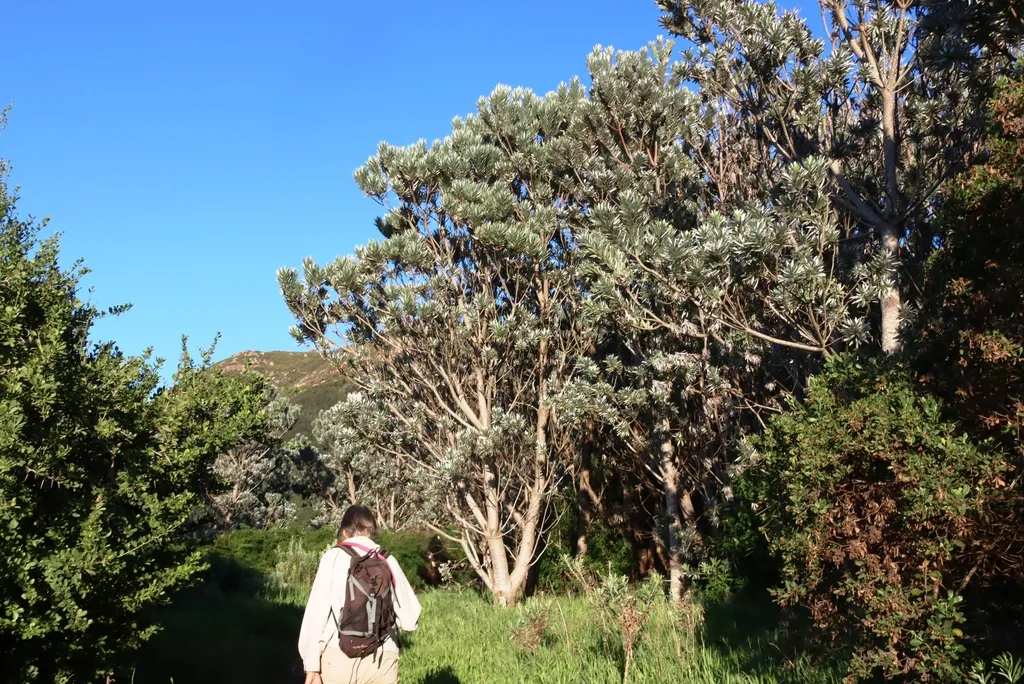
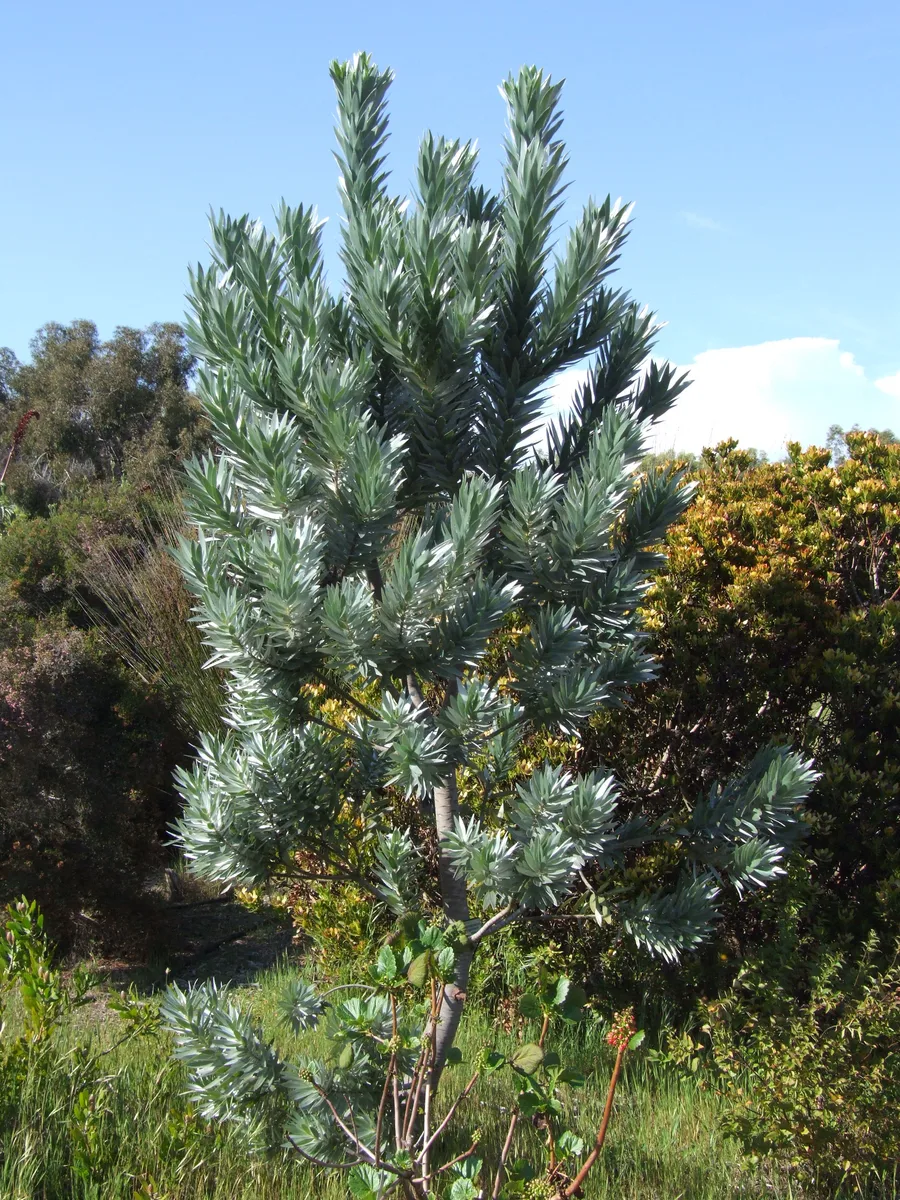
Distribution of silver tree
Distribution map
- Native
- Introduced
- Cultivated
Source:WCVP v16 · Royal Botanic Gardens, Kew · CC BY 3.0 · Boundaries:WGSRPD / TDWG
silver tree care guide
- Moderate regular watering, allowing brief slight drying between soakings
- Watering
- Full sun
- Sunlight

Watering
Moderate regular watering, allowing brief slight drying between soakings
Fertilizing
 Fertilizing
Balanced perennial feed every four weeks from spring through summer
Pruning
 Pruning
Little pruning is needed. Remove diseased, damaged, crowded or crossing shoots and unwanted growth. Timing depends on the plant: generally late winter or early spring; plants prone to bleeding and deciduous magnolias need different timing, and deciduous azaleas and lilacs are pruned after flowering.
Propagation
 Propagation
Root semi-ripe cuttings with bottom heat in summer
Growing
 Growing
May survive outdoors in the mildest areas in a warm, sunny position with poor, neutral to acid, free-draining soil. Otherwise grow in a warm greenhouse in a mix of 3 parts peat-substitute, 3 parts grit or perlite and 1 part lime-free compost. Do not overwater. Feed with half-strength magnesium sulphate and urea in spring and autumn
Common pests and diseases
Diseases
Generally disease-free
Pests
May be susceptible to Glasshouse red spider mites when grown under glass
Explore the plant health library →




