



Planting and Growing narrow-leaved Cape Colony sundew

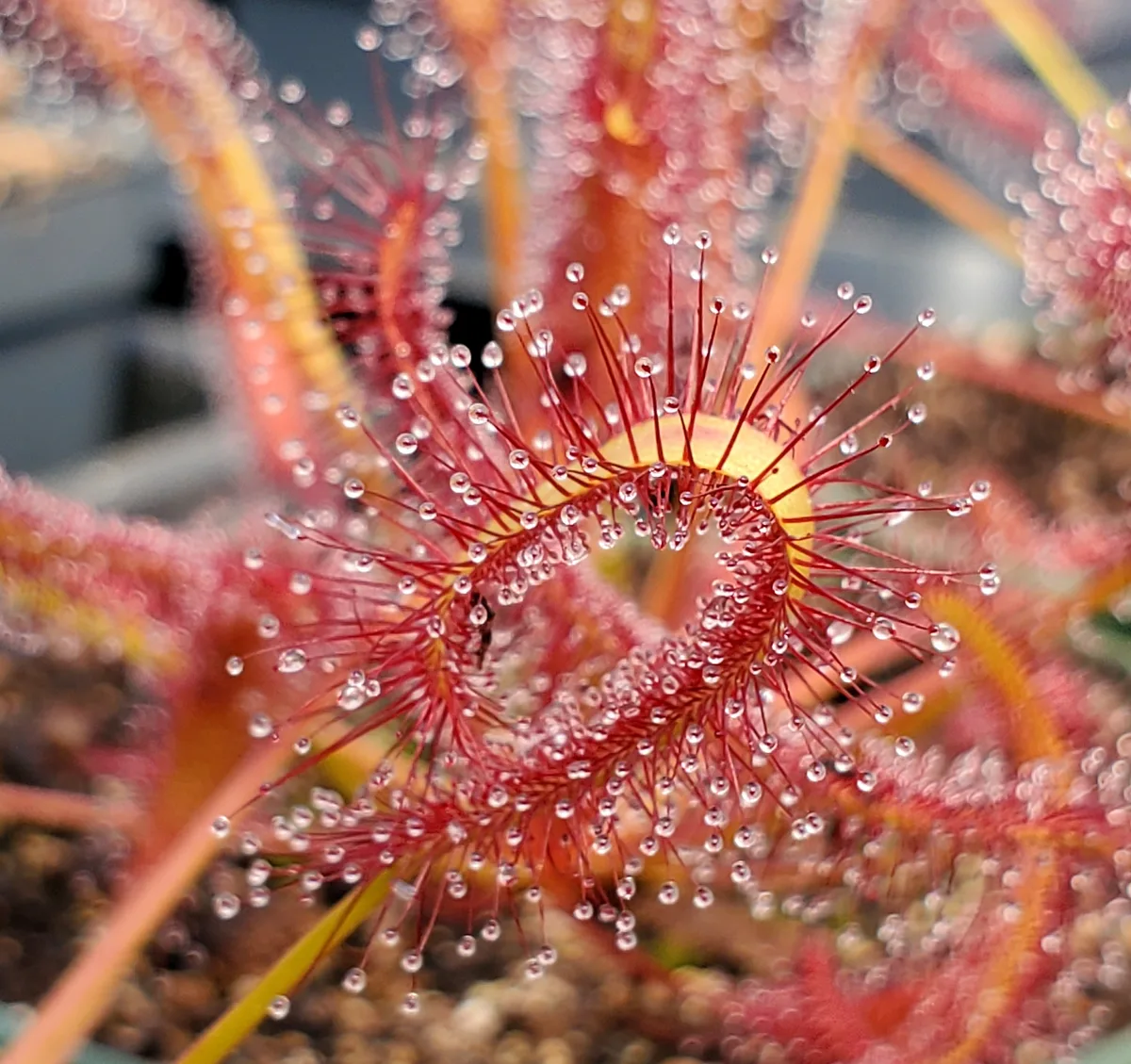
| Care difficulty | 4 / 5 |
|---|---|
| Watering schedule | Moderate regular watering, allowing brief slight drying between soakings |
| Sunlight requirements | Full shade |
| Ideal temperature | Information to be completed |
| Soil type | Clay · Loam · Sand |
| Soil pH | Acid |
| Soil moisture | Poorly drained |
| Fertilizing | Balanced perennial feed every four weeks from spring through summer |
| Toxicity | Information to be completed |
How to Water narrow-leaved Cape Colony sundew?
Moderate regular watering, allowing brief slight drying between soakings
Learn more →What Are the Sunlight Requirements for narrow-leaved Cape Colony sundew?
Full shade
Learn more →What Soil Is Best for narrow-leaved Cape Colony sundew?
- Soil type
- Clay · Loam · Sand
- Soil pH
- Acid
What Are the Moisture Requirements for narrow-leaved Cape Colony sundew?
Poorly drained
Learn more →How to Fertilize narrow-leaved Cape Colony sundew?

Balanced perennial feed every four weeks from spring through summer
Learn more →How to Prune narrow-leaved Cape Colony sundew?

No pruning required
Learn more →How to Propagate narrow-leaved Cape Colony sundew?

Propagate by seed as soon as ripe. Stored seed rapidly loses viability. Leaf cuttings during the growing season and root cuttings taken when dormant are alternative methods of propagation
Learn more →How to Plant narrow-leaved Cape Colony sundew?
Under glass grow in a mix of equal parts moss peat or fertiliser-free peat substitute and sand, in full light, although may need shading from hot midday sun in summer. The compost should be kept continually moist to wet during the growing season by standing the container in a tray of lime-free water, such as rainwater or Reverse Osmosis water. Keep just moist during the winter and do not stand the plants in water. Do not apply fertiliser at all through the year. Minimum temperatures should be no lower than 5C in the winter. In consistently lower temperatures the plant produces overwintering buds called hibernacula at the apex of the old stem, whilst the foliage dies back. When the plant dies back to the roots, it often regenerates again in the spring when the temperatures rise.
Learn more →Common Pests & Diseases

Diseases
Generally disease-free
Pests
Generally pest-free
Explore the plant health library →