



Planting and Growing apricot 'Early Moorpark'

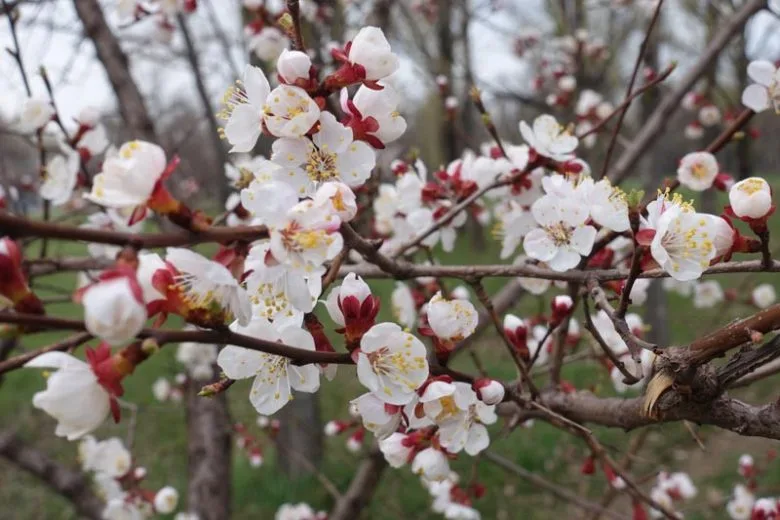
| Care difficulty | 3 / 5 |
|---|---|
| Watering schedule | Deep watering during dry spells, let surface soil partly dry between sessions |
| Sunlight requirements | Full sun |
| Ideal temperature | Information to be completed |
| Soil type | Clay · Loam · Sand |
| Soil pH | Alkaline · Neutral |
| Soil moisture | Moist but well drained · Well drained |
| Fertilizing | Balanced tree feed applied once every early spring growth cycle |
| Toxicity | Information to be completed |
How to Water apricot 'Early Moorpark'?
Deep watering during dry spells, let surface soil partly dry between sessions
Learn more →What Are the Sunlight Requirements for apricot 'Early Moorpark'?
Full sun
Learn more →What Soil Is Best for apricot 'Early Moorpark'?
- Soil type
- Clay · Loam · Sand
- Soil pH
- Alkaline · Neutral
What Are the Moisture Requirements for apricot 'Early Moorpark'?
Moist but well drained · Well drained
Learn more →How to Fertilize apricot 'Early Moorpark'?

Balanced tree feed applied once every early spring growth cycle
Learn more →How to Prune apricot 'Early Moorpark'?

May be trained as a fan on a warm wall, or as a free-standing bush in milder areas, see How to grow: Apricots for more details. Train fan-trained trees in spring. Pruning established fans is carried out in early summer and after harvest
Learn more →How to Propagate apricot 'Early Moorpark'?

Propagate by grafting on rootstock for fruit. Seed-raised plants are likely to be inferior to the parent
Learn more →How to Plant apricot 'Early Moorpark'?
Apricots flourish on deep, moisture-retentive, well-drained, ideally slightly alkaline soils and struggle in poor, shallow soils. Although fully hardy, they bloom early, and the flowers are vulnerable to frost, so trees need a warm, sheltered position. Protect blossom from frost at night, and hand pollinate if insects are scarce. See How to grow: Apricots for cultivation details
Learn more →Common Pests & Diseases

Diseases
May be susceptible to peach leaf curl, silver leaf, bacterial canker, blossom wilt and honey fungus
Pests
May be susceptible to aphids, brown scale, glasshouse red spider mite. Birds and squirrels may damage fruit
Explore the plant health library →