



Planting and Growing purple velvet plant

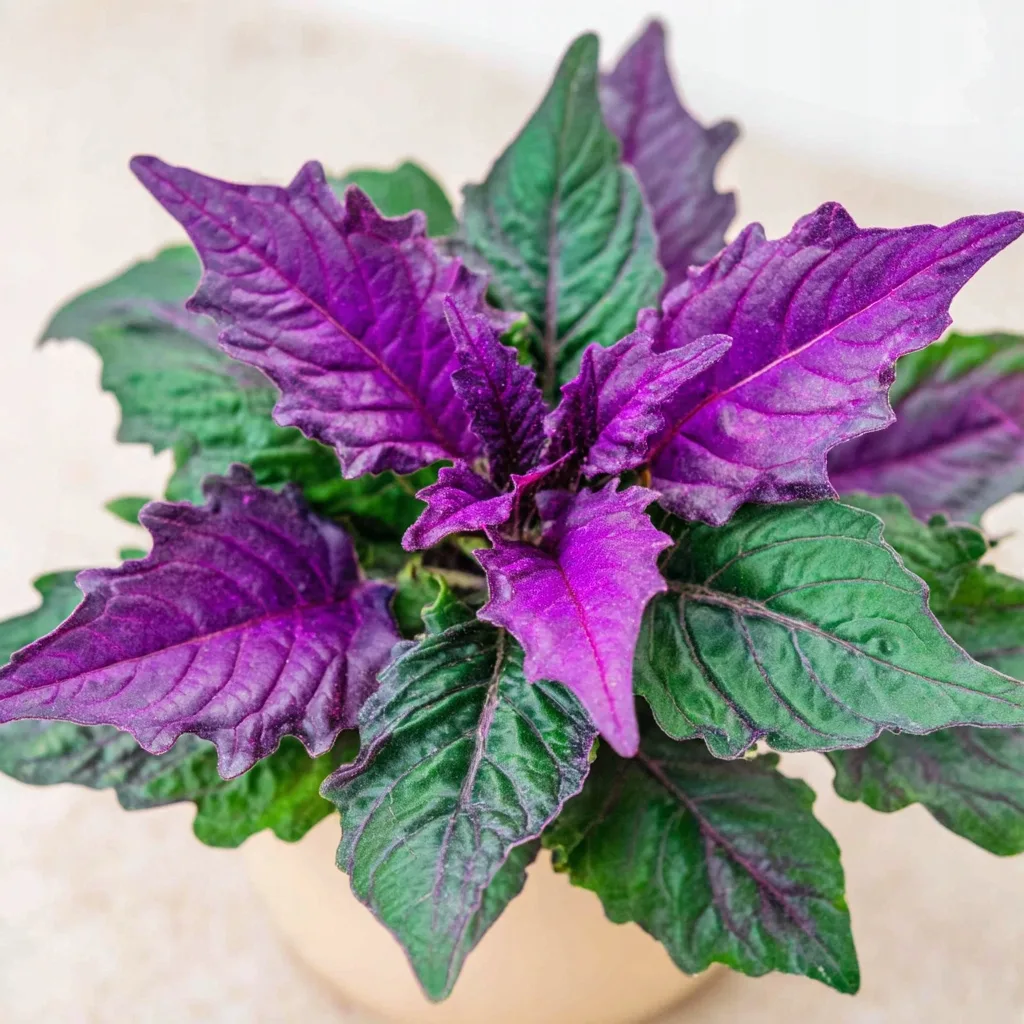
| Care difficulty | 3 / 5 |
|---|---|
| Watering schedule | Moderate regular watering, avoid prolonged drought or waterlogging |
| Sunlight requirements | Partial shade |
| Ideal temperature | 18 – 27 °C |
| Soil type | Loam |
| Soil pH | Acid · Alkaline · Neutral |
| Soil moisture | Moist but well drained |
| Fertilizing | Balanced feed in spring and light repeat in growth season |
| Toxicity | Information to be completed |
How to Water purple velvet plant?
Thriving in humid environments, velvet plant has adapted to retain moisture efficiently. This species exhibits a preference for consistent hydration without being waterlogged, indicative of its origins in tropical settings. Watering every week will maintain its lush appearance and vitality. As an indoor plant, velvet plant benefits from higher humidity levels which can be bolstered during the growing season by misting or placing it on a pebble tray with water to emulate its native climate conditions.
Learn more →What Are the Sunlight Requirements for purple velvet plant?
Velvet plant thrives in bright, indirect sunlight but will tolerate partial sun. Optimal illumination is key, where the desired intensity includes exposure to full sun filtered through a sheer curtain or diffused by a shade. Velvet plant's growth is bolstered with generous light for at least 6 hours daily. Exceeding or underachieving these levels can result in leggy growth or faded foliage, respectively. In indoor environments, east or west-facing windows suit velvet plant well, promoting vibrant leaf coloration and robust health. When situated outdoors, velvet plant flourishes in dappled sun, particularly in regions where the light is intense. Adaptive traits, such as its unique velvety foliage, can endure fluctuating light with minor impacts.
Learn more →What Is the Ideal Temperature Range for purple velvet plant?

Velvet plant demonstrates noticeable resilience to temperature variations, tolerating cold down to 0℃ (32℉) and heat up to 43℃ (109℉). However, velvet plant prefers steady conditions and may exhibit stress if exposed to prolonged cold or heat. Symptoms of cold stress include leaf yellowing and wilting, while excessive heat can cause leaf scorching and dehydration. To care for velvet plant, avoid placing it in drafty or extremely hot areas. Use protective measures like shading or insulation during extreme weather to maintain its health. Adapting to such temperature variations, velvet plant is suitable for temperate and warm environments, with proper care ensuring its vibrant growth.
Learn more →What Soil Is Best for purple velvet plant?
Velvet plant thrives in well-draining soil, which helps prevent root rot. A suitable soil mix includes equal parts potting mix, perlite, and peat or coco coir. In the absence of perlite, sand can aid drainage. Ensure pots have drainage holes to avoid water-logging. Fertilize bi-monthly with a balanced, water-soluble fertilizer to promote growth.
- Soil type
- Loam
- Soil pH
- Acid · Alkaline · Neutral
What Are the Moisture Requirements for purple velvet plant?
Moist but well drained
Learn more →How to Fertilize purple velvet plant?

For velvet plant, optimal growth requires fertilization every two weeks with high nitrogen fertilizer during active growth periods, spring through summer. This promotes lush foliage and overall vigor. In fall and winter, reduce to monthly. Use half-strength concentrations to avoid over-fertilization. Seasonal adjustment encourages health, avoids nutrient overload, and aligns with velvet plant's growth cycle. Proper application ensures robustness, enhancing both appearance and longevity for gardeners at all levels.
Learn more →How to Prune purple velvet plant?

Velvet plant is known for its vibrant, velvety purple foliage. Prune in early to later spring to encourage bushier growth and remove leggy or damaged stems. Regularly pinching off the tips helps maintain a compact shape. Sterilize tools to prevent disease. Proper pruning promotes healthier and more vigorous growth, while enhancing its ornamental appeal.
Learn more →How to Propagate purple velvet plant?

Velvet plant can be propagated easily in spring and summer by herbaceous cuttings. Look for signs of successful propagation such as new growth and healthy foliage. One key tip is to keep the soil moist but not waterlogged.
Learn more →How to Transplant purple velvet plant?
The prime season for transplanting velvet plant is between mid-spring and late spring, as warmer temperatures and stable conditions optimize growth. Choose a well-draining location with bright, indirect light for transplanting. Simple transplant tips include ensuring adequate space between plants and keeping the root ball intact during the process. Enjoy a thriving velvet plant with these friendly pointers!
Learn more →How to Care for purple velvet plant in Winter?

Native to warm Indonesia, velvet plant copes with winter by naturally entering dormancy. Its lush, velvety leaves may wilt, reflecting a period of rest. To care for velvet plant during the cold months, maintain indoor temperatures of 60-70°F, provide indirect light, and water sparingly to prevent root rot. A perfectly cozy winter can help velvet plant spring back into vibrant life as the seasons change.
Learn more →How to Plant purple velvet plant?
Indoors-potted: Thriving indoors, velvet plant requires regular pruning to maintain its vibrant foliage and prevent it from becoming leggy. Outdoors-potted: Velvet plant enjoys the freedom of outdoor pots but ensure protection from strong winds which can damage its delicate leaves. Outdoors-in the ground: When planted in the garden, velvet plant may spread quickly; keep an eye on its enthusiastic growth to manage space effectively.
Learn more →How to Repot purple velvet plant?
Repot velvet plant every 2-3 years, mainly due to its vigorous growth as a velvety, vining plant. Spring, with its active growth cycle, is the best time to repot. Choose a slightly larger pot to accommodate its roots without crowding. Post-repotting, ensure velvet plant receives bright, indirect light and even moisture to thrive without any unique care hurdles.
Learn more →Common Pests & Diseases

Diseases
Generally disease-free
Pests
May be susceptible to aphids and glasshouse red spider mite
Explore the plant health library →Troubleshooting
Yellowing Lower Leaves, Root Rot, or Crispy Brown Edges
purple velvet plant (Gynura aurantiaca) thrives in warm, humid conditions with evenly moist, well-aerated compost; soggy soil suffocates roots, while dry indoor air, hard tap water, or direct hot sun crisps leaf margins.
| What you notice | Possible explanation | What to check next |
|---|---|---|
| Multiple lower or inner leaves turn yellow and limp while potting mix remains heavy and wet | Overwatering, dense poorly drained compost, or cold drafts causing root rot | Feel two inches into the potting mix, check drainage holes, and verify room temperature stays above 15°C (59°F) |
| Leaf tips or margins turn brown and dry while center leaves stay green, or bleached patches appear on sunny sides | Low indoor air humidity, mineral/fluoride buildup from hard tap water (common in Marantaceae/Dracaena/palms), or harsh direct sun scorch | Check proximity to heaters/vents, water quality, and whether midday direct sun hits the foliage |
- Pot in an airy, humus-rich, well-drained mix (amended with bark, perlite, or coarse grit) in a container with open drainage holes.
- Water properly: Moderate regular watering, avoid prolonged drought or waterlogging, and reduce watering during cooler winter months without letting the root ball desiccate completely.
- Provide bright indirect light out of scorching midday sun, boost ambient humidity with a pebble tray or humidifier (using rainwater or distilled water for salt-sensitive prayer plants and dracaenas), and keep away from cold drafts.
Stop watering and inspect roots if stems or rhizomes turn mushy at the soil line; trim decayed roots and repot into fresh airy mix.
Fine Webbing, Sticky Residue, or Leaf Spots
Warm, dry indoor air favors spider mites, mealybugs, and scale on purple velvet plant (Gynura aurantiaca), while stagnant wet foliage encourages fungal or bacterial leaf spots.
| What you notice | Possible explanation | What to check next |
|---|---|---|
| Speckled pale stippling with fine webbing under leaves, or white cottony clusters along petioles and veins | Sap-sucking pests (May be susceptible to aphids and glasshouse red spider mite) | Inspect leaf undersides, midribs, and petiole sheaths with a magnifier |
| Dark water-soaked or yellow-haloed spots expanding on leaves in cool, stagnant, humid conditions | Suspected leaf spot or fungal blight (Generally disease-free) | Check whether water sits on leaves overnight and assess room airflow |
- Isolate affected plants, wipe leaf surfaces and undersides gently with a damp cloth, and apply insecticidal soap or horticultural oil per label directions.
- Remove heavily spotted leaves at the base with sterilized shears, water at the soil surface rather than over the crown, and improve gentle air circulation.
- Keep foliage clean of dust so leaves photosynthesize efficiently.
Avoid spraying foliage in stagnant, cool rooms where leaves cannot dry within a few hours.