
purple velvet plant
Also known as: royal velvet plant; velvet plant
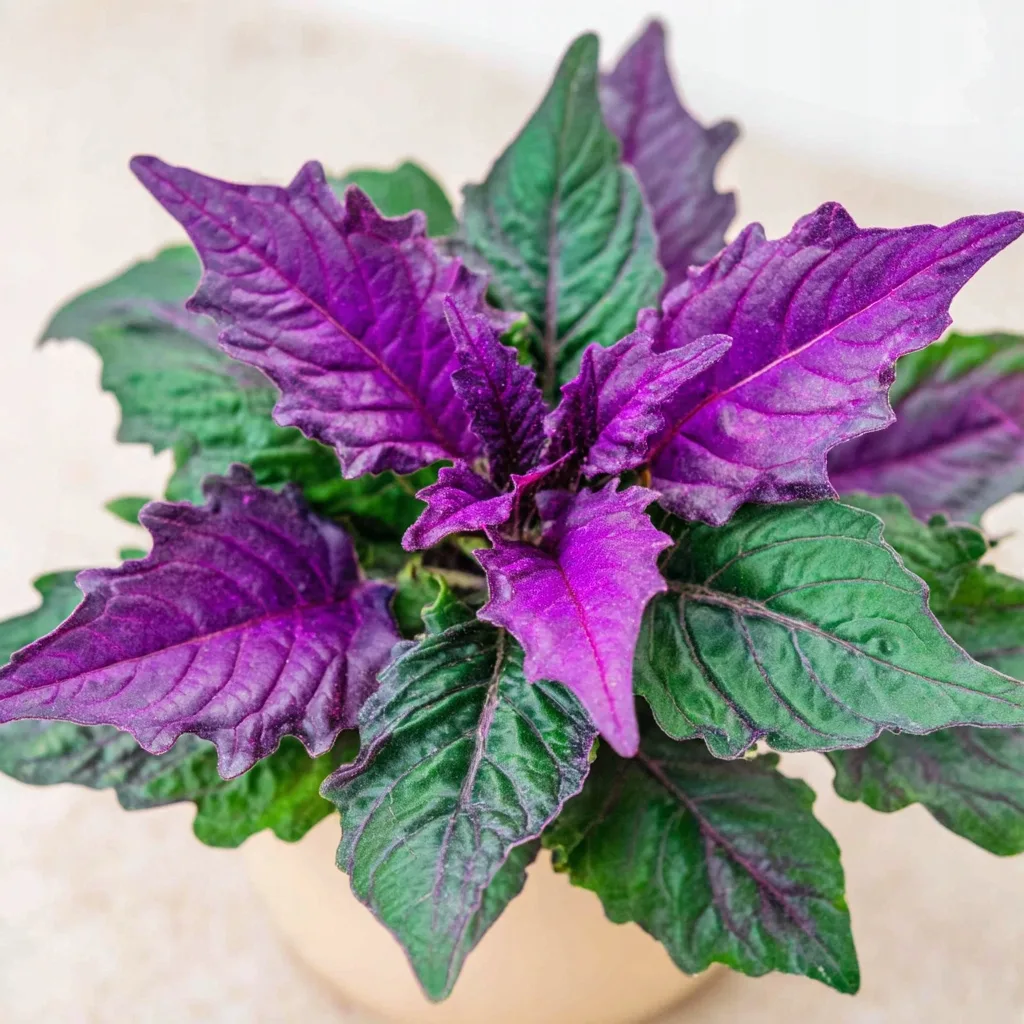
A species of evergreen perennial grown primarily as houseplants, with dark green leaves and stems which are both clothed in bright purple hairs, especially on the undersides. Plants can grow upwards or recline against other objects. Flower heads have yellow, orange or red discs and have a strong odour but they do not produce ray flowers. These appear mostly in winter
Scientific classification
- Species
- purple velvet plant (Gynura aurantiaca)
- Genus
- Gynura
- Family
- Asteraceae
- Order
- Asterales
- Class
- Magnoliopsida
- Phylum
- Tracheophyta
- Information to be completed
- Toxicity
- Conservatory Greenhouse · Houseplants
- Plant type
- 0.1-0.5 metres
- Height
- 0.5-1 metres
- Spread
- Evergreen
- Foliage
- Climbing · Columnar upright
- Habit
- Spring · Summer · Autumn · Winter
- Season of interest
- Partial shade
- Sunlight
- 18 – 27 °C
- Ideal temperature









purple velvet plant pictures
purple velvet plant care guide
- Moderate regular watering, avoid prolonged drought or waterlogging
- Watering
- Partial shade
- Sunlight
- 18 – 27 °C
- Ideal temperature

Watering
Moderate regular watering, avoid prolonged drought or waterlogging
Fertilizing
 Fertilizing
Balanced feed in spring and light repeat in growth season
Pruning
 Pruning
No pruning required. Cut in spring or summer if plant becomes too large
Propagation
 Propagation
Propagate by softwood cuttings in late spring, or semi-ripe cuttings in summer, both with bottom heat
Growing
 Growing
Grow indoors in a loam-based potting compost in bright, filtered light. Train up a support, or pinch out shoots to keep more compact and encourage new shoots
Common pests and diseases
Diseases
Generally disease-free
Pests
May be susceptible to aphids and glasshouse red spider mite
Explore the plant health library →




