



Planting and Growing Sabra spike sage

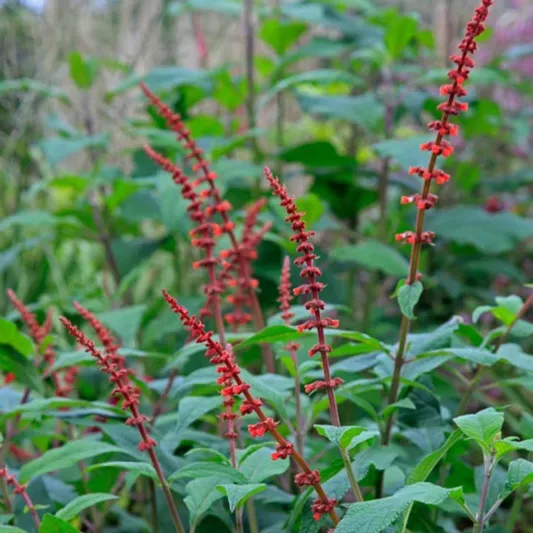
| Care difficulty | 3 / 5 |
|---|---|
| Watering schedule | Water moderately, let upper soil dry between waterings |
| Sunlight requirements | Full sun |
| Ideal temperature | Information to be completed |
| Soil type | Chalk · Loam · Sand |
| Soil pH | Acid · Alkaline · Neutral |
| Soil moisture | Well drained |
| Fertilizing | Light balanced feed in spring and during bloom flush |
| Toxicity | Information to be completed |
How to Water Sabra spike sage?
Water moderately, let upper soil dry between waterings
Learn more →What Are the Sunlight Requirements for Sabra spike sage?
Full sun
Learn more →What Soil Is Best for Sabra spike sage?
- Soil type
- Chalk · Loam · Sand
- Soil pH
- Acid · Alkaline · Neutral
What Are the Moisture Requirements for Sabra spike sage?
Well drained
Learn more →How to Fertilize Sabra spike sage?

Light balanced feed in spring and during bloom flush
Learn more →How to Prune Sabra spike sage?

Prune lightly as needed to remove unwanted shoots and keep the shrub in shape. Prune in mid- to late spring.
Learn more →How to Propagate Sabra spike sage?

Propagate by seed in containers in a cold frame in spring. Propagate by softwood cuttings in spring or early summer or semi-ripe cuttings in late summer or autumn with bottom heat
Learn more →How to Plant Sabra spike sage?
Under glass grow in well-drained, loamless or loam-based potting compost (JI No.2 or 3) in full light with shade from hot sun; can be moved outdoors during the summer months
Learn more →Common Pests & Diseases

Diseases
May be susceptible to honey fungus (rarely), powdery mildews, verticillium wilt and foot and root rots
Pests
May be susceptible to aphids, glasshouse red spider mite, glasshouse whitefly; outdoors may be attacked by slugs and snails, capsid bug, rosemary beetle and leafhoppers
Explore the plant health library →