



Planting and Growing Pink Champagne Echeveria

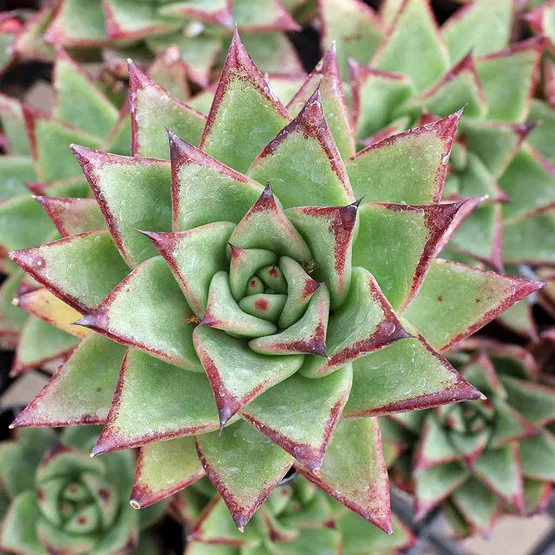
| Care difficulty | 2 / 5 |
|---|---|
| Watering schedule | Soak and dry method; water thoroughly when soil is dry |
| Sunlight requirements | Full sun · Bright indirect light |
| Ideal temperature | Information to be completed |
| Soil type | Sand · Loam |
| Soil pH | Neutral |
| Soil moisture | Well-drained · Dry between watering |
| Fertilizing | Monthly with diluted fertilizer during growing season |
| Toxicity | Non-toxic to humans and pets, but ingestion may cause mild digestive discomfort. |
How to Water Pink Champagne Echeveria?
Soak and dry method; water thoroughly when soil is dry
Learn more →What Are the Sunlight Requirements for Pink Champagne Echeveria?
Full sun · Bright indirect light
Learn more →What Soil Is Best for Pink Champagne Echeveria?
- Soil type
- Sand · Loam
- Soil pH
- Neutral
What Are the Moisture Requirements for Pink Champagne Echeveria?
Well-drained · Dry between watering
Learn more →How to Fertilize Pink Champagne Echeveria?

Monthly with diluted fertilizer during growing season
Learn more →How to Prune Pink Champagne Echeveria?

Remove spent flower stalks after blooming to maintain neat appearance. Trim off any dead or damaged lower leaves as needed.
Learn more →How to Propagate Pink Champagne Echeveria?

Propagate by leaf cuttings or offsets. Gently twist a healthy leaf from the rosette, allow the cut end to callus for 2–3 days, then place on dry succulent mix. Roots and a new rosette will form in 2–4 weeks at 18–24°C. Offsets can be separated when they reach about 2 cm in diameter and potted individually.
Learn more →How to Plant Pink Champagne Echeveria?
Grow in bright, indirect light to full sun; protect from intense midday sun in summer to prevent leaf scorch. Use a very well-drained cactus or succulent potting mix. Water thoroughly only when the soil is completely dry, then allow to drain fully; reduce watering in winter. Apply a balanced liquid fertilizer diluted to half-strength once a month during the growing season. Avoid water on the rosette to prevent rot. In cool climates, bring indoors or keep in a frost-free greenhouse during winter.
Learn more →Common Pests & Diseases

Diseases
Susceptible to root rot if overwatered or kept in poorly drained soil. Foliar fungal spots can occur in humid, poorly ventilated conditions.
Pests
Mealybugs and aphids may occasionally infest the leaf axils or roots. Regular inspection and treatment with insecticidal soap or neem oil are effective.
Explore the plant health library →The Toxicity of Pink Champagne Echeveria
Non-toxic to humans and pets, but ingestion may cause mild digestive discomfort.