



Planting and Growing silver spoons

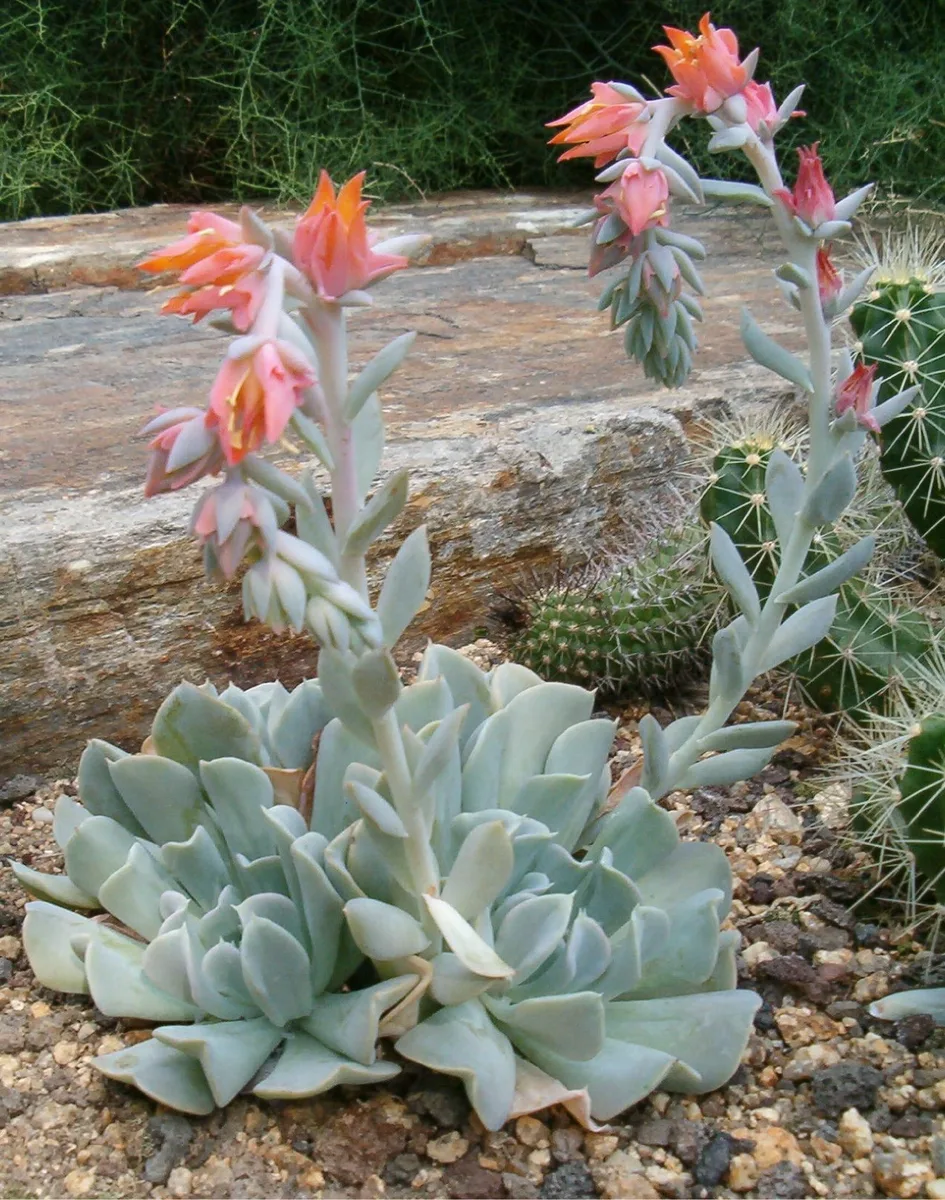
| Care difficulty | 2 / 5 |
|---|---|
| Watering schedule | Water thoroughly then let soil dry out completely |
| Sunlight requirements | Full sun |
| Ideal temperature | 18 – 28 °C |
| Soil type | Loam · Sand |
| Soil pH | Acid · Alkaline · Neutral |
| Soil moisture | Well drained |
| Fertilizing | Very dilute low nitrogen feed during warm growth only |
| Toxicity | Information to be completed |
How to Water silver spoons?
Originating from arid regions, echeveria runyonii has evolved to store water in its succulent leaves, showcasing a remarkable drought tolerance. This species thrives with minimal moisture and prefers a dry environment. The watering schedule for echeveria runyonii should be sparse, aligning with once every 2-3 weeks to mimic its natural dry habitat conditions. As an evergreen plant, echeveria runyonii retains its foliage year-round, requiring less frequent watering during cooler months when evaporation rates are lower.
Learn more →What Are the Sunlight Requirements for silver spoons?
Echeveria runyonii flourishes in full sun with plentiful light exposure, which is critical for its vibrant growth and rich color expression. Optimal conditions involve direct sunlight for at least six hours a day. Though adaptable to partial sun, insufficient light may result in leggy stems and faded foliage. Echeveria runyonii demonstrates resilience in variable light but prefers a sun-drenched setting. Outdoors, echeveria runyonii should be positioned in a location that receives ample morning sunlight and is protected from harsh afternoon rays. Proper light exposure encourages compact growth and enhances the plant’s innate tendency for brilliant leaf hues.
Learn more →What Is the Ideal Temperature Range for silver spoons?

Echeveria runyonii is resilient to a wide range of temperatures, tolerating down to 0℃ (32℉) and up to 43℃ (109℉). Its ability to withstand cold and heat extremes makes it adaptable to various environments. Care considerations include sheltering from frost and high heat periods. Cold damage may present as leaf discoloration or tissue mushiness, while overheating can cause leaf scorch or desiccation. To counter extreme cold, use frost cloths or move indoors; in heat, provide shade and adequate water. Understanding echeveria runyonii's temperature tolerance enhances its successful growth.
Learn more →What Soil Is Best for silver spoons?
Echeveria runyonii thrives in well-draining soil to prevent water-logging. A suitable mix includes 1 part potting soil to 1 part coarse sand or perlite and 1 part peat to ensure aeration. If peat is unavailable, use coconut coir. To enhance growth, incorporate slow-release fertilizer at planting and biannually thereafter. Monitor drainage and adjust the coarse material ratio if necessary.
- Soil type
- Loam · Sand
- Soil pH
- Acid · Alkaline · Neutral
What Are the Moisture Requirements for silver spoons?
Well drained
Learn more →How to Fertilize silver spoons?

For echeveria runyonii, use a balanced, water-soluble Succulents and Cacti Food, diluted to half the recommended strength. Fertilize monthly during the growing season, spring through early fall, reducing to every other month in winter for dormancy. The goal is to support robust growth and potential blooms. Apply directly to the soil, avoiding leaves to prevent burn. Over-fertilization can damage echeveria runyonii, so adhere strictly to the suggested regimen, considering its slow growth nature. With varying seasons, adjust the feed to match growth stages, less in colder months. Always water echeveria runyonii before fertilizing to avoid root shock.
Learn more →How to Prune silver spoons?

In order to keep a beautiful shape, large succulent plants may need pruning. For example, for echeveria planted in the garden, redundant branches or branches that are too dense need to be cut off in spring and fall. This depends on the plant's purpose and your preference. Tools for pruning mainly include knives, scissors, and some medicines (such as sulfur powder). In order to propagate new plants, cut some leaves in spring and fall. Select a stout stem with 5-6 leaves. Cut it off with a knife, then smear the wound with sulfur powder, and plant it after the wound is healed. Slightly wet the soil used for planting.
Learn more →How to Propagate silver spoons?

Belonging to the Crassulaceae family, echeveria runyonii is a succulent that easily propagates from cuttings. For successful propagation, take healthy and mature leaf cuttings, ensuring a clean snip at the base. Allow the cutting to callous for a few days to prevent rot when planting. Place the dry end into well-draining soil, provide ample indirect sunlight, and water sparingly to encourage rooting without causing rot. With proper care, new growth will typically emerge in a few weeks, resulting in a clone of the parent plant.
Learn more →How to Transplant silver spoons?
Transplant echeveria runyonii ideally during early to late spring or mid to late fall, as these seasons offer optimal growth conditions. Choose a location with well-draining soil and sunlight exposure. Gently loosen the root ball while transplanting to promote healthy growth.
Learn more →How to Plant silver spoons?
Indoors-potted: Ensure echeveria runyonii has ample space to accommodate its rosette spread indoors, allowing it to flourish with its stunning foliage. Outdoors-potted: Echeveria runyonii's need for free-draining pots is crucial outdoors; this prevents root rot and encourages vibrant growth. Outdoors-in the ground: While planting echeveria runyonii in the ground, consider spacing to provide sufficient room for their sprawling nature and optimal leaf development.
Learn more →How to Repot silver spoons?
Repot echeveria runyonii every 2 years to accommodate its growth as a compact, rosette-forming succulent. The best time is spring, when its active growth phase begins. Use a container slightly larger than its current size, ensuring it has good drainage. Post-repotting, provide bright, indirect light and resume watering after a week to prevent root rot and allow acclimation.
Learn more →Common Pests & Diseases

Diseases
Generally disease-free
Pests
May be susceptible to mealybugs, vine weevil and aphids
Explore the plant health library →Troubleshooting
Soft Basal Rot or Splitting Leaves vs. Wrinkled Dehydration
silver spoons (Echeveria runyonii) stores water in fleshy leaves or stems and depends on sharply drained mineral compost; excess moisture in cool or dormant periods quickly causes rot or split tissues.
| What you notice | Possible explanation | What to check next |
|---|---|---|
| Base of stem or lower leaves turns dark brown/black, soft, and translucent while soil stays damp | Root or stem rot from overwatering, heavy compost, or watering during dormancy | Check pot drainage holes, inspect lower soil wetness, and test base firmness gently |
| Fleshy leaves or stems look wrinkled, deflated, or limp while gritty soil is bone dry during active growth | Underwatering as the plant draws on stored tissue moisture | Check deep soil dryness and confirm seasonal growth activity |
- Pot in a sharply drained cactus/succulent compost (amended with pumice, coarse sand, grit, or perlite) in a container with open drainage holes.
- Follow seasonal moisture cues: Water thoroughly then let soil dry out completely.
- If rot develops at the base, cut away healthy upper stems or offsets with a sterilized blade, let cut ends dry and callous for several days, and root in fresh gritty mix.
Stop watering immediately if soft black rot spreads from the base, and discard rotted tissues and wet old soil.
Etiolated Growth or Mealybugs, Scale, and Spider Mites
Insufficient direct sunlight stretches new growth and dulls natural coloration in silver spoons (Echeveria runyonii), while mealybugs, root mealybugs, and scale often shelter in leaf axils or roots.
| What you notice | Possible explanation | What to check next |
|---|---|---|
| New growth stretches pale green with wide internodes instead of staying compact and richly colored | Insufficient bright light | Evaluate daily hours of direct or bright filtered light at the current site |
| White cottony tufts, sticky honeydew, or hard brown bumps along stems, leaf bases, or roots | Sap-sucking pests (May be susceptible to mealybugs, vine weevil and aphids) | Inspect stem junctions, leaf undersides, and the soil line closely |
- Acclimate gradually to full sun so new growth develops compact form and natural coloration without sudden sunburn.
- Isolate infested plants and dab visible mealybugs or scale with rubbing alcohol on a cotton swab, or apply insecticidal soap per label directions.
- Protect frost-tender plants indoors or under cover before freezing weather arrives.
Already stretched stems will not shrink back, though compact healthy growth will resume once bright light is restored.