



Planting and Growing Solanum crispum 'Elizabeth Jane Dunn'

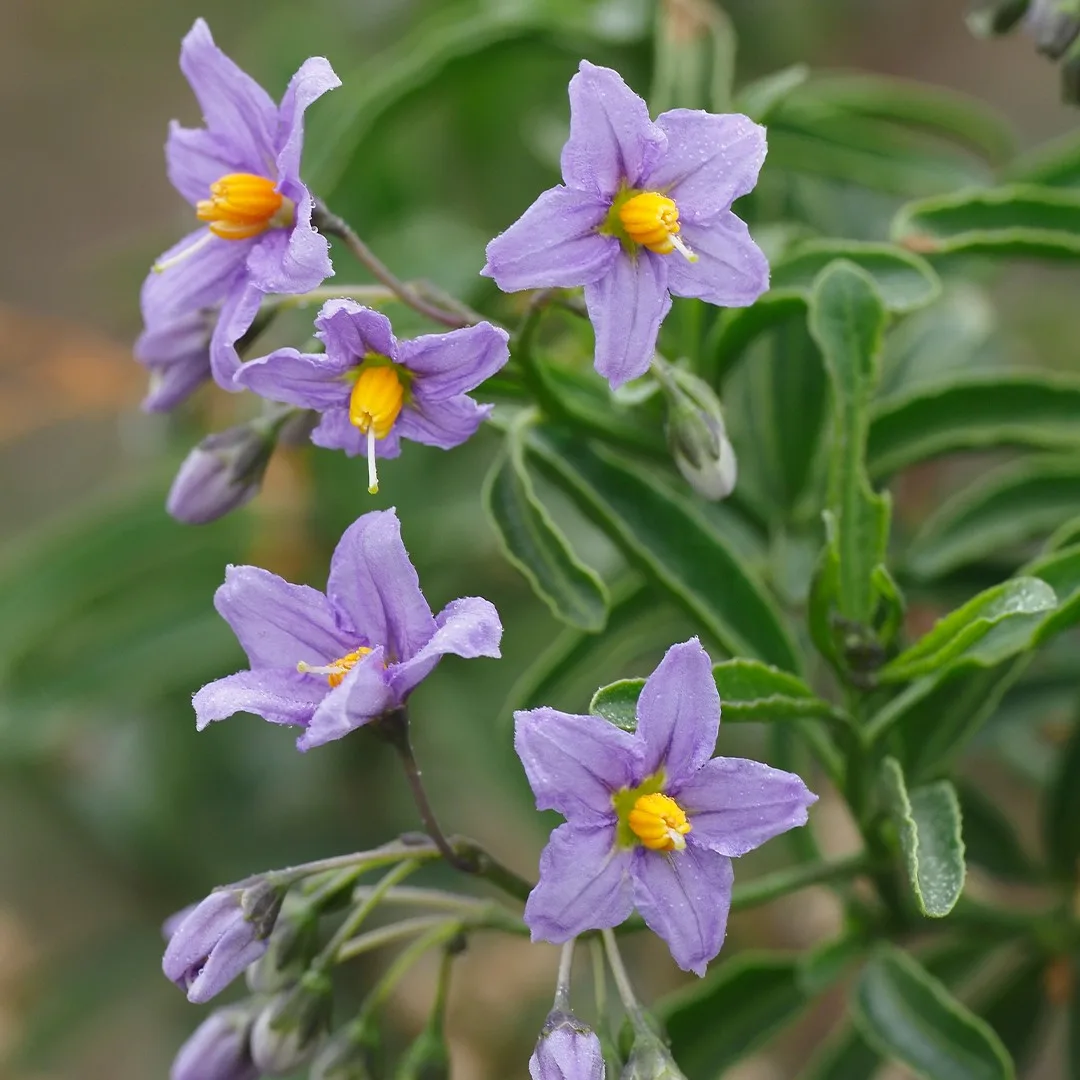
| Care difficulty | 2 / 5 |
|---|---|
| Watering schedule | Water thoroughly when top substrate slightly dries out each time |
| Sunlight requirements | Full sun |
| Ideal temperature | Information to be completed |
| Soil type | Chalk · Clay · Loam · Sand |
| Soil pH | Acid · Alkaline · Neutral |
| Soil moisture | Moist but well drained |
| Fertilizing | Diluted blooming vine feed every three weeks warm growing months |
| Toxicity | Information to be completed |
How to Water Solanum crispum 'Elizabeth Jane Dunn'?
Water thoroughly when top substrate slightly dries out each time
Learn more →What Are the Sunlight Requirements for Solanum crispum 'Elizabeth Jane Dunn'?
Full sun
Learn more →What Soil Is Best for Solanum crispum 'Elizabeth Jane Dunn'?
- Soil type
- Chalk · Clay · Loam · Sand
- Soil pH
- Acid · Alkaline · Neutral
What Are the Moisture Requirements for Solanum crispum 'Elizabeth Jane Dunn'?
Moist but well drained
Learn more →How to Fertilize Solanum crispum 'Elizabeth Jane Dunn'?

Diluted blooming vine feed every three weeks warm growing months
Learn more →How to Prune Solanum crispum 'Elizabeth Jane Dunn'?

On established plants, shorten sideshoots to three or four buds from the permanent framework; remove crowded or damaged shoots. Prune after flowering has finished.
Learn more →How to Propagate Solanum crispum 'Elizabeth Jane Dunn'?

Propagate by semi-hardwood cuttings
Learn more →How to Plant Solanum crispum 'Elizabeth Jane Dunn'?
Grow outdoors in moist but well-drained fertile soil in full sun. Support plants and tie in regularly. Grow under glass, in a cool conservatory or greenhouse, in loam-based compost in bright light
Learn more →Common Pests & Diseases

Diseases
May be susceptible to honey fungus (rarely), tomato spotted wilt and grey moulds
Pests
May be susceptible to aphids and glasshouse red spider mite
Explore the plant health library →