



Planting and Growing clematis 'Warwickshire Rose'

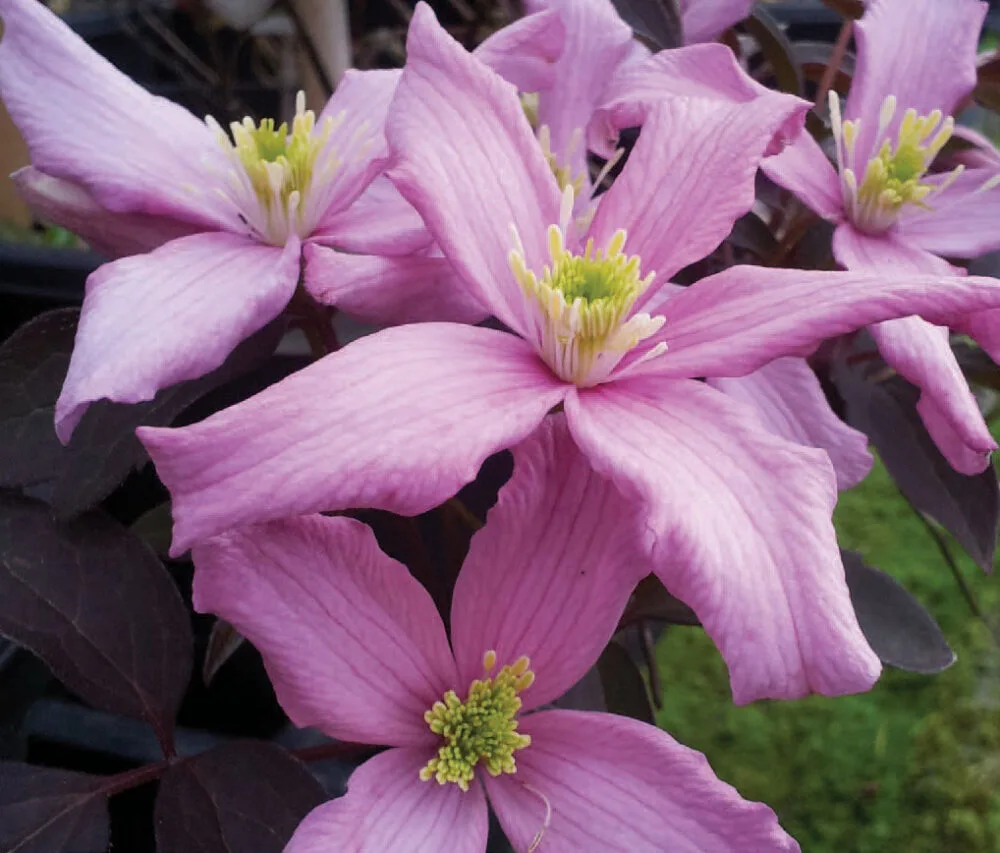
| Care difficulty | 2 / 5 |
|---|---|
| Watering schedule | Deep regular watering, keeping roots cool and never chronically dry |
| Sunlight requirements | Full sun · Partial shade |
| Ideal temperature | Information to be completed |
| Soil type | Chalk · Clay · Loam · Sand |
| Soil pH | Acid · Alkaline · Neutral |
| Soil moisture | Moist but well drained |
| Fertilizing | Balanced clematis feed monthly in spring, higher potash before bloom |
| Toxicity | Skin irritant. Wear gloves and other protective equipment when handling |
How to Water clematis 'Warwickshire Rose'?
Deep regular watering, keeping roots cool and never chronically dry
Learn more →What Are the Sunlight Requirements for clematis 'Warwickshire Rose'?
Full sun · Partial shade
Learn more →What Soil Is Best for clematis 'Warwickshire Rose'?
- Soil type
- Chalk · Clay · Loam · Sand
- Soil pH
- Acid · Alkaline · Neutral
What Are the Moisture Requirements for clematis 'Warwickshire Rose'?
Moist but well drained
Learn more →How to Fertilize clematis 'Warwickshire Rose'?

Balanced clematis feed monthly in spring, higher potash before bloom
Learn more →How to Prune clematis 'Warwickshire Rose'?

Pruning (clematis) group 2
Learn more →How to Propagate clematis 'Warwickshire Rose'?

Propagate by softwood cuttings in spring, semi-ripe cuttings in summer, or by layering in late winter or early spring
Learn more →How to Plant clematis 'Warwickshire Rose'?
Plant in a moisture-retentive, well-drained soil, with the roots and base of the plant kept cool and shaded by other plants or a layer of pebbles at the base. See clematis cultivation for more advice
Learn more →Common Pests & Diseases

Diseases
May be susceptible to honey fungus (rarely), clematis wilt and clematis slime flux
Pests
May be susceptible to aphids. Cutworms and voles may cut young stems
Explore the plant health library →The Toxicity of clematis 'Warwickshire Rose'
Skin irritant. Wear gloves and other protective equipment when handling