



Planting and Growing aubergine 'Pingtung Long'

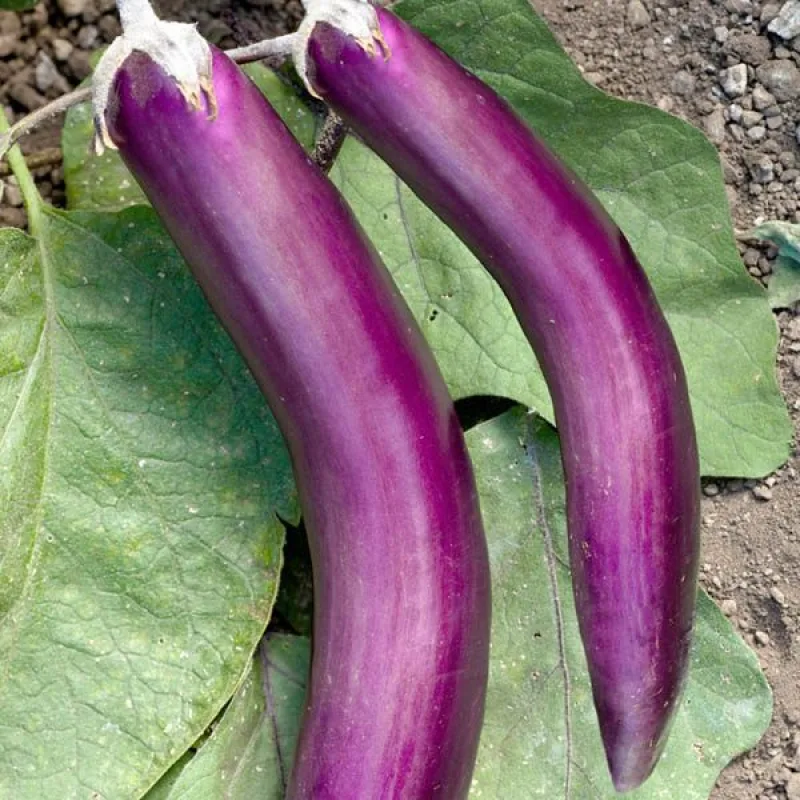
| Care difficulty | 3 / 5 |
|---|---|
| Watering schedule | Even moisture throughout flowering and fruit set, avoid sharp drought swings |
| Sunlight requirements | Full sun |
| Ideal temperature | Information to be completed |
| Soil type | Loam · Sand |
| Soil pH | Acid · Alkaline · Neutral |
| Soil moisture | Moist but well drained |
| Fertilizing | Tomato or pepper feed every one to two weeks fruiting season |
| Toxicity | Information to be completed |
How to Water aubergine 'Pingtung Long'?
Even moisture throughout flowering and fruit set, avoid sharp drought swings
Learn more →What Are the Sunlight Requirements for aubergine 'Pingtung Long'?
Full sun
Learn more →What Soil Is Best for aubergine 'Pingtung Long'?
- Soil type
- Loam · Sand
- Soil pH
- Acid · Alkaline · Neutral
What Are the Moisture Requirements for aubergine 'Pingtung Long'?
Moist but well drained
Learn more →How to Fertilize aubergine 'Pingtung Long'?

Tomato or pepper feed every one to two weeks fruiting season
Learn more →How to Prune aubergine 'Pingtung Long'?

Pinch out the growing tip when the plant has reached about 30cm high to encourage branching
Learn more →How to Propagate aubergine 'Pingtung Long'?

Propagate by seed. See sowing vegetable seeds or sowing seeds indoors for further advice
Learn more →How to Plant aubergine 'Pingtung Long'?
Can be grown outdoors in a sunny, sheltered position in mild areas, or in a in a greenhouse or tall growing-frame in colder areas. Start from seed or buy as small plants and grow on in a heated greenhouse or on a warm windowsill. Move to an unheated greenhouse or outside once all risk of frost has passed. Water regularly and feed every 10-14 days with a balanced liquid fertiliser, switching to a high potassium liquid feed once the first fruits have set. See aubergine cultivation
Learn more →Common Pests & Diseases

Diseases
May be susceptible to honey fungus (rarely)
Pests
May be susceptible to glasshouse whitefly, aphids and glasshouse red spider mite
Explore the plant health library →