



Planting and Growing white-flowered chives

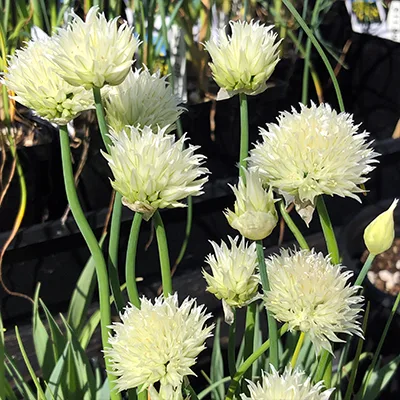
| Care difficulty | 1 / 5 |
|---|---|
| Watering schedule | Water moderately in growth, keep drier after flowering |
| Sunlight requirements | Full sun · Partial shade |
| Ideal temperature | Information to be completed |
| Soil type | Chalk · Clay · Loam · Sand |
| Soil pH | Acid · Alkaline · Neutral |
| Soil moisture | Moist but well drained |
| Fertilizing | Light bulb feed in spring before flowering |
| Toxicity | Information to be completed |
How to Water white-flowered chives?
Water moderately in growth, keep drier after flowering
Learn more →What Are the Sunlight Requirements for white-flowered chives?
Full sun · Partial shade
Learn more →What Soil Is Best for white-flowered chives?
- Soil type
- Chalk · Clay · Loam · Sand
- Soil pH
- Acid · Alkaline · Neutral
What Are the Moisture Requirements for white-flowered chives?
Moist but well drained
Learn more →How to Fertilize white-flowered chives?

Light bulb feed in spring before flowering
Learn more →How to Prune white-flowered chives?

No pruning required, except cutting the leaves for eating, preferably with scissors, and deadheading
Learn more →How to Propagate white-flowered chives?

Propagate by seed (may not come true if non-white chives are growing nearby) or by division during spring or autumn into groups of 5 or 6 plants, and replant at spacings of 20-30cm
Learn more →How to Plant white-flowered chives?
Grow in full sun or partial shade; for edible leaves, grow in moist but well-drained medium soil, while for flowers, grow in lighter and drier soil. May have the potential to become a nuisance if not managed well. See chive cultivation for further advice
Learn more →Common Pests & Diseases

Diseases
May be susceptible to onion white rot and onion downy mildew
Pests
May be susceptible to allium leaf miner and onion fly
Explore the plant health library →