



Planting and Growing Asparagus officinalis 'Pacific Purple'

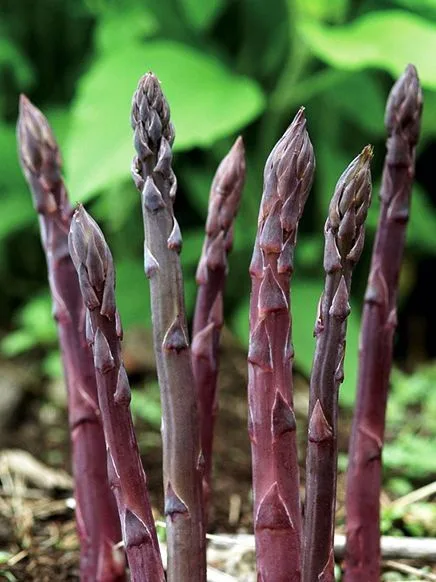
| Care difficulty | 3 / 5 |
|---|---|
| Watering schedule | Moderate regular watering, avoid prolonged drought and stagnant waterlogging |
| Sunlight requirements | Full sun |
| Ideal temperature | Information to be completed |
| Soil type | Chalk · Clay · Loam · Sand |
| Soil pH | Alkaline · Neutral |
| Soil moisture | Well drained |
| Fertilizing | Balanced perennial feed every four weeks spring through summer growth |
| Toxicity | Skin allergen, fruits harmful if eaten. Wear gloves and other protective equipment when handling] |
How to Water Asparagus officinalis 'Pacific Purple'?
Moderate regular watering, avoid prolonged drought and stagnant waterlogging
Learn more →What Are the Sunlight Requirements for Asparagus officinalis 'Pacific Purple'?
Full sun
Learn more →What Soil Is Best for Asparagus officinalis 'Pacific Purple'?
- Soil type
- Chalk · Clay · Loam · Sand
- Soil pH
- Alkaline · Neutral
What Are the Moisture Requirements for Asparagus officinalis 'Pacific Purple'?
Well drained
Learn more →How to Fertilize Asparagus officinalis 'Pacific Purple'?

Balanced perennial feed every four weeks spring through summer growth
Learn more →How to Prune Asparagus officinalis 'Pacific Purple'?

Cut a few spears, if any at all, in the first two years to allow the plant to build up strength. Cut the foliage when yellowed to 2.5cm above the soil
Learn more →How to Propagate Asparagus officinalis 'Pacific Purple'?

Propagate by crowns. Although propagation by seed is possible, it is not advisable as seedlings take longer, and may not be male cultivars which produce better plants
Learn more →How to Plant Asparagus officinalis 'Pacific Purple'?
Grow in moderately fertile, well drained soil in full sun. Plant one year old crowns or sow seed direct between March and April. Do not harvest in first year, half-harvest in second year and take a full harvest in the third year. See vegetable cultivation
Learn more →Common Pests & Diseases

Diseases
May be susceptible to foot and root rot
Pests
May be susceptible to asparagus beetle and slugs and snails
Explore the plant health library →The Toxicity of Asparagus officinalis 'Pacific Purple'
Skin allergen, fruits harmful if eaten. Wear gloves and other protective equipment when handling]