



Planting and Growing fern asparagus



| Care difficulty | 3 / 5 |
|---|---|
| Watering schedule | Keep soil slightly moist, increase water in summer |
| Sunlight requirements | Partial shade |
| Ideal temperature | 15 – 25 °C |
| Soil type | Chalk · Clay · Loam · Sand |
| Soil pH | Acid · Alkaline · Neutral |
| Soil moisture | Moist but well drained · Well drained |
| Fertilizing | Monthly during growing season |
| Toxicity | Skin allergen, fruits harmful if eaten. Wear gloves and other protective equipment when handling] |
How to Water fern asparagus?
Originating from the humid environments of Africa, common asparagus fern thrives in moisture-rich conditions and exhibits a preference for consistent humidity. This species is moderately drought-tolerant, yet it flourishes when its soil remains slightly moist without becoming waterlogged. Watering every week will sustain its lush appearance. As an evergreen plant, common asparagus fern maintains its verdure year-round, making it a popular choice for indoor greenery where stable humidity levels can be managed to mimic its natural tropical habitat.
Learn more →What Are the Sunlight Requirements for fern asparagus?
Common asparagus fern thrives in partial sun conditions, which allows for moderate light without the harsh exposure of midday sunlight. Although common asparagus fern is adaptable to a wide light spectrum, prolonged periods in full sun could lead to leaf scorch, while excessive shade might cause sparse growth and reduced vigor. In its native environment, common asparagus fern is accustomed to dappled light similar to a forest understory. Indoors, common asparagus fern flourishes near windows with filtered light. Outdoors, common asparagus fern should be positioned to receive morning sunlight with protection from intense afternoon rays. This balance ensures robust growth and preserves the delicate feathery foliage that characterizes common asparagus fern.
Learn more →What Is the Ideal Temperature Range for fern asparagus?

Common asparagus fern demonstrates moderate tolerance to varied temperatures, enduring from 0℃ (32℉) to 43℃ (109℉). While it is relatively resilient, extreme cold can cause leaf browning and drop, and excessive heat may lead to wilting and yellowing of fronds. During cold spells, insulating the plant or moving it indoors is necessary, and in peak heat, ensuring adequate hydration and partial shade is crucial. Such resilience makes common asparagus fern suitable for a range of environments, though care must be tailored to protect from temperature extremes.
Learn more →What Soil Is Best for fern asparagus?
Common asparagus fern thrives in well-draining soil to prevent root rot. A suitable soil mix includes equal parts potting mix and perlite or sand, enhancing aeration and drainage. In the absence of perlite, use coarse gravel. Incorporate slow-release fertilizer at the beginning of the growing season for optimal growth. Regularly check moisture levels, ensuring the soil remains moist but not waterlogged.
- Soil type
- Chalk · Clay · Loam · Sand
- Soil pH
- Acid · Alkaline · Neutral
What Are the Moisture Requirements for fern asparagus?
Moist but well drained · Well drained
Learn more →How to Fertilize fern asparagus?

For optimal growth, fertilize common asparagus fern every two weeks during spring and summer with a high nitrogen fertilizer diluted at half the strength. In fall and winter, reduce to once a month. This regimen boosts foliage density and reinforces common asparagus fern's vigor. Ensure even distribution to avoid root burn and follow the recommended dose to promote healthy growth without overfertilization.
Learn more →How to Prune fern asparagus?

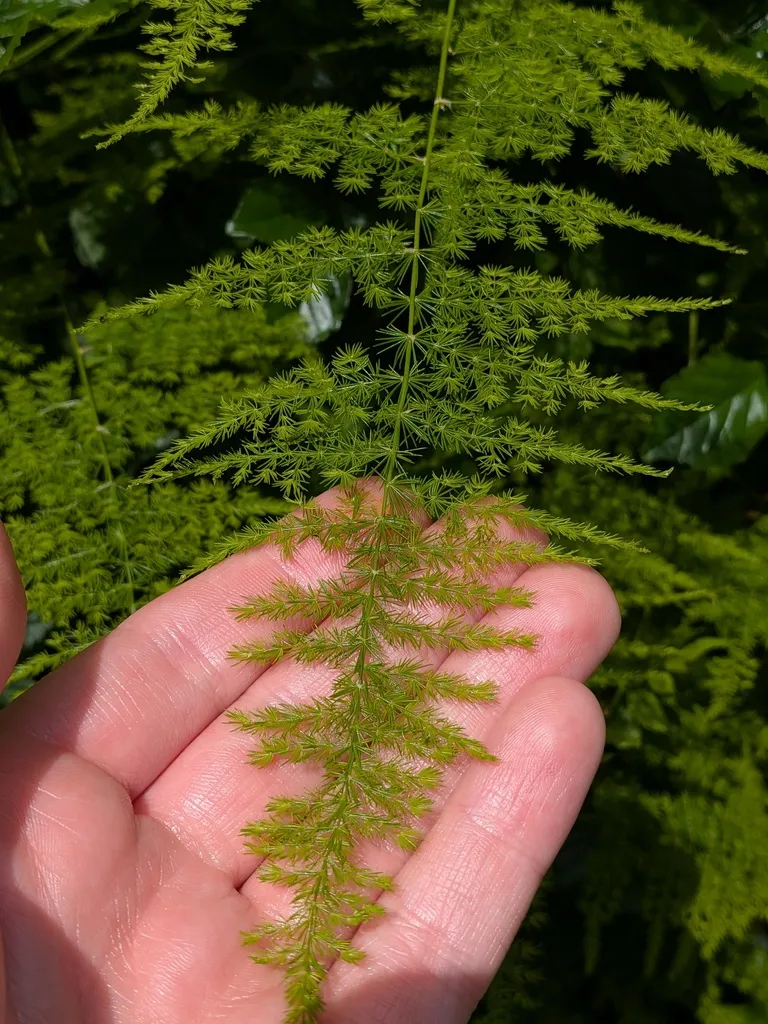
Common asparagus fern is known for its feathery, fern-like foliage. Prune in early spring before new growth appears. Trim dead or yellowing stems and thin dense areas to improve air circulation. Remove any stems invading unwanted areas to control its spread. Pruning supports healthier growth and maintains its aesthetic shape. Regularly check for overcrowded stems, which can lead to pest issues. Refer to reputable horticultural guides for detailed care tips.
Learn more →How to Propagate fern asparagus?

The ideal propagation for common asparagus fern occurs during Spring and Autumn seasons through division. This method has moderate difficulty; success is evident by new shoots appearing. Regular watering aids in successful propagation.
Learn more →How to Transplant fern asparagus?
The perfect time to transplant common asparagus fern is at the dawn of the growing season, between early to mid-spring, when the temperatures are mild. Choose a partially shaded location, ensuring it has well-draining soil. Remember, a gentle touch is crucial during transplant to protect delicate roots.
Learn more →How to Care for fern asparagus in Winter?

Common asparagus fern hails from South Africa's warm temperatures, accustomed to mild winters. However, it has proven resilience, tolerating frost down to -5°C. Its lace-like fronds may yellow in freezing conditions, reflecting its tropical roots. For winter care, gardeners should consider a sheltered position or indoor placement, ensuring a moderate and consistent environment. Regular watering, avoiding waterlogging, and bright, indirect light is key to help common asparagus fern thrive through the winter months.
Learn more →How to Plant fern asparagus?
Indoors-potted: Keep your common asparagus fern in a spot where it can bask in the glow of your home's ambient light; this green friend thrives on consistent warmth and gentle rays. Outdoors-potted: When potted outside, your common asparagus fern enjoys a sheltered nook. Beware of harsh conditions as its delicate fronds prefer a kinder environment. Outdoors-in the ground: In the garden soil, common asparagus fern flourishes under a canopy of trees that mimic its natural habitat, offering protection and dappled light.
Learn more →How to Repot fern asparagus?
Repotting common asparagus fern is ideal every 2-3 years as it is a climbing plant that can reach extensive lengths. Springtime, before active growth, offers the best outcomes. Choose a pot that’s one size larger to accommodate root expansion. Post-repotting, ensure bright indirect light and keep the soil moist to support recovery. Remember common asparagus fern's preference for slightly cramped conditions, so don't over-pot.
Learn more →How to Harvest fern asparagus?

Information to be completed
Learn more →Common Pests & Diseases

Diseases
Generally disease-free
Pests
May be susceptible to asparagus beetle, slugs and snails
Explore the plant health library →The Toxicity of fern asparagus
Skin allergen, fruits harmful if eaten. Wear gloves and other protective equipment when handling]