
fern asparagus
Also known as: asparagus fern; feathery asparagus; lace fern
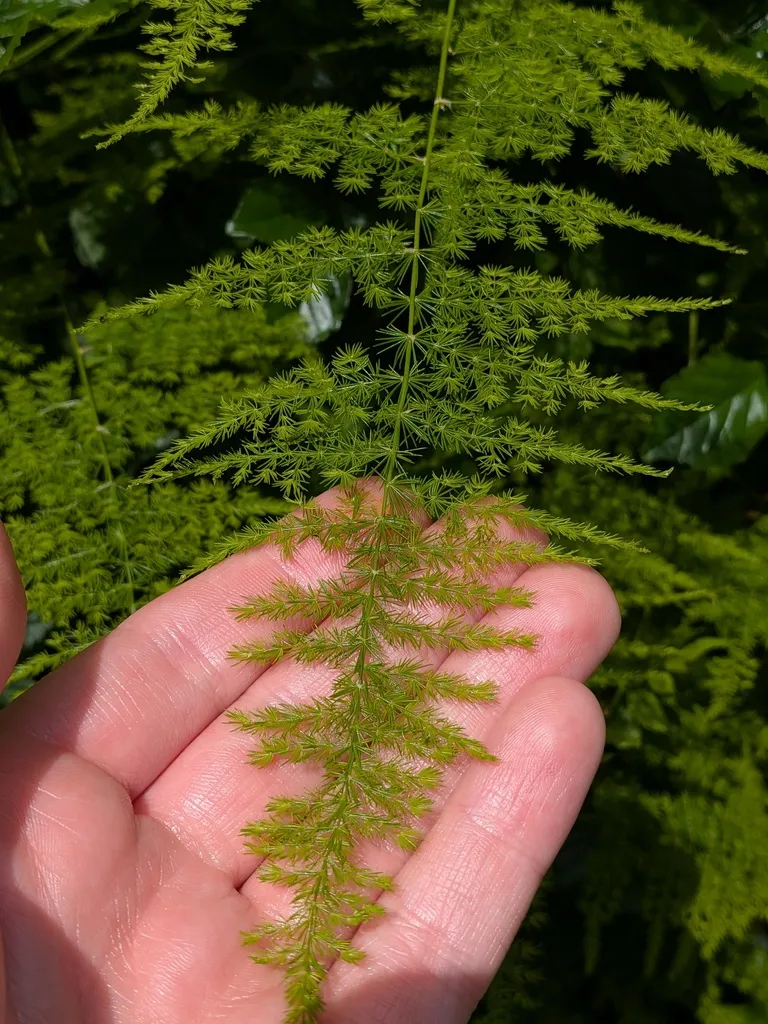
A bushy tuberous perennial developing twining stems to 2.5m tall, with fine feathery bright green foliage, small white flowers and deep purple berries
Scientific classification
- Species
- fern asparagus (Asparagus setaceus)
- Genus
- Asparagus
- Family
- Asparagaceae
- Skin allergen, fruits harmful if eaten. Wear gloves and other protective equipment when handling]
- Toxicity
- Climber Wall Shrub · Conservatory Greenhouse
- Plant type
- 1.5-2.5 metres
- Height
- 0.1-0.5 metres
- Spread
- Evergreen
- Foliage
- Climbing
- Habit
- Spring · Summer · Autumn · Winter
- Season of interest
- Partial shade
- Sunlight
- 15 – 25 °C
- Ideal temperature









fern asparagus pictures


Distribution of fern asparagus
Distribution map
South and East Africa
Information to be completed
Culture
Information to be completed
Toxicity
Skin allergen, fruits harmful if eaten. Wear gloves and other protective equipment when handling]
Quick identification of fern asparagus
Information to be completed
fern asparagus care guide
- Keep soil slightly moist, increase water in summer
- Watering
- Partial shade
- Sunlight
- 15 – 25 °C
- Ideal temperature

Watering
Keep soil slightly moist, increase water in summer
Fertilizing
 Fertilizing
Monthly during growing season
Pruning
 Pruning
No pruning required
Propagation
 Propagation
Propagate by seed in autumn or early spring, germinate at 16°C (61°F). Divide in early spring
Growing
 Growing
Under glass grow in a loam based potting compost such as John Innes No.2 in bright filtered light sheltered from hot sun. Keep frost free. Water freely from spring to mid-autumn; water more sparingly in winter. Pot on in spring. Provide support
People also ask
Information to be completed
Common pests and diseases
Diseases
Generally disease-free
Pests
May be susceptible to asparagus beetle, slugs and snails
Explore the plant health library →




