



Planting and Growing taro 'Mojito'

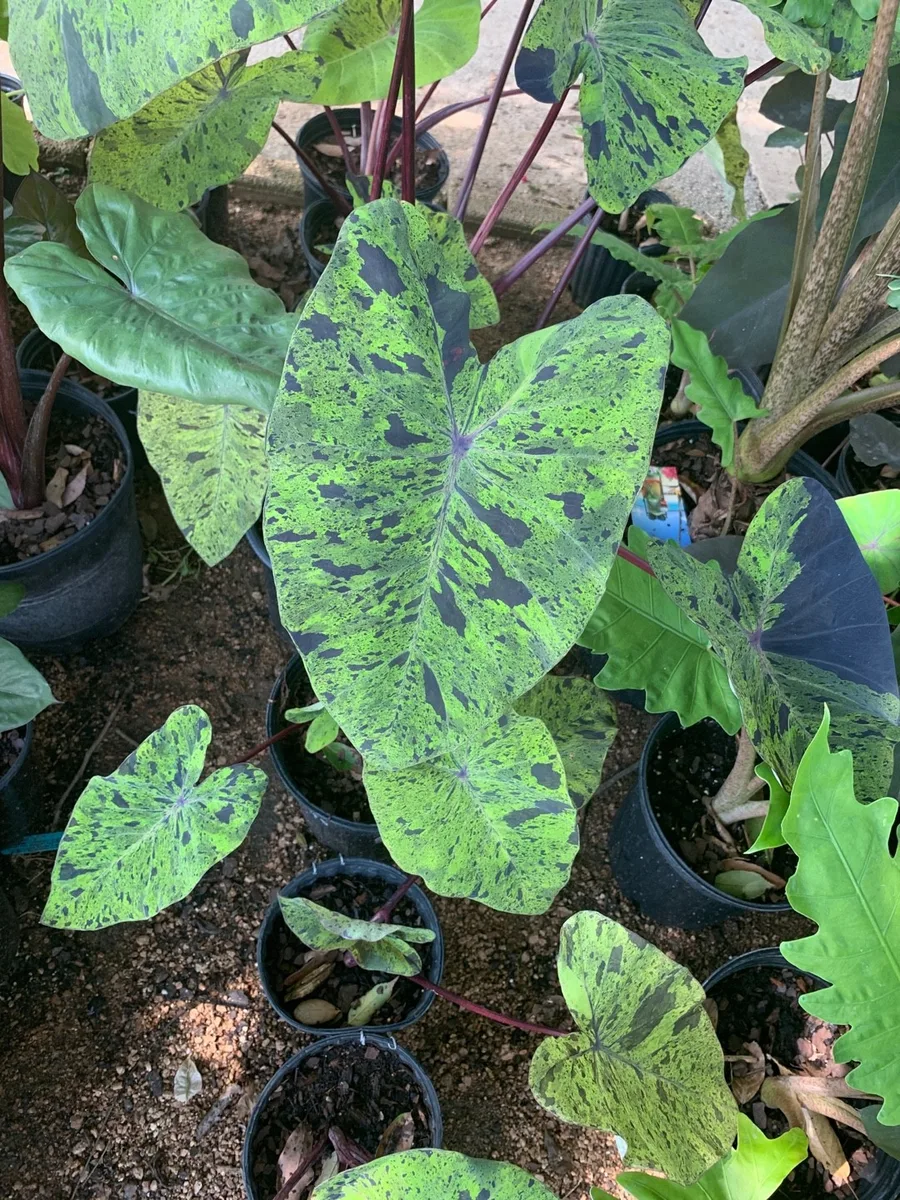
| Care difficulty | 3 / 5 |
|---|---|
| Watering schedule | Keep soil persistently moist, add extra water in warm weather |
| Sunlight requirements | Full sun · Partial shade |
| Ideal temperature | Information to be completed |
| Soil type | Loam · Sand |
| Soil pH | Acid · Alkaline · Neutral |
| Soil moisture | Moist but well drained |
| Fertilizing | Diluted tropical foliage feed monthly spring to fall period |
| Toxicity | Harmful if eaten, skin/eye irritant. Wear gloves and other protective equipment when handling] |
How to Water taro 'Mojito'?
Keep soil persistently moist, add extra water in warm weather
Learn more →What Are the Sunlight Requirements for taro 'Mojito'?
Full sun · Partial shade
Learn more →What Soil Is Best for taro 'Mojito'?
- Soil type
- Loam · Sand
- Soil pH
- Acid · Alkaline · Neutral
What Are the Moisture Requirements for taro 'Mojito'?
Moist but well drained
Learn more →How to Fertilize taro 'Mojito'?

Diluted tropical foliage feed monthly spring to fall period
Learn more →How to Prune taro 'Mojito'?

No pruning required
Learn more →How to Propagate taro 'Mojito'?

Propagate by division of rhizomes
Learn more →How to Plant taro 'Mojito'?
Plant tubers in a large pot of humus-rich compost in warm conditions in early spring. In early summer the pot can be positioned in a sunny or lightly shaded spot outdoors, with shelter from strong winds. Water freely when the plant comes into growth and apply a high nitrogen feed weekly. Either move the pot into a greenhouse or conservatory over winter, or lift the tuber and store it dry
Learn more →Common Pests & Diseases

Diseases
Generally disease-free
Pests
May be susceptible to glasshouse red spider mite, aphids and glasshouse whitefly
Explore the plant health library →The Toxicity of taro 'Mojito'
Harmful if eaten, skin/eye irritant. Wear gloves and other protective equipment when handling]