



Planting and Growing taro

| Care difficulty | 2 / 5 |
|---|---|
| Watering schedule | Moderate regular watering, allowing brief slight drying between soakings |
| Sunlight requirements | Partial shade |
| Ideal temperature | 20 – 30 °C |
| Soil type | Loam |
| Soil pH | Acid · Neutral |
| Soil moisture | Poorly drained |
| Fertilizing | Balanced perennial feed every four weeks from spring through summer |
| Toxicity | Harmful if eaten, skin/eye irritant. Wear gloves and other protective equipment when handling] |
How to Water taro?
Native to tropical regions, taro thrives in environments with high humidity and consistent moisture. This species exhibits a preference for wet soil, mirroring the water-abundant conditions of its origin. For optimal growth, taro requires watering every week. Given its natural habitat, taro is not drought-tolerant and demands regular hydration to maintain its lush foliage. As an herbaceous perennial commonly grown outdoors, taro's water needs are heightened during its active growing season to support its vigorous development.
Learn more →What Are the Sunlight Requirements for taro?
Taro flourishes in conditions with full sun exposure, which greatly benefits its growth and enhances its hardiness. When placed outdoors, taro should be situated in a spot where it can receive uninterrupted daylight for at least 6 hours daily, ensuring robust development. Nevertheless, taro exhibits resilience to less intense light, tolerating partial sun environments. Variations from ideal lighting may manifest in reduced growth vigor and possible leaf discoloration. While full sun encourages optimal growth, taro can adeptly adjust to lesser light, an adaptive capability that aids in its survival across diverse environments.
Learn more →What Is the Ideal Temperature Range for taro?

Taro exhibits moderate resilience to temperature fluctuations, tolerating cold down to 0℃ (32℉) and heat up to 43℃ (109℉). In cold conditions, taro may show signs of stress such as reduced growth and discoloration. During extreme heat, symptoms like wilting and leaf burn can occur. To care for taro, provide mulching in cold weather and ensure adequate hydration and shading during hot spells. This tolerance makes taro suitable for a variety of climates but necessitates protective measures during temperature extremes to maintain health and vigor.
Learn more →What Soil Is Best for taro?
- Soil type
- Loam
- Soil pH
- Acid · Neutral
What Are the Moisture Requirements for taro?
Poorly drained
Learn more →How to Fertilize taro?

For optimal growth, taro benefits from a balanced high-phosphorus and potassium fertilizer to fuel its large, lush foliage and robust root system. Apply a granular, slow-release formula every two months during the growing season, halving the dose in winter. Carefully measured, adhere to package instructions to prevent root burn. Seasonal adjustment is key; increase feeding frequency in spring and summer to support vigorous growth. When fertilizing, consider taro's sensitivity to salt buildup - flush the soil periodically to maintain health. Novice and expert gardeners should ensure even distribution around the plant's base, avoiding direct contact with stems and leaves.
Learn more →How to Prune taro?

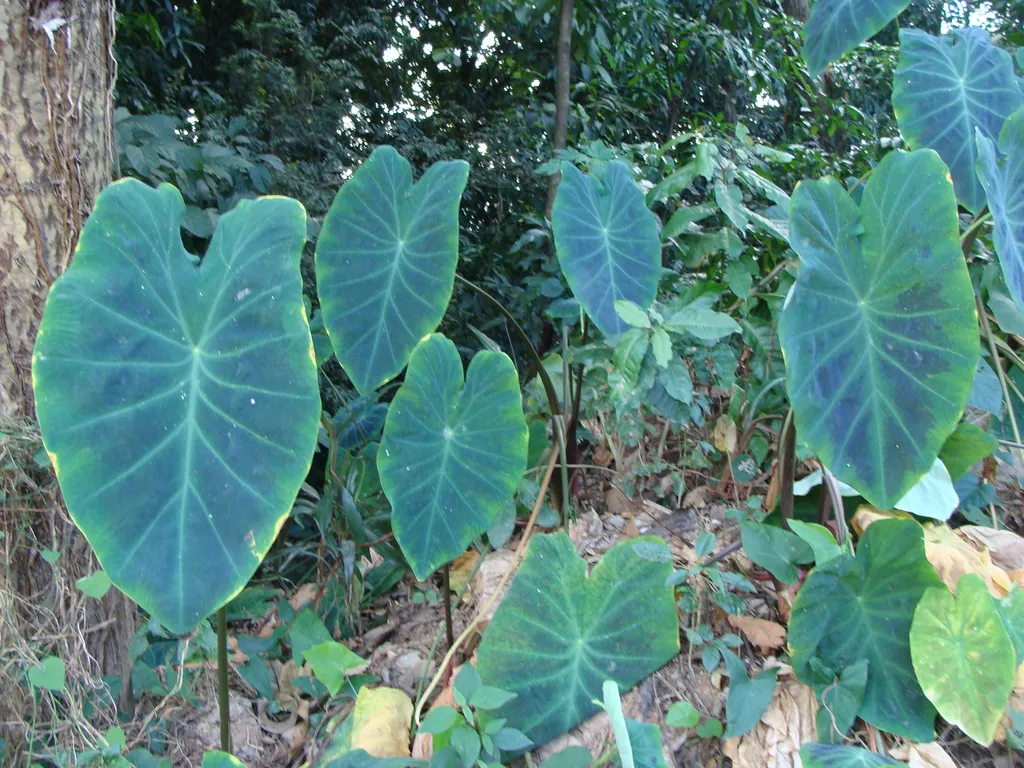
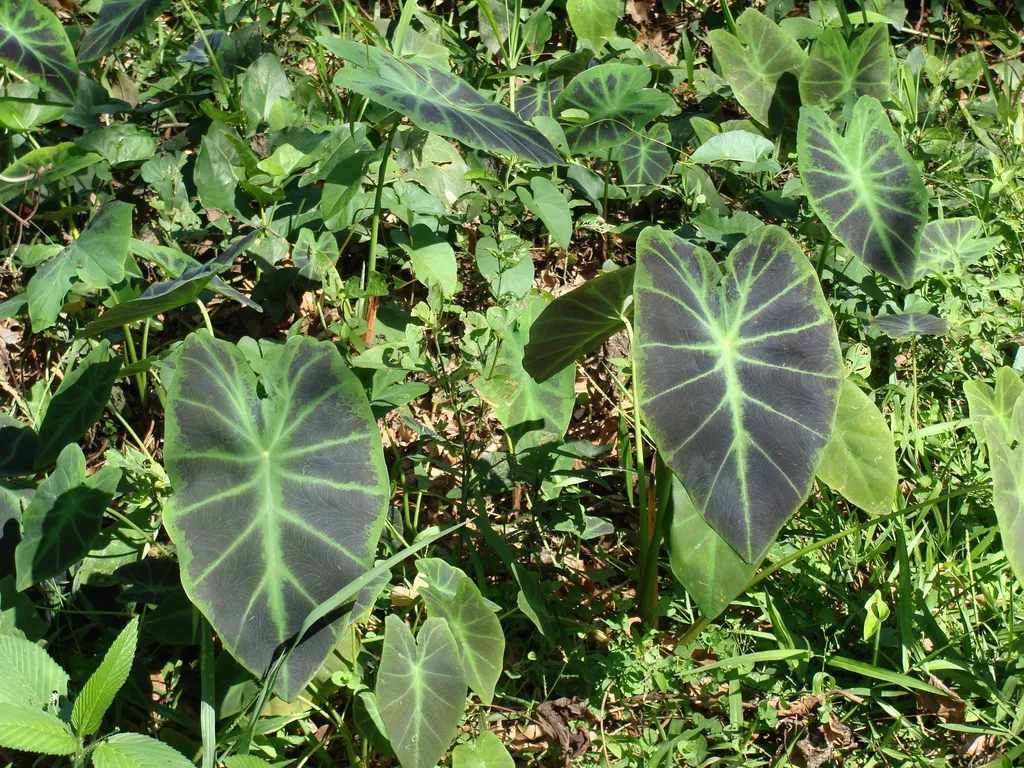
Taro, known for its large heart-shaped leaves, should be pruned in early to late spring. Focus on removing dead or damaged leaves to enhance air circulation and reduce disease risk. Regularly trim back any excessively long stems to maintain shape and encourage healthy growth. Pruning helps the plant conserve energy for tuber development. Ensure tools are sanitized to prevent infection.
Learn more →How to Propagate taro?

Taro propagation typically occurs in Spring, using its tubers. It's considered easy to propagate, with successful propagation signaled by fresh shoots. Keep tubers warm and moist for best results.
Learn more →How to Transplant taro?
The ideal season for transplanting taro is during the warmth of mid-spring, when conditions promote vigorous growth. Choose a partly shaded location with moist, well-draining soil. For optimal results, prepare the transplant site with rich, organic matter and ensure sufficient space between plants.
Learn more →How to Care for taro in Winter?

Taro hails from tropical environments where frosty temperatures are virtually unknown. Its tubers, the plants’ natural defense mechanism against colder seasons, burrow deep within the earth, getting insulated naturally. However, domestic cultivation poses winter challenges. Gardeners must dig out tubers before the first frost and keep them at 40-55℉ for replanting in spring. Greenhouses or indoor planting can also work as viable alternatives in maintaining taro's optimal conditions during winter.
Learn more →How to Plant taro?
Indoors-potted: In the cozy confines of your home, taro adapts to container living with grace. Ensure ample space for its impressive leaf growth. Outdoors-potted: On patios or decks, potted taro enjoys the breeze but monitor its moisture levels more diligently than in-ground counterparts. Outdoors-in the ground: Planted in the earth, taro thrives expansively, so give it room to flourish and prevent overcrowding in garden beds.
Learn more →How to Repot taro?
Repot taro, a tropical perennial, in early spring, when active growth resumes. As a fast grower, taro appreciates annual repotting to prevent root crowding. Choose a large container with ample room for its sizeable, heart-shaped leaves and rhizomatic growth pattern. Post-repotting, maintain high humidity and indirect light to support recovery. Employ a friendly tone and ensure adherence to word count, without over-elaborating on care specifics.
Learn more →Common Pests & Diseases

Diseases
Generally disease-free
Pests
May be susceptible to glasshouse red spider mite, aphids and glasshouse whitefly
Explore the plant health library →Troubleshooting
Yellowing Leaves, Dormancy Dieback, or Underground Rot
taro (Colocasia esculenta) grows from starchy underground corms with distinct active and resting phases; distinguish natural seasonal dormancy from waterlogged rot.
| What you notice | Possible explanation | What to check next |
|---|---|---|
| Leaves turn yellow and die back after blooming or at season's end while underground storage organs remain firm | Normal post-bloom or seasonal dormancy as energy returns underground | Gently feel the crown or rhizome/bulb top to verify it is hard and dry rather than mushy |
| Leaves yellow prematurely and collapse with a soft, foul-smelling base | Basal rot or rhizome rot caused by waterlogged soil during cool weather or dormancy | Check drainage and inspect underground storage organs for soft decay |
| Large heart-shaped leaves develop dry brown edges or stippled bronzing | Insufficient water during hot summer growth or spider mites in dry indoor air | Check soil moisture and inspect leaf undersides for webbing |
- Keep green foliage growing after flowering—continuing light watering and feeding until leaves yellow naturally—so underground storage organs recharge for next season.
- Reduce watering sharply once foliage yellows into dormancy, keeping dormant storage organs frost-free.
- Provide abundant moisture and fertile organic soil in full sun to partial shade during warm summer growth; lift corms before autumn frost in cold climates and store frost-free.
Discard bulbs, corms, or rhizomes with soft, foul-smelling rot immediately so disease does not spread.
NEVER eat raw Colocasia esculenta corms, stems, or leaves—all raw parts contain irritating calcium oxalate crystals and must be thoroughly cooked before human consumption.
Spider Mites, Aphids, or Leaf Scorch
Warm indoor rooms and dry summer heat can invite spider mites or scorch leaves if moisture and light fluctuate abruptly.
| What you notice | Possible explanation | What to check next |
|---|---|---|
| Fine webbing, pale stippling, or bronzed leaf undersides | Spider mites or aphids, especially in warm dry indoor/conservatory air | Inspect leaf undersides closely and wipe with a damp cloth |
| Dry brown leaf margins or bleached patches | Low ambient humidity, dry soil during peak heat, or sudden direct midday sun | Check soil moisture and afternoon shade protection |
- Water consistently during warm active growth and maintain good humidity around indoor or container specimens.
- Isolate pest-affected containers, rinse leaf undersides gently with water, and treat persistent spider mites or aphids with insecticidal soap per label instructions.
- Divide overcrowded rhizomes or corms in spring as new growth resumes.
Ensure containers have open drainage holes and never sit in stagnant water during cool weather.
The Toxicity of taro
Harmful if eaten, skin/eye irritant. Wear gloves and other protective equipment when handling]