
taro 'Mojito'
Also known as: Information to be completed
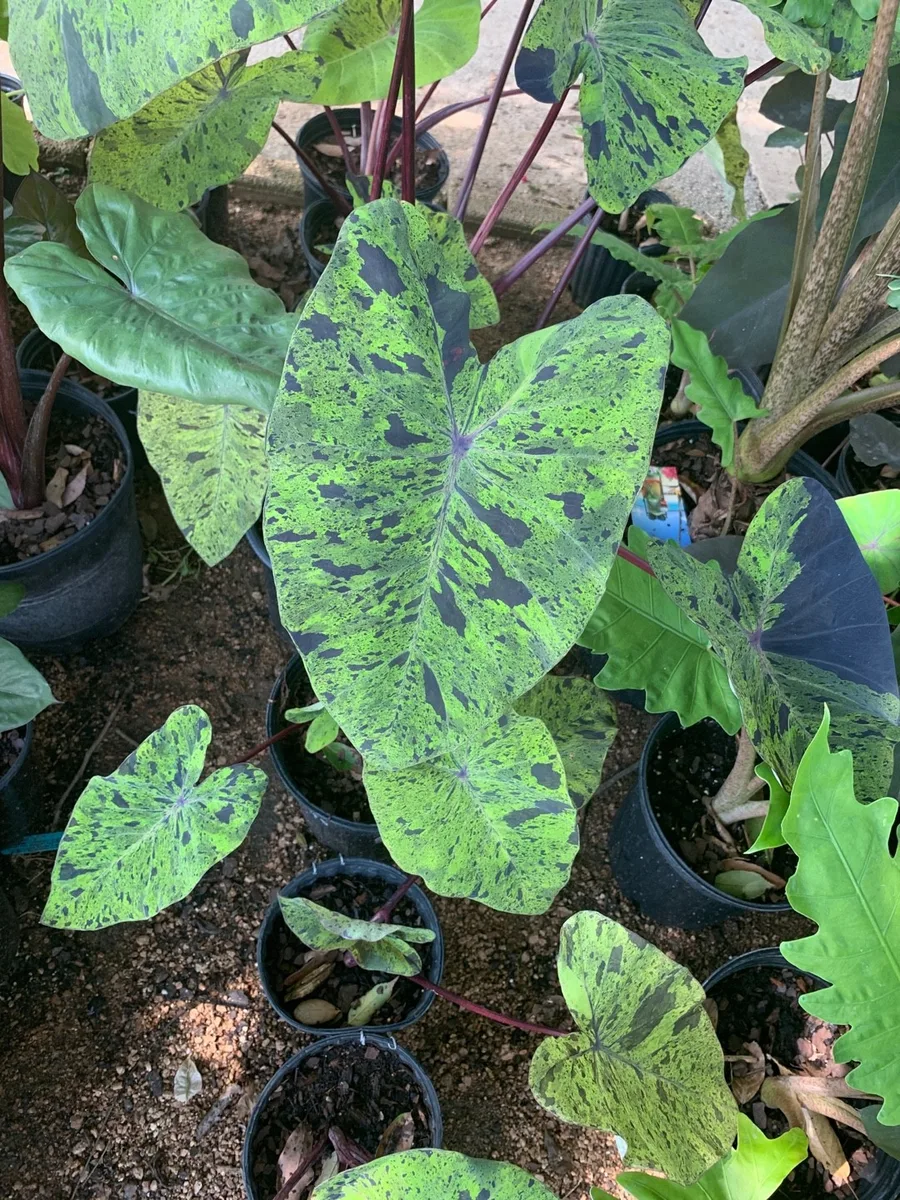
A frost-tender, tuberous perennial, 1m tall, bearing large, heart-shaped leaves. The foliage is light green, mottled and splashed with dark purple, and the leaf stalks are similarly marked. A striking summer foliage plant
Scientific classification
- Species
- taro 'Mojito' (Colocasia esculenta 'Mojito')
- Genus
- Colocasia
- Family
- Araceae
- Order
- Alismatales
- Class
- Liliopsida
- Phylum
- Tracheophyta
- Harmful if eaten, skin/eye irritant. Wear gloves and other protective equipment when handling]
- Toxicity
- Conservatory Greenhouse
- Plant type
- 1-1.5 metres
- Height
- 0.5-1 metres
- Spread
- Deciduous
- Foliage
- Clump forming · Columnar upright
- Habit
- Spring · Summer · Autumn
- Season of interest
- Full sun · Partial shade
- Sunlight
- Information to be completed
- Ideal temperature









taro 'Mojito' pictures
Distribution of taro 'Mojito'
Distribution map
- Native
- Introduced
- Cultivated
Source:WCVP v16 · Royal Botanic Gardens, Kew · CC BY 3.0 · Boundaries:WGSRPD / TDWG
Toxicity
Harmful if eaten, skin/eye irritant. Wear gloves and other protective equipment when handling]
taro 'Mojito' care guide
- Keep soil persistently moist, add extra water in warm weather
- Watering
- Full sun · Partial shade
- Sunlight

Watering
Keep soil persistently moist, add extra water in warm weather
Fertilizing
 Fertilizing
Diluted tropical foliage feed monthly spring to fall period
Pruning
 Pruning
No pruning required
Propagation
 Propagation
Propagate by division of rhizomes
Growing
 Growing
Plant tubers in a large pot of humus-rich compost in warm conditions in early spring. In early summer the pot can be positioned in a sunny or lightly shaded spot outdoors, with shelter from strong winds. Water freely when the plant comes into growth and apply a high nitrogen feed weekly. Either move the pot into a greenhouse or conservatory over winter, or lift the tuber and store it dry
Common pests and diseases
Diseases
Generally disease-free
Pests
May be susceptible to glasshouse red spider mite, aphids and glasshouse whitefly
Explore the plant health library →




