



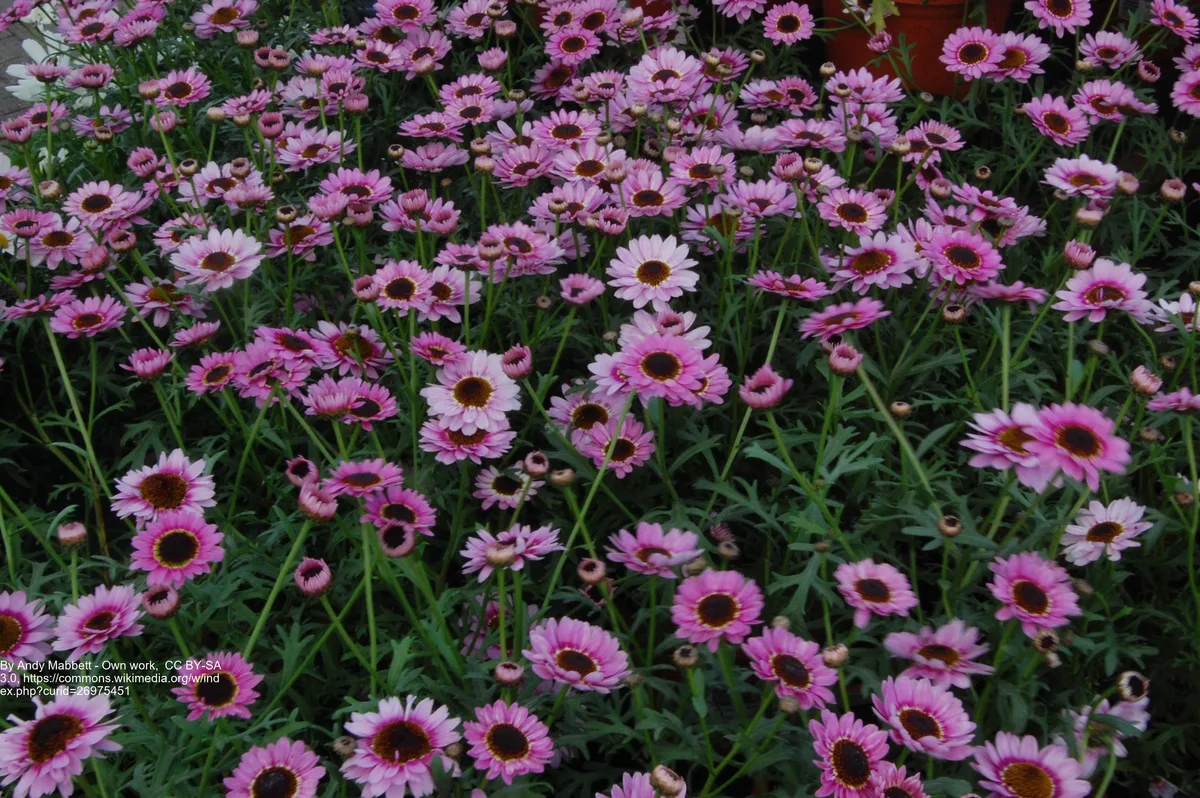
Planting and Growing marguerite 'Reflection Pink'

| Care difficulty | 3 / 5 |
|---|---|
| Watering schedule | Water regularly, allowing the soil to dry slightly between waterings. |
| Sunlight requirements | Full sun |
| Ideal temperature | Information to be completed |
| Soil type | Chalk · Loam · Sand |
| Soil pH | Acid · Alkaline · Neutral |
| Soil moisture | Well drained |
| Fertilizing | Apply a balanced liquid fertilizer every 2-3 weeks during the growing season. |
| Toxicity | Information to be completed |
How to Water marguerite 'Reflection Pink'?
Water regularly, allowing the soil to dry slightly between waterings.
Learn more →What Are the Sunlight Requirements for marguerite 'Reflection Pink'?
Full sun
Learn more →What Soil Is Best for marguerite 'Reflection Pink'?
- Soil type
- Chalk · Loam · Sand
- Soil pH
- Acid · Alkaline · Neutral
What Are the Moisture Requirements for marguerite 'Reflection Pink'?
Well drained
Learn more →How to Fertilize marguerite 'Reflection Pink'?

Apply a balanced liquid fertilizer every 2-3 weeks during the growing season.
Learn more →How to Prune marguerite 'Reflection Pink'?

Shorten flowered shoots to about 1.5–2.5 cm from the previous year's growth. If flowering is on last year's growth, prune after flowering; if on current-year growth, prune the following early to mid-spring. Remove spent flowers regularly.
Learn more →How to Propagate marguerite 'Reflection Pink'?

Propagate by softwood cuttings in spring, and semi-hardwood cuttings of non-flowering shoots in summer
Learn more →How to Plant marguerite 'Reflection Pink'?
Grow in moderately fertile, well-drained soil in full sun. Pinch out growing tips to keep compact. Plants will die back as temperatures drop; a deep dry mulch may protect the rootstock from light frosts, but it is advisable to take cuttings to insure against winter losses, or plant in containers that may be moved indoors over winter
Learn more →Common Pests & Diseases

Diseases
May be susceptible to crown gall
Pests
May be susceptible to chrysanthemum leaf miner
Explore the plant health library →