



Planting and Growing Phlox divaricata 'Blue Moon'

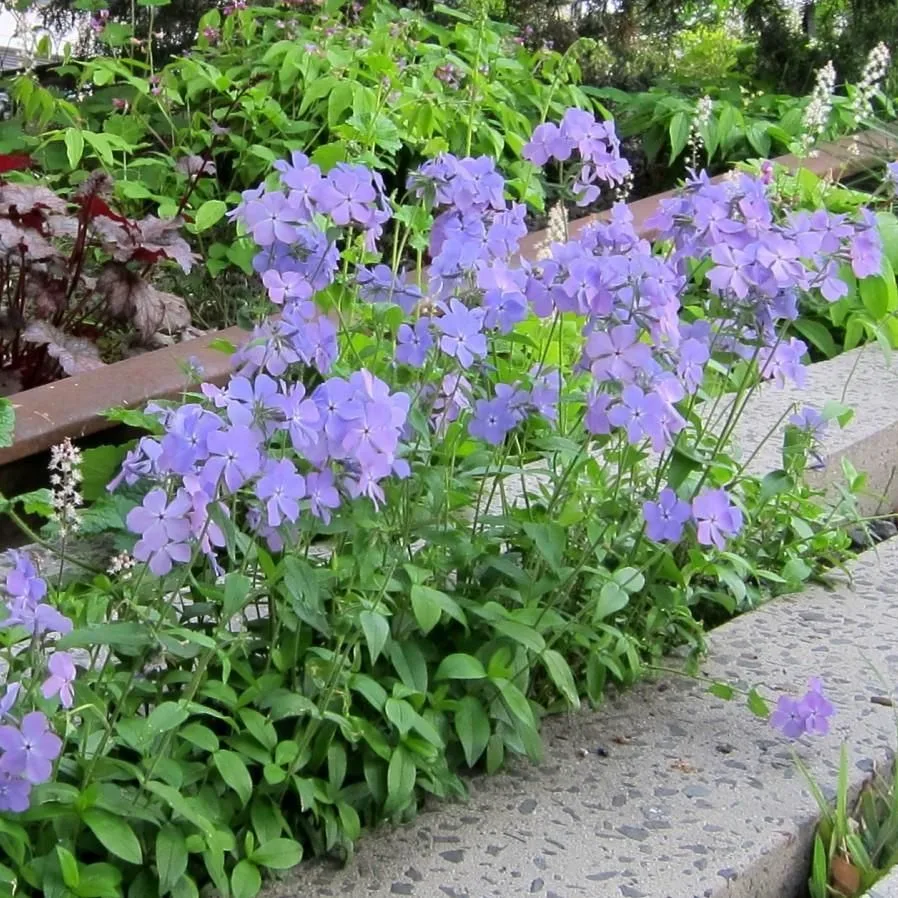
| Care difficulty | 3 / 5 |
|---|---|
| Watering schedule | Keep soil evenly moist with good air circulation |
| Sunlight requirements | Full shade · Partial shade |
| Ideal temperature | Information to be completed |
| Soil type | Chalk · Clay · Loam |
| Soil pH | Acid · Alkaline · Neutral |
| Soil moisture | Moist but well drained |
| Fertilizing | Balanced feed in spring and during bud formation |
| Toxicity | Information to be completed |
How to Water Phlox divaricata 'Blue Moon'?
Keep soil evenly moist with good air circulation
Learn more →What Are the Sunlight Requirements for Phlox divaricata 'Blue Moon'?
Full shade · Partial shade
Learn more →What Soil Is Best for Phlox divaricata 'Blue Moon'?
- Soil type
- Chalk · Clay · Loam
- Soil pH
- Acid · Alkaline · Neutral
What Are the Moisture Requirements for Phlox divaricata 'Blue Moon'?
Moist but well drained
Learn more →How to Fertilize Phlox divaricata 'Blue Moon'?

Balanced feed in spring and during bud formation
Learn more →How to Prune Phlox divaricata 'Blue Moon'?

Cut back in late spring after flowering, to promote new growth
Learn more →How to Propagate Phlox divaricata 'Blue Moon'?

Propagate by root cuttings or by softwood cuttings of non-flowering stems in spring
Learn more →How to Plant Phlox divaricata 'Blue Moon'?
Thrives in moist but well-drained, fertile soil, in part or dappled shade. Ideal for underplanting in borders or deciduous woodland
Learn more →Common Pests & Diseases

Diseases
May be susceptible to powdery mildews and leaf spot
Pests
Generally pest-free, though may be susceptible to grazing by rabbits
Explore the plant health library →