
Phlox divaricata 'Blue Moon'
Also known as: Information to be completed
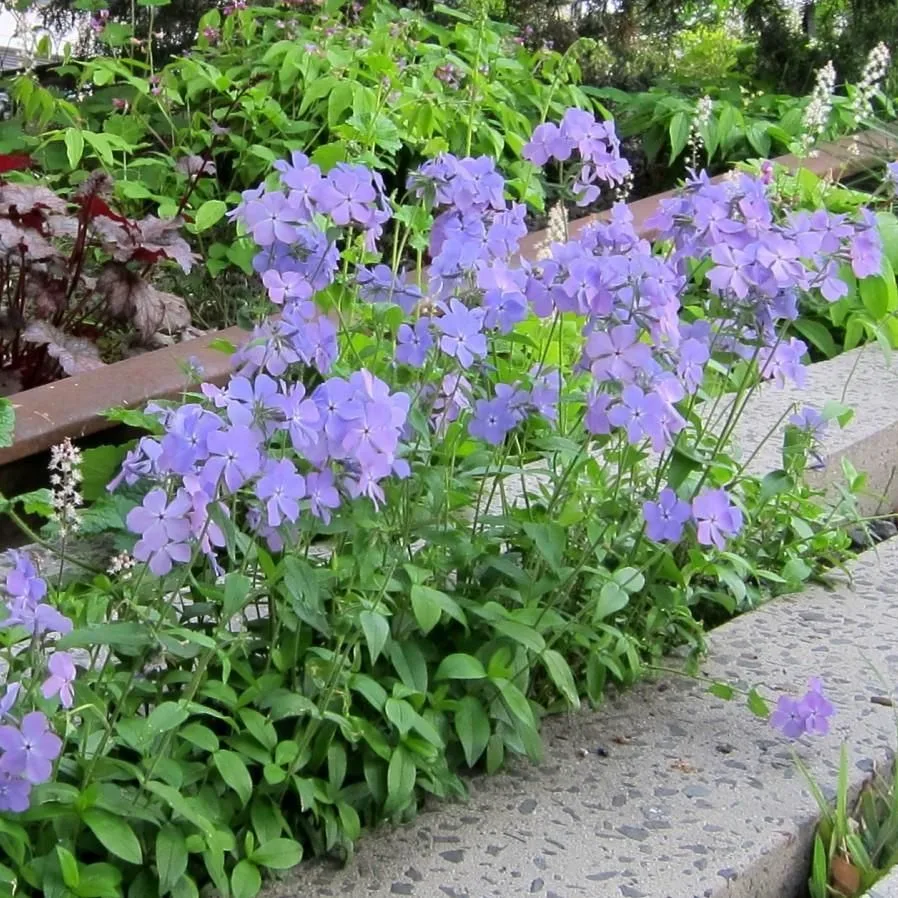
A low-growing, bushy perennial, to around 30cm high, with trailing, rooting stems and lance-shaped, glossy green leaves. Clusters of fragrant, pale lavender blue flowers are produced in mid to late spring
Scientific classification
- Species
- Phlox divaricata 'Blue Moon' (Phlox divaricata 'Blue Moon')
- Genus
- Phlox
- Family
- Polemoniaceae
- Order
- Ericales
- Class
- Magnoliopsida
- Phylum
- Magnoliophyta
- Information to be completed
- Toxicity
- Herbaceous Perennial
- Plant type
- Information to be completed
- Height
- Information to be completed
- Spread
- Semi evergreen
- Foliage
- Bushy · Trailing
- Habit
- Spring · Summer · Autumn · Winter
- Season of interest
- Full shade · Partial shade
- Sunlight
- Information to be completed
- Ideal temperature









Phlox divaricata 'Blue Moon' pictures
Distribution of Phlox divaricata 'Blue Moon'
Distribution map
- Native
- Introduced
- Cultivated
Source:WCVP v16 · Royal Botanic Gardens, Kew · CC BY 3.0 · Boundaries:WGSRPD / TDWG
Phlox divaricata 'Blue Moon' care guide
- Keep soil evenly moist with good air circulation
- Watering
- Full shade · Partial shade
- Sunlight

Watering
Keep soil evenly moist with good air circulation
Fertilizing
 Fertilizing
Balanced feed in spring and during bud formation
Pruning
 Pruning
Cut back in late spring after flowering, to promote new growth
Propagation
 Propagation
Propagate by root cuttings or by softwood cuttings of non-flowering stems in spring
Growing
 Growing
Thrives in moist but well-drained, fertile soil, in part or dappled shade. Ideal for underplanting in borders or deciduous woodland
Common pests and diseases
Diseases
May be susceptible to powdery mildews and leaf spot
Pests
Generally pest-free, though may be susceptible to grazing by rabbits
Explore the plant health library →




