



Planting and Growing Paeonia obovata subsp. willmottiae

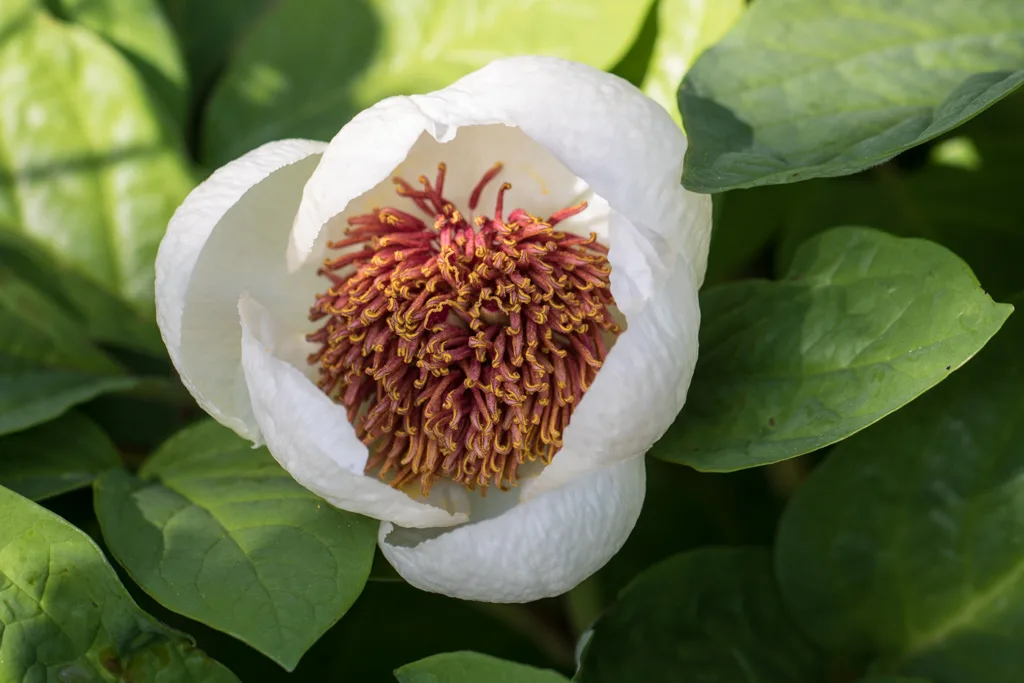
| Care difficulty | 2 / 5 |
|---|---|
| Watering schedule | Even consistent moisture, cut watering heavily in winter dormancy |
| Sunlight requirements | Full sun · Partial shade |
| Ideal temperature | Information to be completed |
| Soil type | Chalk · Clay · Loam · Sand |
| Soil pH | Acid · Alkaline · Neutral |
| Soil moisture | Moist but well drained |
| Fertilizing | Bone meal and balanced feed twice yearly pre-spring and post-bloom |
| Toxicity | Information to be completed |
How to Water Paeonia obovata subsp. willmottiae?
Even consistent moisture, cut watering heavily in winter dormancy
Learn more →What Are the Sunlight Requirements for Paeonia obovata subsp. willmottiae?
Full sun · Partial shade
Learn more →What Soil Is Best for Paeonia obovata subsp. willmottiae?
- Soil type
- Chalk · Clay · Loam · Sand
- Soil pH
- Acid · Alkaline · Neutral
What Are the Moisture Requirements for Paeonia obovata subsp. willmottiae?
Moist but well drained
Learn more →How to Fertilize Paeonia obovata subsp. willmottiae?

Bone meal and balanced feed twice yearly pre-spring and post-bloom
Learn more →How to Prune Paeonia obovata subsp. willmottiae?

Cut back to ground level in autumn, to remove dead foliage and reduce the risk of disease
Learn more →How to Propagate Paeonia obovata subsp. willmottiae?

Propagate by seed or by division, lifting and dividing established clumps in autumn
Learn more →How to Plant Paeonia obovata subsp. willmottiae?
Grow in deep, rich, well-drained soil, ideally in full sun but will tolerate light shade. Will not tolerate waterlogging. See herbaceous peony cultivation for more detailed advice
Learn more →Common Pests & Diseases

Diseases
May be susceptible to a virus, honey fungus, Verticillium wilt, peony leaf blotch and peony wilt
Pests
May be susceptible to leaf and bud eelworm and swift moth caterpillar
Explore the plant health library →