



Planting and Growing pinwheel

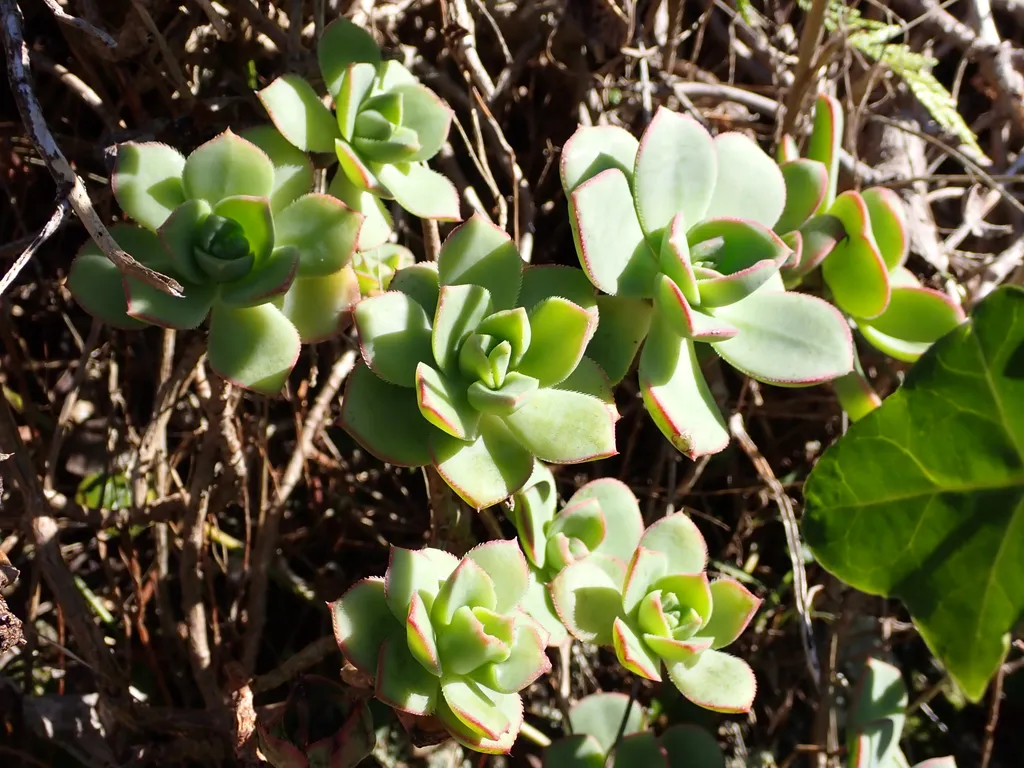

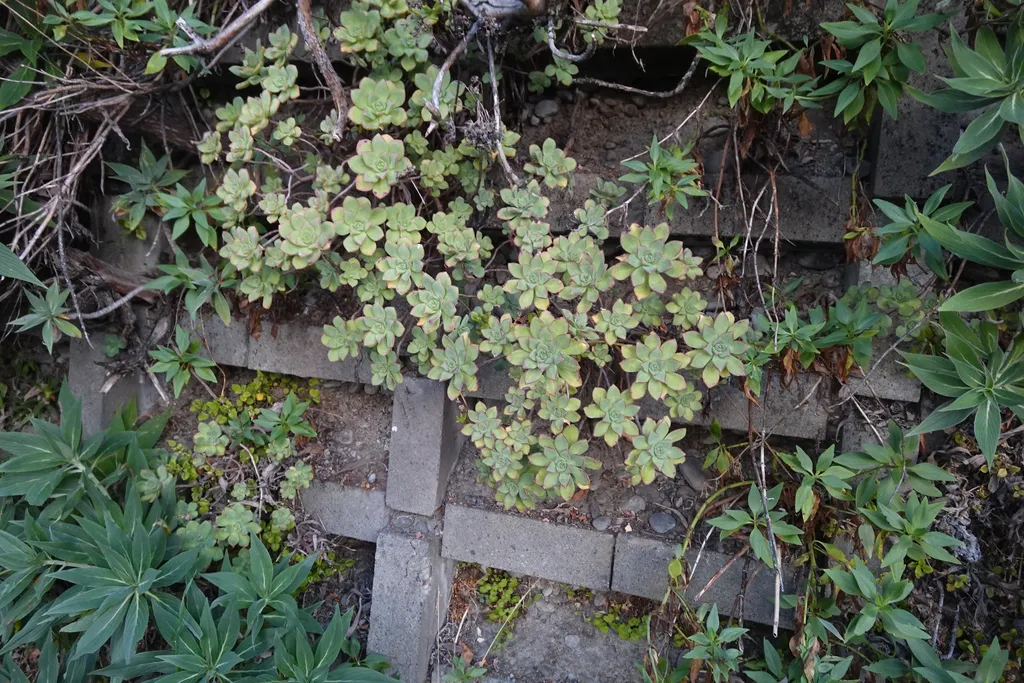
| Care difficulty | 2 / 5 |
|---|---|
| Watering schedule | Water when soil is dry, reduce in summer dormant period |
| Sunlight requirements | Full sun |
| Ideal temperature | 12 – 24 °C |
| Soil type | Loam · Sand |
| Soil pH | Acid · Alkaline · Neutral |
| Soil moisture | Well drained |
| Fertilizing | Monthly during active growth (autumn to spring) |
| Toxicity | Information to be completed |
How to Water pinwheel?
Originating from the rocky terrains of the Canary Islands, haworth's aeonium is accustomed to dry conditions and has evolved to store water in its succulent leaves, showcasing a high drought tolerance. This resilience translates into a watering regimen of once every three weeks, maintaining soil moisture without over-saturating. Typically grown outdoors due to its preference for full sun exposure, haworth's aeonium thrives in well-draining soil that mimics its native arid environment, ensuring excess water can easily escape and prevent root rot.
Learn more →What Are the Sunlight Requirements for pinwheel?
Haworth's aeonium thrives in full sun, flourishing under intense light that bolsters its growth and flowering potential. Although it can tolerate partial sun, prolonged deviation from bright light may lead to suboptimal health and reduced blooms. With exposure to less than ideal light, haworth's aeonium often undergoes color shifts, intensifying its foliage hue as an adaptive response to maximize light absorption. Indoors, haworth's aeonium is best placed in south-facing windows, whereas outdoors, it should be planted in unobstructed areas that receive ample sunlight throughout the day, for vibrancy and vitality.
Learn more →What Is the Ideal Temperature Range for pinwheel?

Haworth's aeonium demonstrates significant resilience to temperature fluctuations. It can endure cold conditions down to 0℃ (32℉) and extreme heat up to 43℃ (109℉). This tolerance necessitates specific care requirements; for instance, during cold snaps, protective measures such as indoor placement or frost covers are crucial. In heatwaves, increased watering and shaded locations help prevent overheating. Symptoms of stress include leaf drop and sunburn in high heat, and leaf browning or mushy texture in cold. Countermeasures for extremes include gradual acclimatization to temperature changes, ensuring proper drainage, and avoiding overwatering in cold weather.
Learn more →What Soil Is Best for pinwheel?
Haworth's aeonium thrives in well-draining soil, vital to prevent water-logging. A suitable mix includes a purchased succulent & cactus blend. Alternatively, combine equal parts potting soil, coarse sand, and perlite or pumice to improve aeration. Regularly check for compactness, aerate if needed. Fertilizing with half-strength cactus fertilizer during the active growing season will support robust growth. Ensure pot with drainage holes.
- Soil type
- Loam · Sand
- Soil pH
- Acid · Alkaline · Neutral
What Are the Moisture Requirements for pinwheel?
Well drained
Learn more →How to Fertilize pinwheel?

For haworth's aeonium, a balanced succulents and cacti food enhances growth and plant resilience. Apply a diluted half-strength solution once a month during the growing season, spring to fall. Overwintering haworth's aeonium requires minimal to no fertilization. Excessive feeding can lead to leggy growth, so ensure a controlled approach. When fertilizing, avoid contact with leaves to prevent burns. Observe haworth's aeonium for signs of under or over-fertilization, such as discolored or abundant foliage, to adjust feeding accordingly.
Learn more →How to Prune pinwheel?

In order to keep a beautiful shape, large succulent plants may need pruning. For example, for echeveria planted in the garden, redundant branches or branches that are too dense need to be cut off in spring and fall. This depends on the plant's purpose and your preference. Tools for pruning mainly include knives, scissors, and some medicines (such as sulfur powder). In order to propagate new plants, cut some leaves in spring and fall. Select a stout stem with 5-6 leaves. Cut it off with a knife, then smear the wound with sulfur powder, and plant it after the wound is healed. Slightly wet the soil used for planting.
Learn more →How to Propagate pinwheel?

Haworth's aeonium is adept at regeneration and can be effectively propagated through the method of cutting. Practical tips include selecting healthy, non-flowering stems for cuttings. It is crucial to allow the cut end of the cutting to dry and callous over for a few days before planting. This helps prevent rot and encourages healthier root development. Using a well-draining soil mix enhances the chance of successful propagation.
Learn more →How to Transplant pinwheel?
The optimal time to transplant haworth's aeonium is during mid-to-late spring, as the warmer weather promotes growth. Select a well-draining location with partial sun exposure. To promote better establishment, use a nutrient-rich, well-aerated substrate.
Learn more →How to Care for pinwheel in Winter?

Haworth's aeonium originates from the mild climate of the Canary Islands and can naturally withstand short durations of lower temperatures. Its fleshy, moisture-storing leaves adapt well to occasional frosts. However, in colder climates, haworth's aeonium requires winter care indoors, in a well-lit, cool room to mimic its native conditions. Watering should be minimized, and fertilization avoided until growth resumes in spring.
Learn more →How to Plant pinwheel?
Indoors-potted: Keep your haworth's aeonium near a bright window; its evergreen leaves thrive with ample light and can add a lush look to your indoor oasis. Outdoors-potted: Haworth's aeonium in outdoor pots require rotation to ensure uniform growth, as they reach for the sun's embrace. Outdoors-in the ground: Plant haworth's aeonium in a sunny spot where it can bask in the glory of full daylight, enhancing its foliage vibrancy.
Learn more →How to Repot pinwheel?
Repot your haworth's aeonium every 2 years to accommodate its compact, rosette growth. Early spring is optimal, aligning with its active phase. Choose a slightly larger pot to encourage root development without overstressing the plant. Post-repotting, provide bright indirect light and minimal water to reduce stress and promote steady growth. Gentle, convincing care ensures your haworth's aeonium thrives after repotting.
Learn more →Common Pests & Diseases

Diseases
Generally disease free
Pests
May susceptible to aphids and mealybugs
Explore the plant health library →Troubleshooting
Dropping Lower Leaves in Summer Heat vs. Stem Rot from Wet Soil
Aeonium haworthii (pinwheel / Haworth's aeonium) is a branching Mediterranean-climate subshrub succulent that grows actively in cool spring and autumn weather and slows down or enters semi-dormancy during hot summers.
| What you notice | Possible explanation | What to check next |
|---|---|---|
| Lower rosette leaves dry up and drop during hot summer weather while rosette centers close slightly and woody stems remain firm | Normal summer heat semi-dormancy in Aeonium | Reduce watering during hot summer months, provide afternoon shade, and resume normal watering in cooler autumn weather. |
| Leaves turn yellow, translucent, and mushy and drop at a touch while potting mix stays wet | Overwatering or root/stem rot in poorly draining soil | Stop watering immediately, empty standing water, and inspect woody stems for dark soft rot. |
- Water thoroughly when the gritty potting mix has dried out during active cool-season growth (autumn through spring), and water sparingly during hot summer dormancy.
- Grow in a fast-draining cactus/succulent mix (high in pumice, perlite, or coarse grit) in a terracotta or well-drained pot with open drainage holes.
- If stem rot develops, cut healthy rosette branches well above any dark tissue, let cuts callous for 3 to 5 days in a dry shaded spot, and root them in dry gritty mix.
Aeonium haworthii is listed as non-toxic to cats and dogs by the ASPCA.
Fading Red Leaf Margins or Stretching Rosettes
Compact rosettes with crisp reddish-pink margins require bright sunlight and good air circulation.
| What you notice | Possible explanation | What to check next |
|---|---|---|
| Rosettes flatten out, turn solid pale green without reddish edges, and stems stretch | Insufficient sunlight | Move gradually to a bright south- or west-facing window or sunny outdoor spot with afternoon shade in hot climates. |
- Provide at least 4 to 6 hours of direct sunlight or very bright filtered light daily.
- Protect from freezing temperatures (keep above 2°C to 5°C / 35°F to 41°F in winter).
- Feed very lightly once or twice in spring or autumn with a diluted succulent fertilizer, and skip feeding in summer and midwinter.
Unlike monocarpic Aeonium arboreum rosettes that die after blooming, branching Aeonium haworthii produces side offsets freely so the shrub keeps thriving after individual branches flower.