



Planting and Growing anise-scented sage 'Blue Enigma'

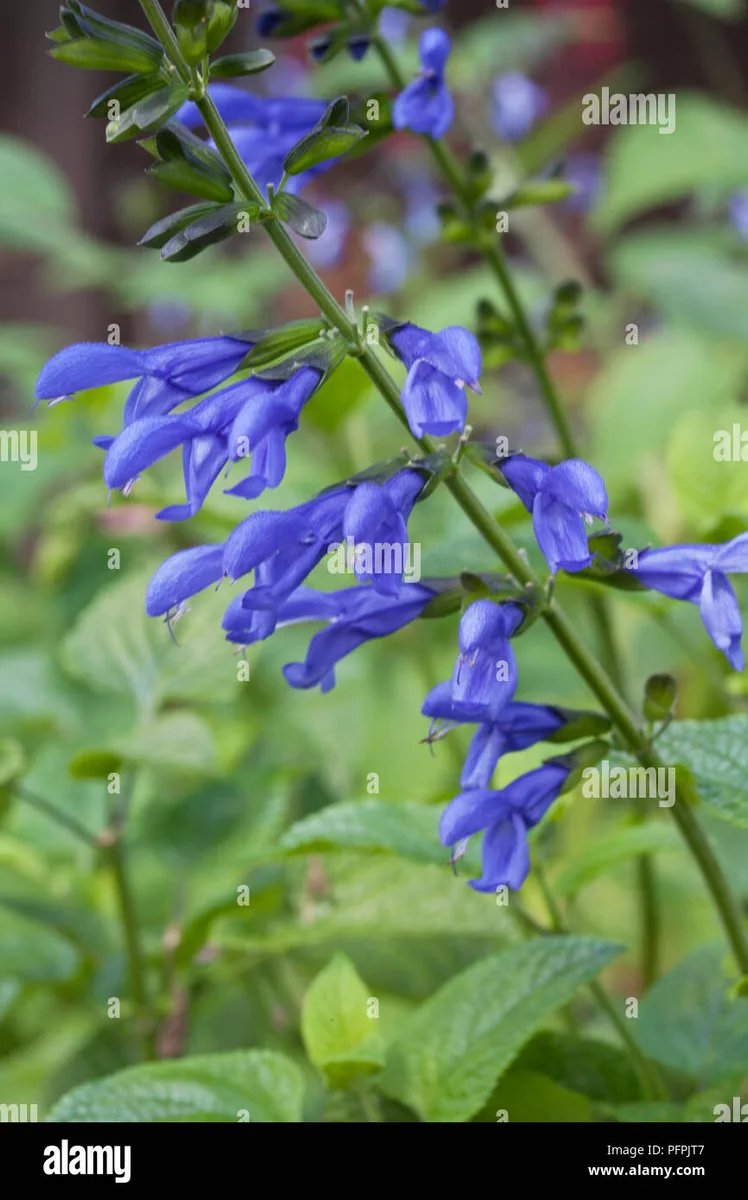
| Care difficulty | 3 / 5 |
|---|---|
| Watering schedule | Consistently lightly moist soil, increase irrigation during hot dry weather |
| Sunlight requirements | Full sun |
| Ideal temperature | Information to be completed |
| Soil type | Chalk · Loam · Sand |
| Soil pH | Acid · Alkaline · Neutral |
| Soil moisture | Moist but well drained |
| Fertilizing | Weak bloom-promoting liquid fertilizer biweekly all summer long |
| Toxicity | Information to be completed |
How to Water anise-scented sage 'Blue Enigma'?
Consistently lightly moist soil, increase irrigation during hot dry weather
Learn more →What Are the Sunlight Requirements for anise-scented sage 'Blue Enigma'?
Full sun
Learn more →What Soil Is Best for anise-scented sage 'Blue Enigma'?
- Soil type
- Chalk · Loam · Sand
- Soil pH
- Acid · Alkaline · Neutral
What Are the Moisture Requirements for anise-scented sage 'Blue Enigma'?
Moist but well drained
Learn more →How to Fertilize anise-scented sage 'Blue Enigma'?

Weak bloom-promoting liquid fertilizer biweekly all summer long
Learn more →How to Prune anise-scented sage 'Blue Enigma'?

Prune lightly as needed to remove unwanted shoots and keep the shrub in shape. Prune in spring.
Learn more →How to Propagate anise-scented sage 'Blue Enigma'?

Propagate by basal cuttings or softwood cuttings in spring or early summer or semi-hardwood cuttings in late summer or autumn with bottom heat
Learn more →How to Plant anise-scented sage 'Blue Enigma'?
Grow in light, moderately fertile, humus-rich, moist but well-drained soil. Best in full sun but can tolerate light partial shade. Usually needs some support
Learn more →Common Pests & Diseases

Diseases
May be susceptible to honey fungus (rarely), powdery mildews, verticillium wilt and foot and root rots
Pests
Generally pest-free
Explore the plant health library →