



Planting and Growing anise-scented sage 'Black and Blue'

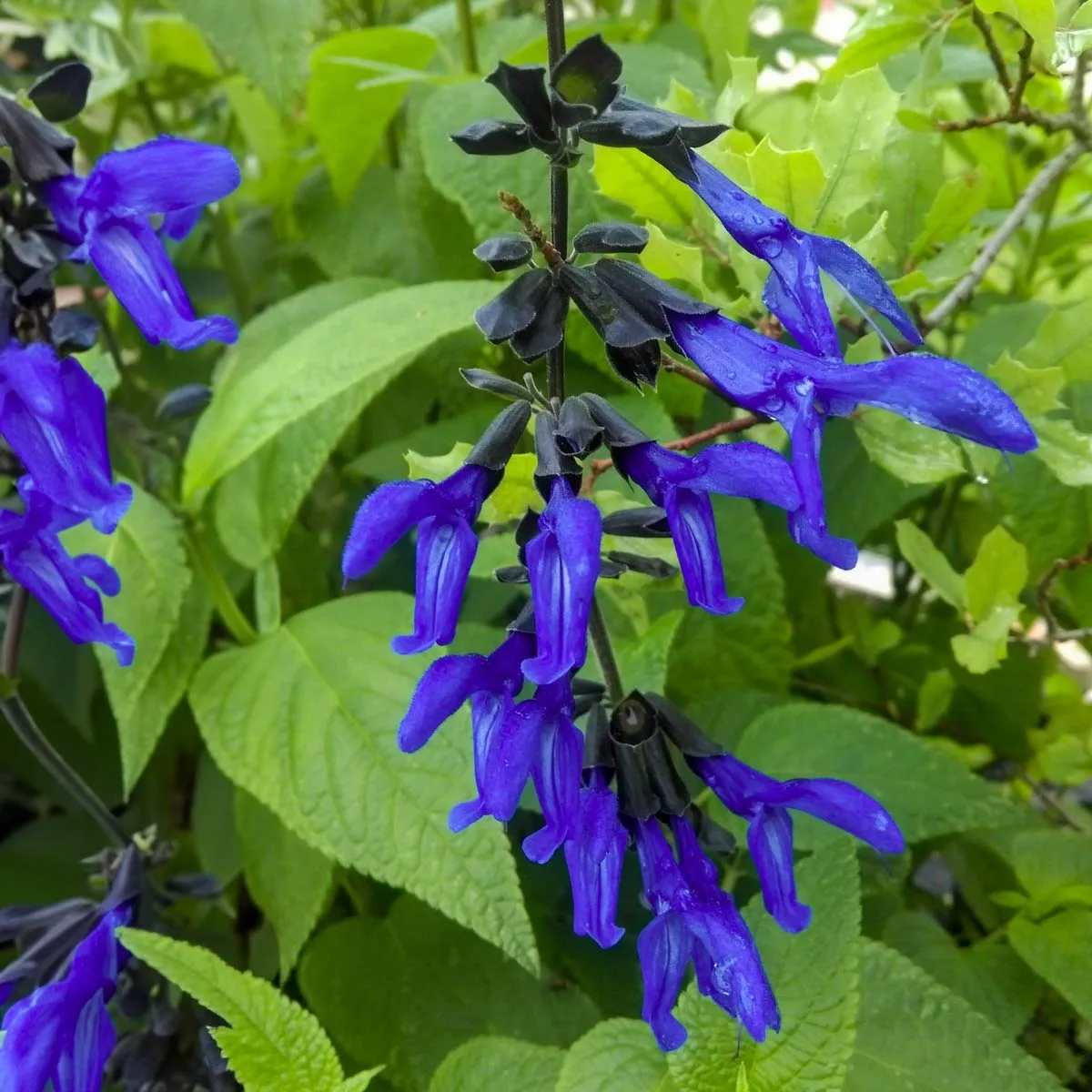
| Care difficulty | 3 / 5 |
|---|---|
| Watering schedule | Water deeply when top inch of soil dries; prefers consistent moisture in summer heat. |
| Sunlight requirements | Full sun |
| Ideal temperature | Information to be completed |
| Soil type | Chalk · Loam · Sand |
| Soil pH | Acid · Alkaline · Neutral |
| Soil moisture | Well drained |
| Fertilizing | Feed with a balanced liquid fertilizer every 2–3 weeks during the growing season. |
| Toxicity | Information to be completed |
How to Water anise-scented sage 'Black and Blue'?
Water deeply when top inch of soil dries; prefers consistent moisture in summer heat.
Learn more →What Are the Sunlight Requirements for anise-scented sage 'Black and Blue'?
Full sun
Learn more →What Soil Is Best for anise-scented sage 'Black and Blue'?
- Soil type
- Chalk · Loam · Sand
- Soil pH
- Acid · Alkaline · Neutral
What Are the Moisture Requirements for anise-scented sage 'Black and Blue'?
Well drained
Learn more →How to Fertilize anise-scented sage 'Black and Blue'?

Feed with a balanced liquid fertilizer every 2–3 weeks during the growing season.
Learn more →How to Prune anise-scented sage 'Black and Blue'?

Deadhead faded flowers
Learn more →How to Propagate anise-scented sage 'Black and Blue'?

Propagate by division of established clumps. Take softwood and semi-ripe stem-tip cuttings from new non-flowering growth. Take basal stem cuttings from new shoots that are about 8cm (3in) tall
Learn more →How to Plant anise-scented sage 'Black and Blue'?
Best grown in full sun in well-drained soil with shelter from cold winds. Maintain low humidity for plants overwintered indoors in a greenhouse. Under glass grow in well-drained loamless or loam-based potting compost (JI No.2) in full light with shade from hot sun
Learn more →Common Pests & Diseases

Diseases
May be susceptible to honey fungus (rarely), powdery mildews, verticillium wilt and foot and root rots
Pests
May be susceptible to capsid bugs and leafhoppers and slugs and snails on young growth. Under glass aphids, glasshouse red spider mite and glasshouse whitefly may be a problem
Explore the plant health library →