
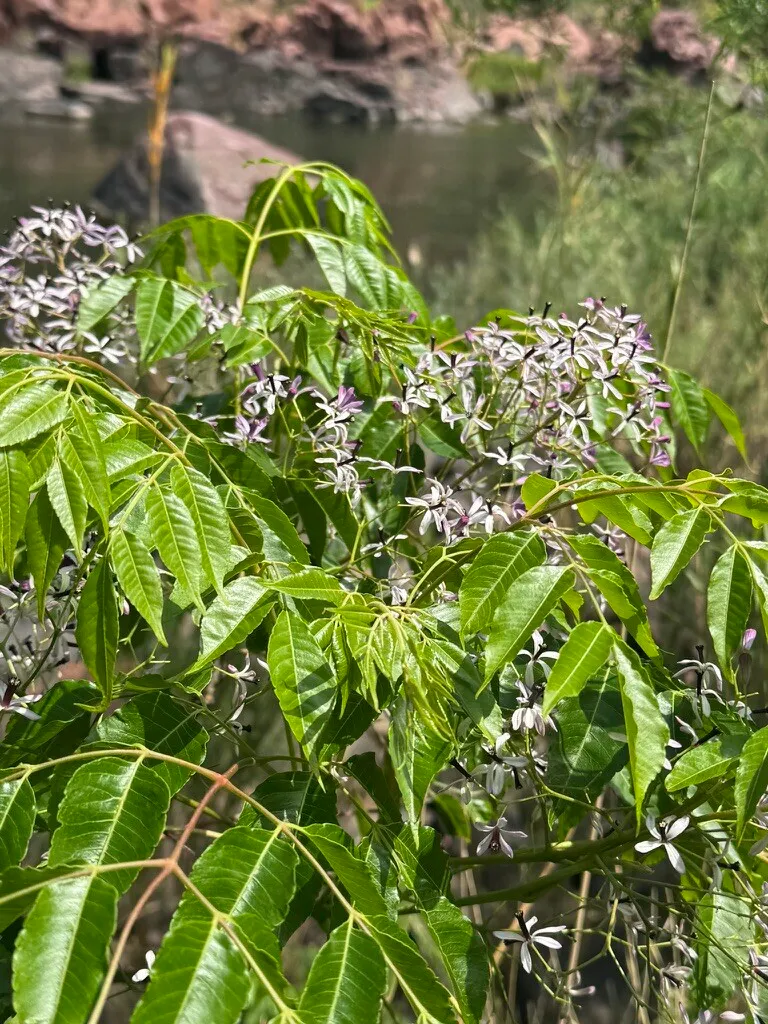



Persian lilac

Persian lilac · Fertilizing

Persian lilac · Melia azedarach
Also known as: African lilac; bakain; bead tree; Cape lilac; Ceylon cedar; Ceylon mahogany; chinaberry; false sycamore; hill margosa; holy tree; Indian lilac; lunumidella; margosa tree; pride of China; Syrian bead tree; pride of India; syringa; white cedar

Chinaberry tree is a hardy and adaptive species, requiring minimal maintenance and thriving under a wide range of conditions, which makes them easy to care for. Key care points include ensuring they're planted in well-draining soil and provided with full to partial sun exposure. Special care should be taken as chinaberry tree can become invasive in certain climates and its berries are toxic if ingested.

Watering: Moderate regular watering, allowing brief slight drying between soakingsSunlight: Full sunTOXIC if eaten. Wear gloves and other protective equipment when handling LJD

How to Fertilize Persian lilac?

For optimal growth, chinaberry tree benefits from balanced nutrition or high-nitrogen fertilizer. Fertilizing encourages vigorous growth, vibrant foliage, and plentiful fruiting. Seasonal changes, particularly spring and summer, call for increased fertilizing frequency—every 4-6 weeks. Young chinaberry tree tend to demand more nitrogen for growth, while established trees benefit from balanced nutrients for fruit production. Use a slow-release fertilizer to prevent root burn and ensure even nutrient distribution. Heed the recommended dose on the product label to avoid over-fertilization, which can lead to lush but weak growth. As weather cools, reduce applications to prevent unnecessary stress on chinaberry tree.