
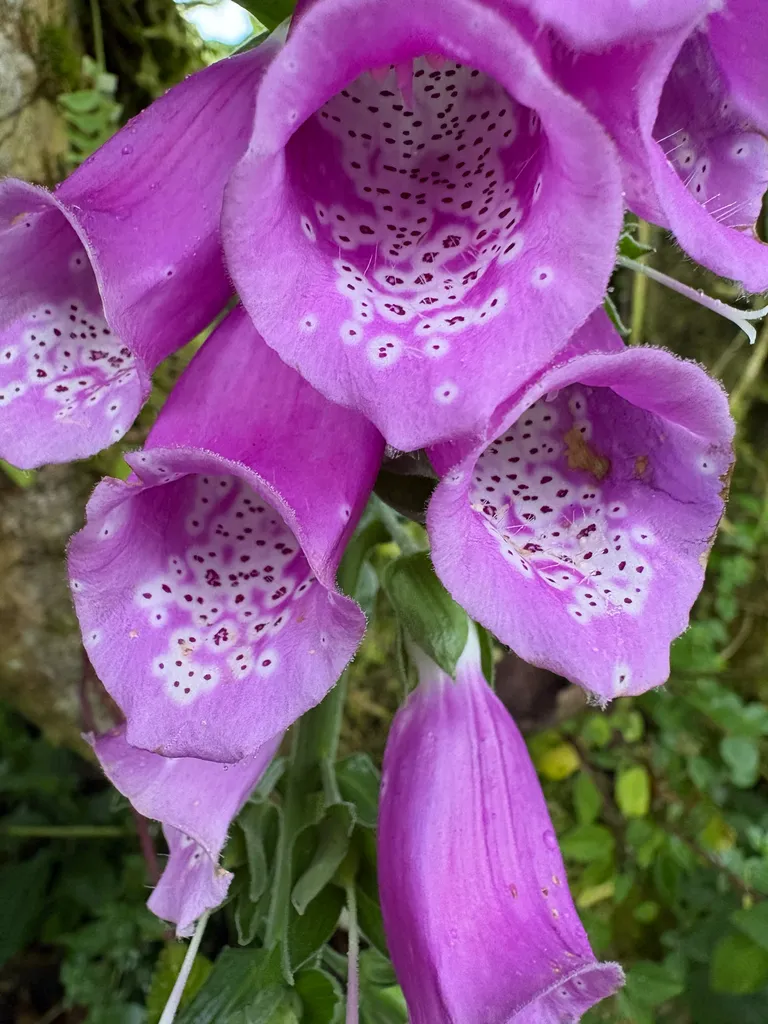



common foxglove

common foxglove · Fertilizing

common foxglove · Digitalis purpurea
Also known as: bloody bells; bloody finger; cow flop; dead man's bells; dead men's bells; dog's lugs; dragon's mouth; fairy bells; fairy fingers; fairy gloves; fairy thimbles; fairy's cap; fairy's petticoat; fairy's thimble; finger flower; flap dock; folk's gloves; fox finger; gloves of Mary; lady's fingers; lady's gloves; lady's thimble; lion's mouth; lusmore; lustmore; pop dock; thimble finger; thimble flower; throat root; witches' bells; witches' fingers; witches' gloves; witches' thimbles

Common foxglove thrives in well-drained soil and partial shade to full sun exposure. A special care point is to ensure moderate watering, as overly wet conditions can lead to root rot. Additionally, deadheading spent flowers promotes further blooming and prevents excessive self-seeding. Providing these basic care requirements makes common foxglove relatively easy to maintain for most gardeners.

Watering: Moderate regular watering, allowing brief slight drying between soakingsSunlight: Full sun · Partial shadeTOXIC if eaten. Wear gloves and other protective equipment when handling

How to Fertilize common foxglove?

Fertilize common foxglove sparingly with high-phosphorus fertilizer to bolster blooming; apply once in early spring and again when flower spikes form. Over-fertilization can harm common foxglove, so no more than 1/2 teaspoon per plant is necessary. Be mindful of run-off, particularly in alkaline soils. Variations in fertilization during dormancy or active growth are not required for common foxglove, as excessive feeding can lead to foliage at the expense of flowers. Water common foxglove thoroughly after fertilizing to aid nutrient absorption and mitigate root burn.