
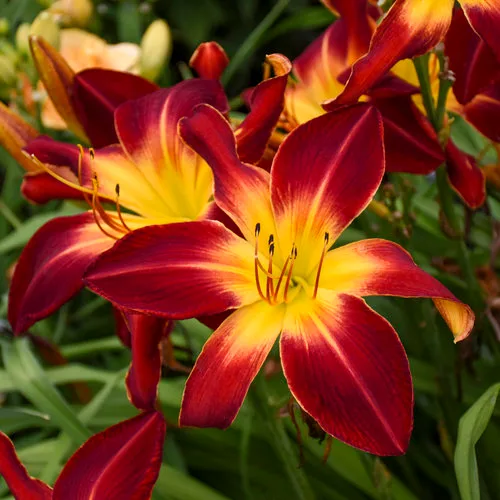



Daylily

Daylily · Pests & diseases

Daylily · Hemerocallis hybrid
Also known as: Daylily, Common daylily

Grow in fertile, well-drained soil in full sun for best flowering, though it tolerates light shade. Water regularly during dry spells to keep the soil moist but not waterlogged. Apply a balanced slow-release fertilizer in early spring and again after the main flowering period. Deadhead spent blooms and remove flower stalks after flowering to maintain a tidy appearance. Mulch in autumn to protect the crown in colder regions. Divide clumps every 3-5 years in early spring or autumn to maintain vigor.

Watering: Keep soil moist during active growth, especially in summerSunlight: Full sunToxic to cats if ingested (can cause kidney failure). Mildly toxic to humans if raw flowers or roots are consumed in large quantities. Cooked flowers (daylily buds) are edible and safe.

Common Pests & Diseases

Diseases

Generally disease-resistant, but may suffer from rust, leaf spot, and crown rot in poorly drained soil. Good air circulation and proper watering help prevent issues.

Pests

Susceptible to aphids, spider mites, thrips, and slugs. Regular inspection and organic controls such as neem oil are effective.

Explore the plant health library →
PlantCare

Your Ultimate Guide to Plants

Identify, grow and nurture the better way!

PlantCare plant identification and care illustration
PlantCare

Botanist in your pocket

Scan to download PlantCareDownload on the App Store

Scan the QR code with your phone camera to download the app