
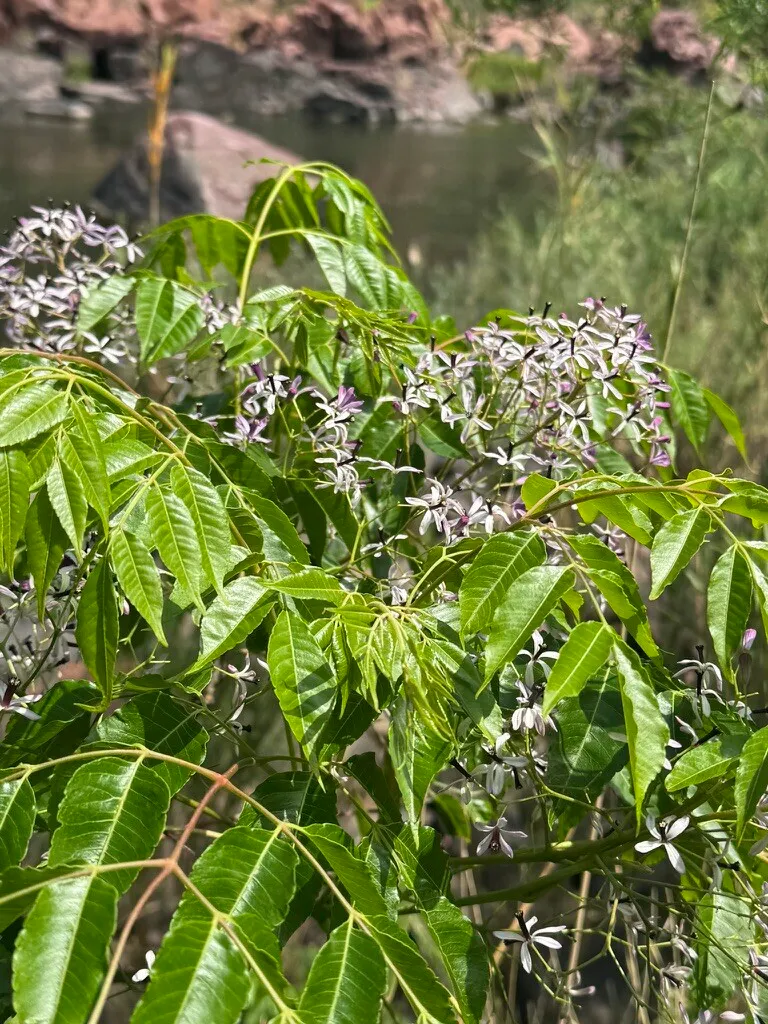



Persian lilac

Persian lilac · Pruning

Persian lilac · Melia azedarach
Also known as: African lilac; bakain; bead tree; Cape lilac; Ceylon cedar; Ceylon mahogany; chinaberry; false sycamore; hill margosa; holy tree; Indian lilac; lunumidella; margosa tree; pride of China; Syrian bead tree; pride of India; syringa; white cedar

Chinaberry tree is a hardy and adaptive species, requiring minimal maintenance and thriving under a wide range of conditions, which makes them easy to care for. Key care points include ensuring they're planted in well-draining soil and provided with full to partial sun exposure. Special care should be taken as chinaberry tree can become invasive in certain climates and its berries are toxic if ingested.

Watering: Moderate regular watering, allowing brief slight drying between soakingsSunlight: Full sunTOXIC if eaten. Wear gloves and other protective equipment when handling LJD

How to Prune Persian lilac?

Chinaberry tree, identified by its characteristic feathery leaves and blonde berries, benefits from pruning in early spring. Remove dead or diseased branches and thin out crowded areas to promote airflow. Prune young plants to develop a strong structure by selecting a central leader and trimming competing side branches. This timing aligns with the growth cycle, ensuring vigorous regrowth and healthier development. Regular pruning also minimizes the risk of pest infestations and improves overall plant aesthetics.