
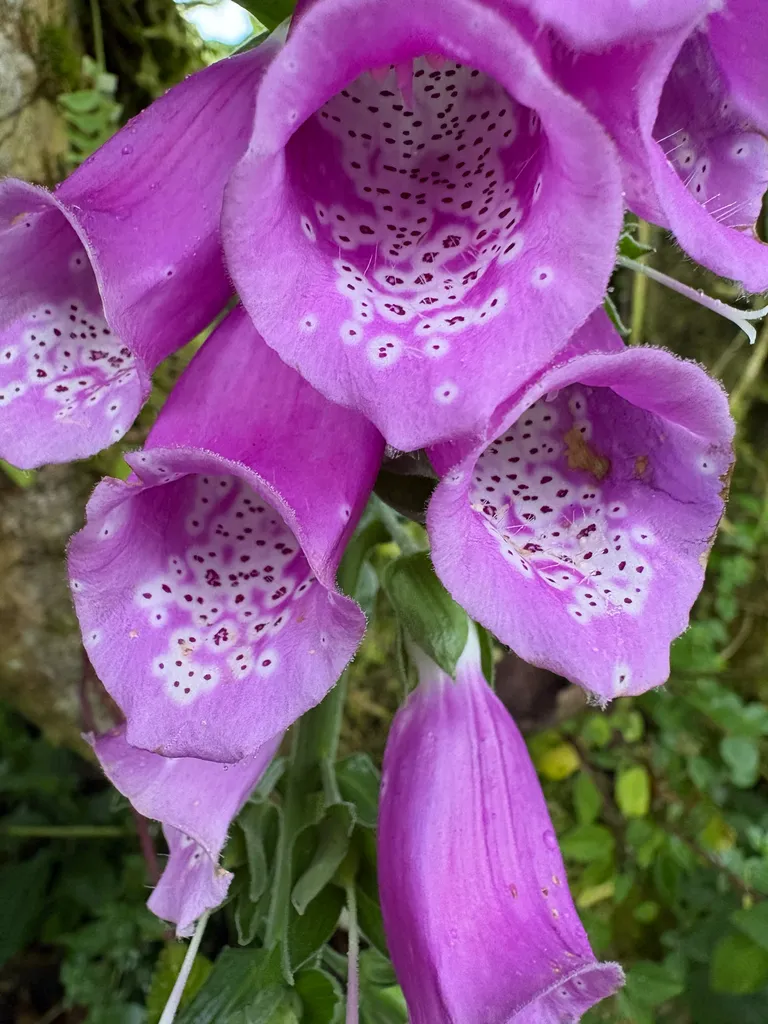



common foxglove

common foxglove · Pruning

common foxglove · Digitalis purpurea
Also known as: bloody bells; bloody finger; cow flop; dead man's bells; dead men's bells; dog's lugs; dragon's mouth; fairy bells; fairy fingers; fairy gloves; fairy thimbles; fairy's cap; fairy's petticoat; fairy's thimble; finger flower; flap dock; folk's gloves; fox finger; gloves of Mary; lady's fingers; lady's gloves; lady's thimble; lion's mouth; lusmore; lustmore; pop dock; thimble finger; thimble flower; throat root; witches' bells; witches' fingers; witches' gloves; witches' thimbles

Common foxglove thrives in well-drained soil and partial shade to full sun exposure. A special care point is to ensure moderate watering, as overly wet conditions can lead to root rot. Additionally, deadheading spent flowers promotes further blooming and prevents excessive self-seeding. Providing these basic care requirements makes common foxglove relatively easy to maintain for most gardeners.

Watering: Moderate regular watering, allowing brief slight drying between soakingsSunlight: Full sun · Partial shadeTOXIC if eaten. Wear gloves and other protective equipment when handling

How to Prune common foxglove?

Common foxglove features tall spires of tubular flowers and heart-shaped leaves. Prune in early to late spring by removing spent flower stalks to encourage new blooms. Cut back to the basal rosette to enhance plant vigor and shape. Consider pruning for plant health by removing damaged or diseased foliage. Proper pruning timing aligns with the plant's spring growth spurts, optimizing flower production and overall aesthetics. Reference reputable horticulture guides to refine techniques specific to common foxglove.