
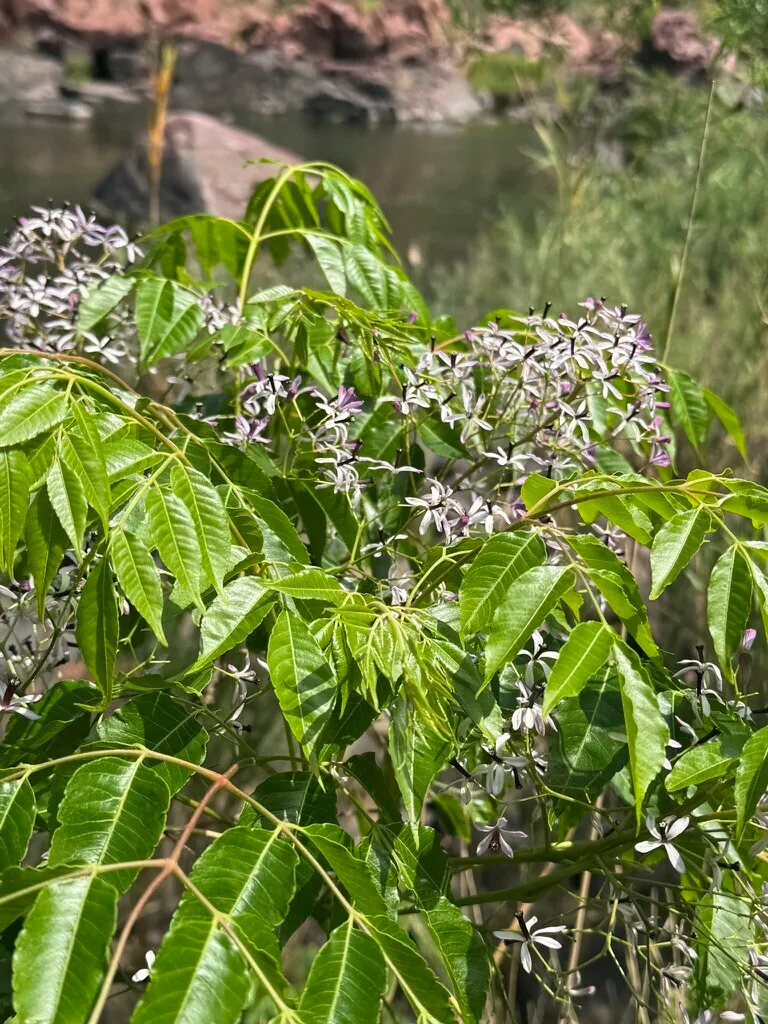



Persian lilac

Persian lilac · Soil

Persian lilac · Melia azedarach
Also known as: African lilac; bakain; bead tree; Cape lilac; Ceylon cedar; Ceylon mahogany; chinaberry; false sycamore; hill margosa; holy tree; Indian lilac; lunumidella; margosa tree; pride of China; Syrian bead tree; pride of India; syringa; white cedar

Chinaberry tree is a hardy and adaptive species, requiring minimal maintenance and thriving under a wide range of conditions, which makes them easy to care for. Key care points include ensuring they're planted in well-draining soil and provided with full to partial sun exposure. Special care should be taken as chinaberry tree can become invasive in certain climates and its berries are toxic if ingested.

Watering: Moderate regular watering, allowing brief slight drying between soakingsSunlight: Full sunTOXIC if eaten. Wear gloves and other protective equipment when handling LJD

What Soil Is Best for Persian lilac?

Native to South and Southeast Asia, chinaberry tree thrives in well-draining soils with pH levels ranging from acidic to alkaline (5.5-8.0). It naturally grows in sandy, loamy, or chalky soils rich in organic matter. To replicate these conditions, use a mix of 1 part garden soil, 1 part sand or perlite, and 1 part compost. Ensure good drainage by adding coarse materials and avoid water-logging. For optimal growth, consider periodic applications of balanced fertilizers during the growing season.

Soil type
Loam · Sand
Soil pH
Acid · Alkaline · Neutral
PlantCare

Your Ultimate Guide to Plants

Identify, grow and nurture the better way!

PlantCare plant identification and care illustration
PlantCare

Botanist in your pocket

Scan to download PlantCareDownload on the App Store

Scan the QR code with your phone camera to download the app