
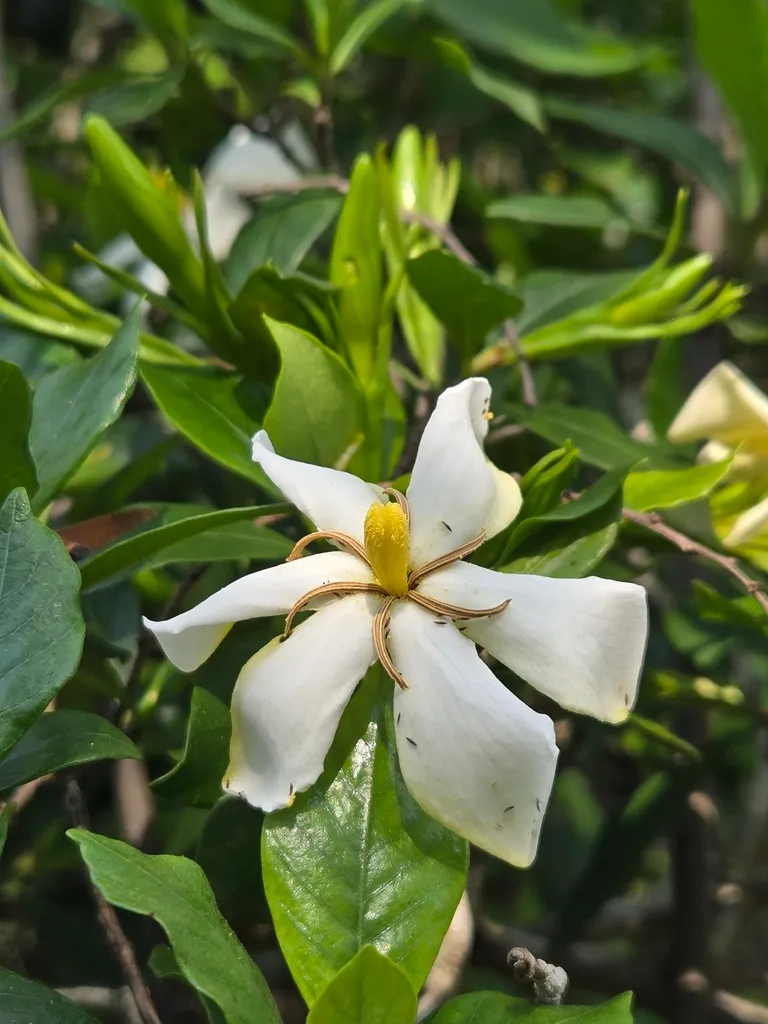



What Soil Is Best for Cape jasmine?

Cape jasmine requires acidic soil with a pH of between 5 and 6.5, preferring soil to be well-draining, organic and rich in nutrients.Soil test kits are the best way to determine how acidic your soil is. Don’t forget to also test your water source too - tap water is usually slightly alkaline to prevent water pipe erosion. If your soil is too alkaline, there are a number of amendments that you can mix in, such as peat moss, elemental sulfur, and iron sulfate. Using diluted vinegar is another common way to quickly acidify the soil. Soils that are heavy in sand, clay or silt should be amended with organic matter, be it aged manure, ground bark or finished compost, before being used for cape jasmine. Other organic supplements, such as leaf mold and alfalfa meal, can help to boost growth, as will a 5 to 10 cm layer of organic mulch applied each spring around the base of the plant.
- Soil type
- Clay · Loam · Sand
- Soil pH
- Acid · Neutral