
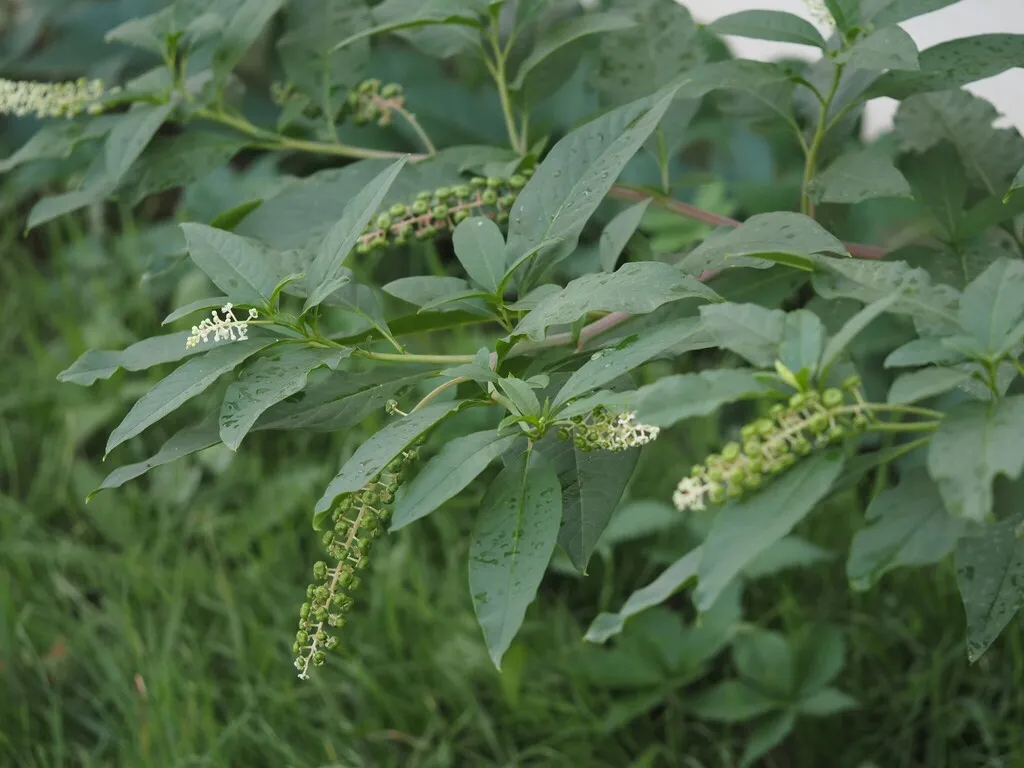



American pokeweed

American pokeweed · Sunlight

American pokeweed · Phytolacca americana
Also known as: American nightshade; cancer jalap; chon grass; coakum; cokan; crimson-berry plant; crowberry; dyer's grapes; garget; inkberry; pigeon berry; poke; poke root; poke salad; pokeberry; pokeweed; red ink plant; red weed; scoke; skoke; Virginian poke; Virginian pokeweed

Pokeweed is a robust perennial plant known for its ease of care. It thrives in full sun to partial shade and prefers moist, well-drained soil, but can tolerate a range of soil conditions. Pokeweed is resilient and can spread aggressively if not managed properly. Special care points include handling with caution due to its toxicity, especially its roots and seeds, and controlling its growth to prevent unwanted spread.

Watering: Moderate regular watering, allowing brief slight drying between soakingsSunlight: Full sun · Partial shadeTOXIC if eaten. Wear gloves and other protective equipment when handling

What Are the Sunlight Requirements for American pokeweed?

Pokeweed thrives best in full sun conditions, where it can receive unfiltered sunlight for the majority of the day. Its tolerance for partial sun means that while it can adapt to less intense light, deviations from full sun can lead to reduced vigor and less robust growth. In terms of adaptive traits, pokeweed is capable of adjusting its foliage orientation to maximize light absorption, which directly impacts its photosynthetic efficiency and health. For outdoor planting, pokeweed should be positioned in open areas where daylight is abundant. Despite its tolerance, prolonged shade could hinder pokeweed's capability to flourish, impacting its overall development.

PlantCare

Your Ultimate Guide to Plants

Identify, grow and nurture the better way!

PlantCare plant identification and care illustration
PlantCare

Botanist in your pocket

Scan to download PlantCareDownload on the App Store

Scan the QR code with your phone camera to download the app