
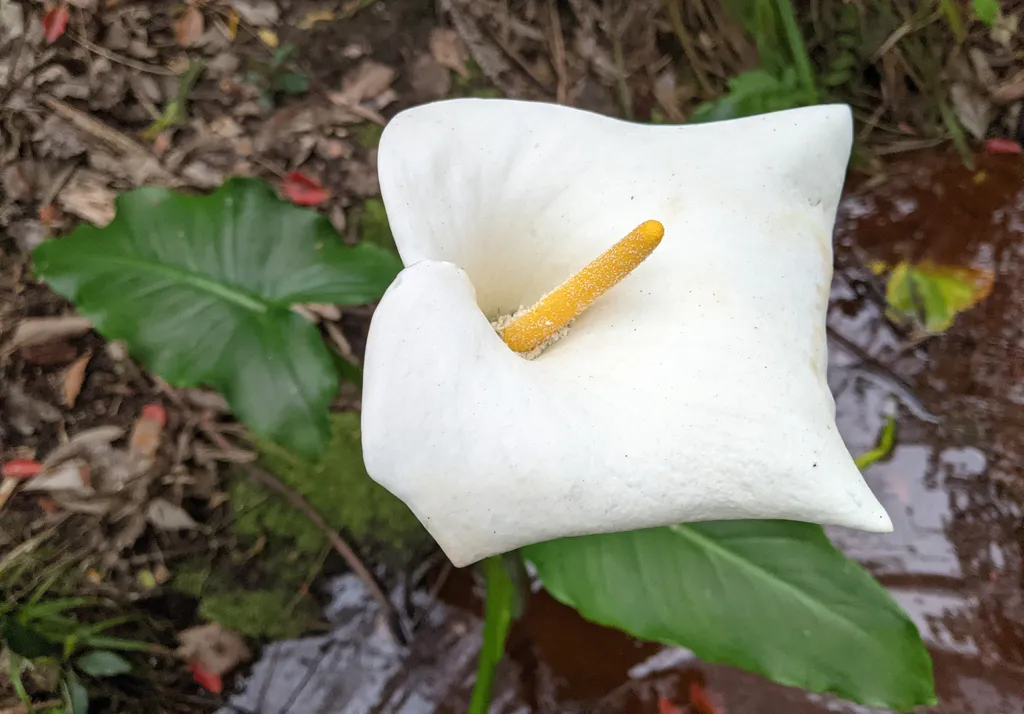



arum lily

arum lily · Sunlight

arum lily · Zantedeschia aethiopica
Also known as: altar lily; calla lily; richardia; trumpet lily; white arum lily; African lily; Egyptian lily; lily of the Nile

Calla lily thrives in well-draining, fertile soil and requires consistent moisture without waterlogging, which can lead to root rot. Placed in partial shade with bright, indirect sunlight, calla lily has moderate care requirements, balancing sufficient light with the need for protection from harsh direct sun. High humidity levels are beneficial but not essential, making humidity considerations a special care point for optimising calla lily's growth.

Watering: Keep soil consistently moist, can tolerate brief shallow standing waterSunlight: Full sun · Partial shadeHarmful if eaten; skin/eye irritant. Wear gloves and other protective equipment when handling

What Are the Sunlight Requirements for arum lily?

Calla lily flourishes in partial sunlight where it receives diffused, bright light. This level of illumination is pivotal for robust growth and optimal flowering. While calla lily demonstrates tolerance to full sunlight and full shade, such variations may impact its vitality. In full sun, calla lily's growth could be stunted, and leaf scorch can occur, whereas in full shade, flowering may be reduced, and the plant could exhibit leggy growth. Its leaves might adjust to varying light by altering orientation or pigmentation to mitigate stress. When grown outdoors, calla lily best thrives in a location that mirrors its native habitat, with morning sun and afternoon shade. Indoors, calla lily should be positioned to receive bright, indirect light, such as near a north-facing window.

PlantCare

Your Ultimate Guide to Plants

Identify, grow and nurture the better way!

PlantCare plant identification and care illustration
PlantCare

Botanist in your pocket

Scan to download PlantCareDownload on the App Store

Scan the QR code with your phone camera to download the app