
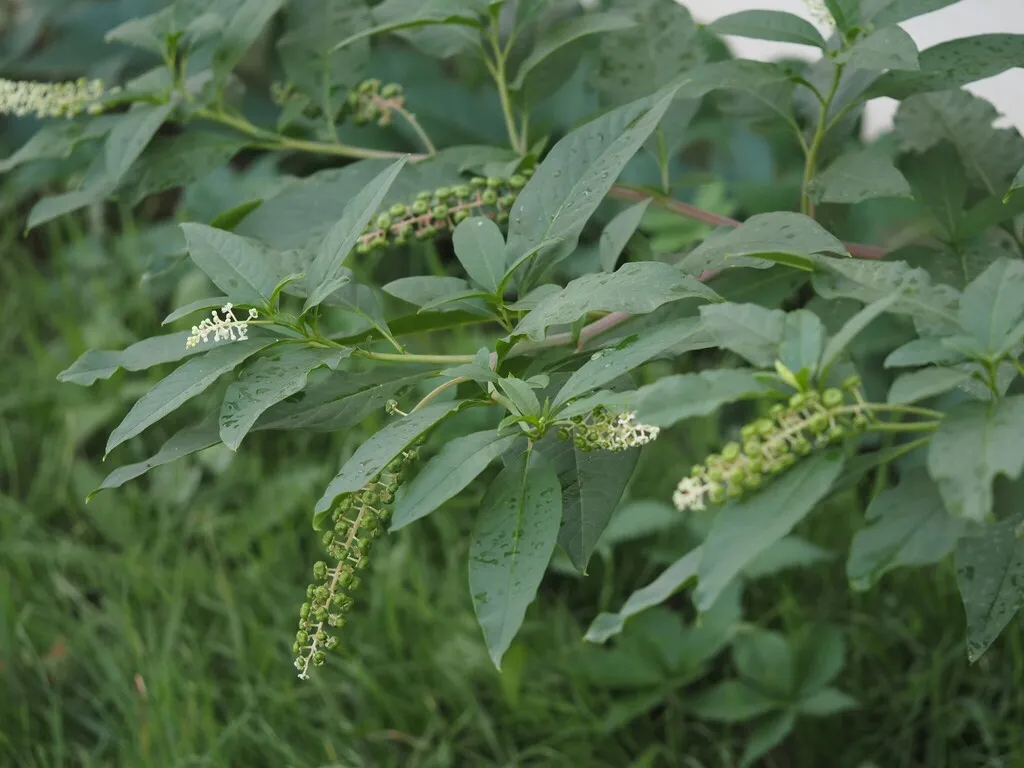



American pokeweed

American pokeweed · Temperature

American pokeweed · Phytolacca americana
Also known as: American nightshade; cancer jalap; chon grass; coakum; cokan; crimson-berry plant; crowberry; dyer's grapes; garget; inkberry; pigeon berry; poke; poke root; poke salad; pokeberry; pokeweed; red ink plant; red weed; scoke; skoke; Virginian poke; Virginian pokeweed

Pokeweed is a robust perennial plant known for its ease of care. It thrives in full sun to partial shade and prefers moist, well-drained soil, but can tolerate a range of soil conditions. Pokeweed is resilient and can spread aggressively if not managed properly. Special care points include handling with caution due to its toxicity, especially its roots and seeds, and controlling its growth to prevent unwanted spread.

Watering: Moderate regular watering, allowing brief slight drying between soakingsSunlight: Full sun · Partial shadeTOXIC if eaten. Wear gloves and other protective equipment when handling

What Is the Ideal Temperature Range for American pokeweed?

Pokeweed is a hardy plant, tolerating temperatures as low as -15°C (5°F) and as high as 41°C (106°F). This resilience makes it suitable for diverse environments, though protection is crucial during extreme weather. In cold conditions, pokeweed may exhibit stunted growth or blackened foliage, while excessive heat can cause wilting or leaf scorch. To safeguard pokeweed, mulch and frost blankets can mitigate cold impacts, and shade or increased watering can alleviate heat stress. Understanding these tolerance limits ensures better care and thriving growth for pokeweed.

PlantCare

Your Ultimate Guide to Plants

Identify, grow and nurture the better way!

PlantCare plant identification and care illustration
PlantCare

Botanist in your pocket

Scan to download PlantCareDownload on the App Store

Scan the QR code with your phone camera to download the app