
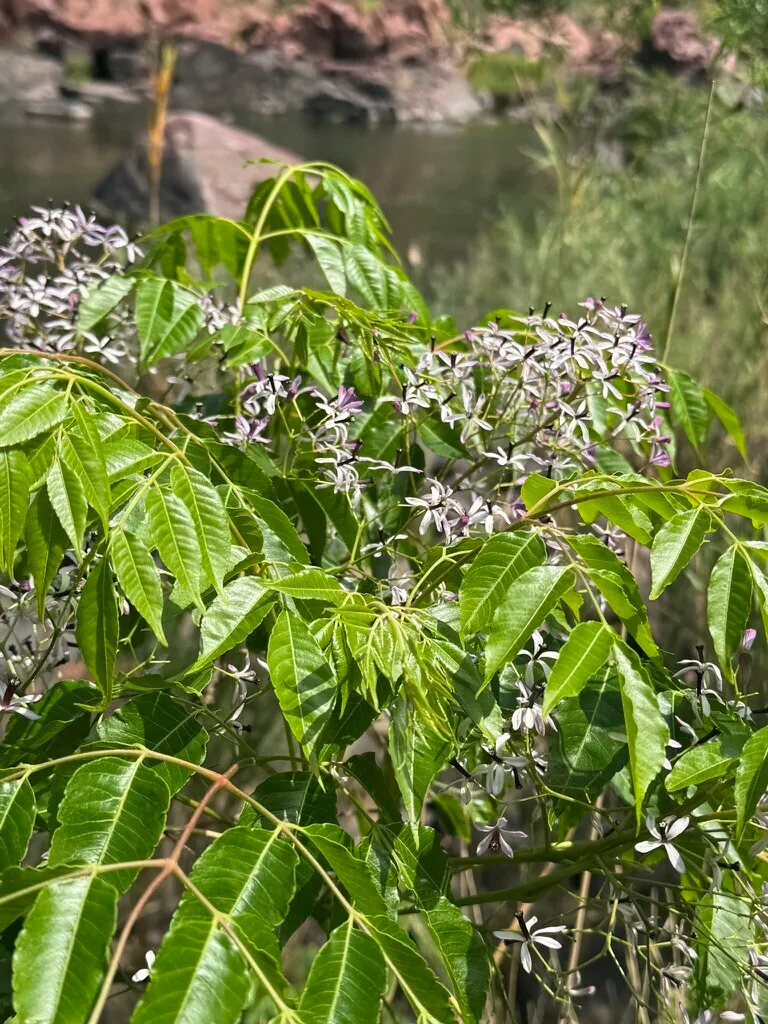



Persian lilac

Persian lilac · Temperature

Persian lilac · Melia azedarach
Also known as: African lilac; bakain; bead tree; Cape lilac; Ceylon cedar; Ceylon mahogany; chinaberry; false sycamore; hill margosa; holy tree; Indian lilac; lunumidella; margosa tree; pride of China; Syrian bead tree; pride of India; syringa; white cedar

Chinaberry tree is a hardy and adaptive species, requiring minimal maintenance and thriving under a wide range of conditions, which makes them easy to care for. Key care points include ensuring they're planted in well-draining soil and provided with full to partial sun exposure. Special care should be taken as chinaberry tree can become invasive in certain climates and its berries are toxic if ingested.

Watering: Moderate regular watering, allowing brief slight drying between soakingsSunlight: Full sunTOXIC if eaten. Wear gloves and other protective equipment when handling LJD

What Is the Ideal Temperature Range for Persian lilac?

Chinaberry tree demonstrates notable resilience to temperature fluctuations, tolerating cold down to -10℃ (14℉) and heat up to 43℃ (109℉). This broad temperature tolerance range makes it adaptable to a variety of climates, though extremes may necessitate protective measures. In cold conditions, chinaberry tree may exhibit leaf drop and reduced growth, while excessive heat can lead to wilting and sunburn. To mitigate overcooling, consider using mulch and anti-frost fabrics; for overheating, ensure ample watering and mulching to retain soil moisture. Understanding chinaberry tree's temperature tolerance helps in optimizing care to maintain its health and vitality across different environments.

PlantCare

Your Ultimate Guide to Plants

Identify, grow and nurture the better way!

PlantCare plant identification and care illustration
PlantCare

Botanist in your pocket

Scan to download PlantCareDownload on the App Store

Scan the QR code with your phone camera to download the app