
clary Haematodes Group
Also known as: Information to be completed
Haematodes Group are clump-forming herbaceous perennials to 90cm, with a basal rosette of large, broadly ovate, dark green leaves and open branched sprays of 2-lipped pale lavender-blue flowers 2cm in length
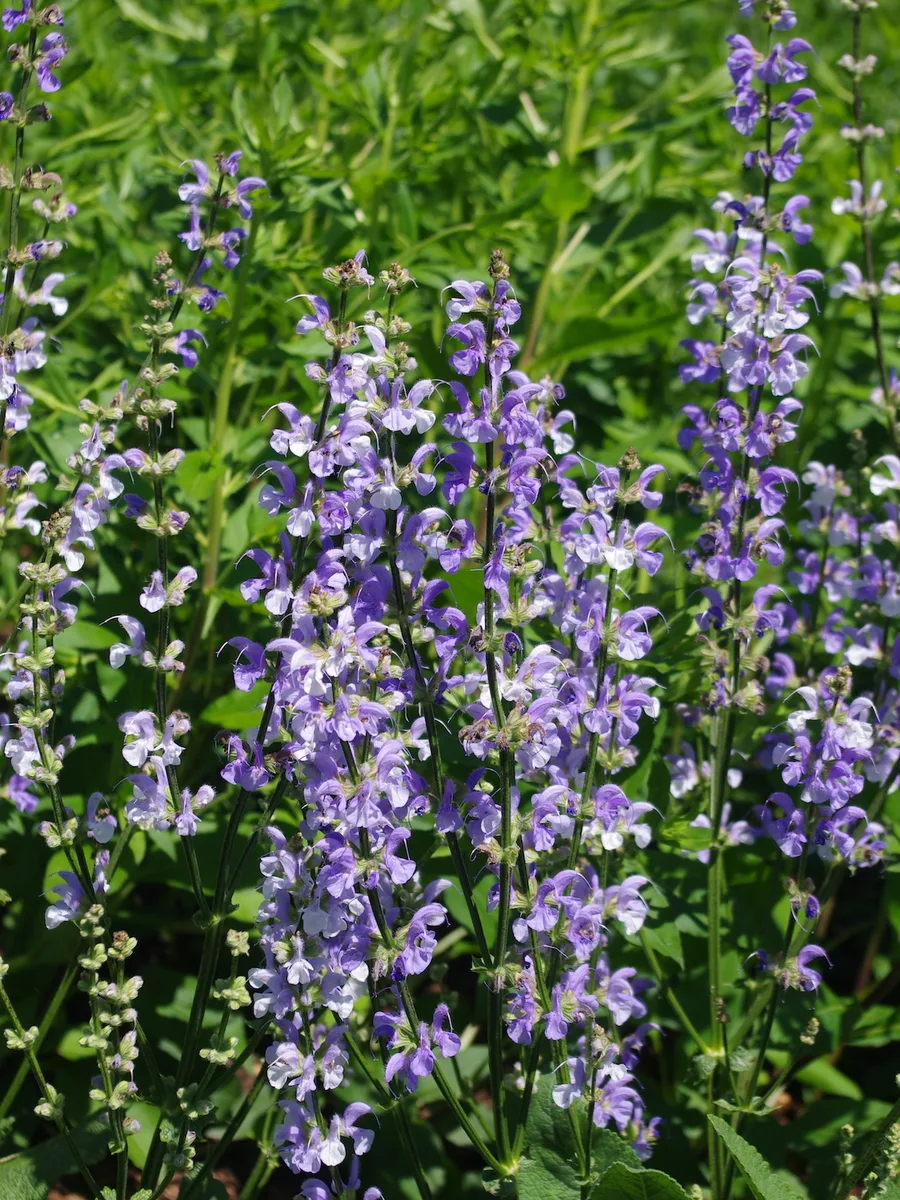
Scientific classification
- Species
- clary Haematodes Group (Salvia pratensis (Haematodes Group))
- Genus
- Salvia
- Family
- Lamiaceae
- Order
- Lamiales
- Class
- Magnoliopsida
- Phylum
- Tracheophyta
- Information to be completed
- Toxicity
- Herbaceous Perennial
- Plant type
- 0.5-1 metres
- Height
- 0.1-0.5 metres
- Spread
- Deciduous
- Foliage
- Clump forming
- Habit
- Summer
- Season of interest
- Full sun
- Sunlight
- Information to be completed
- Ideal temperature









clary Haematodes Group pictures
Distribution of clary Haematodes Group
Distribution map
- Native
- Introduced
- Cultivated
Source:WCVP v16 · Royal Botanic Gardens, Kew · CC BY 3.0 · Boundaries:WGSRPD / TDWG
clary Haematodes Group care guide
- Moderate regular watering, avoid prolonged drought and stagnant waterlogging
- Watering
- Full sun
- Sunlight

Watering
Moderate regular watering, avoid prolonged drought and stagnant waterlogging
Fertilizing
 Fertilizing
Balanced perennial feed every four weeks spring through summer growth
Pruning
 Pruning
Remove flower spikes as they fade to prolong flowering
Propagation
 Propagation
Propagate by seed in pots in a cold frame in spring
Growing
 Growing
Grow in light, moderately fertile, humus-rich, well-drained soil. Best in full sun but can tolerate light partial shade; can be short-lived
Common pests and diseases
Diseases
May be susceptible to honey fungus (rarely), powdery mildews, verticillium wilt and foot and root rots
Pests
May be susceptible to sage leafhopper, slugs, snails and rosemary beetle
Explore the plant health library →




