
bougainvillea 'Margaret Bacon'
Also known as: Information to be completed
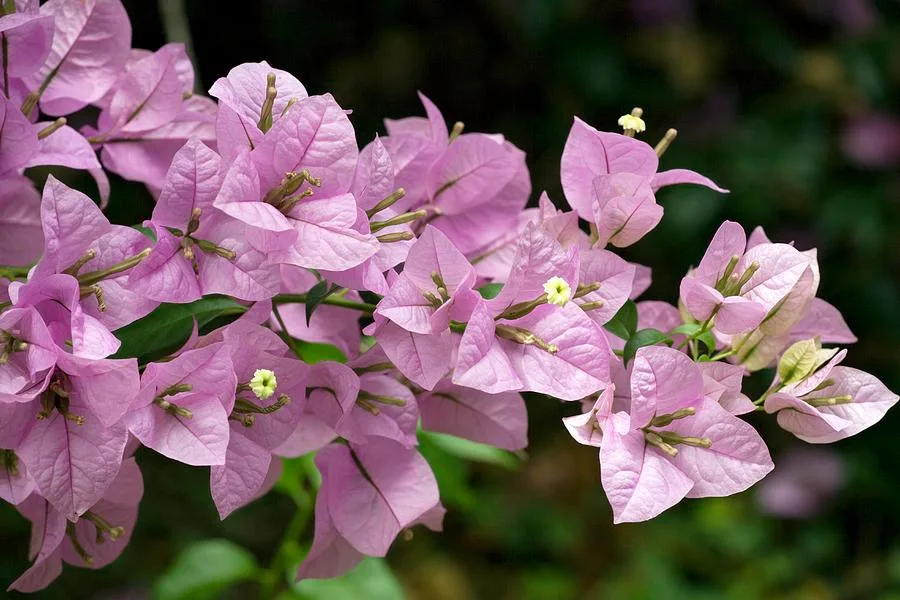
A tender, woody-stemmed scrambling schrub to 5m high, with thorny stems and downy, light green ovate leaves, evergreen if kept in warm conditions. Produces clusters of showy, bright pink bracts around small, tubular white flowers in summer
Scientific classification
- Species
- bougainvillea 'Margaret Bacon' (Bougainvillea spectabilis 'Margaret Bacon')
- Genus
- Bougainvillea
- Family
- Nyctaginaceae
- Order
- Caryophyllales
- Class
- Magnoliopsida
- Phylum
- Tracheophyta
- Information to be completed
- Toxicity
- Climber Wall Shrub
- Plant type
- 4-8 metres
- Height
- 4-8 metres
- Spread
- Semi evergreen
- Foliage
- Climbing
- Habit
- Spring · Summer · Autumn · Winter
- Season of interest
- Full sun
- Sunlight
- Information to be completed
- Ideal temperature









bougainvillea 'Margaret Bacon' pictures
Distribution of bougainvillea 'Margaret Bacon'
Distribution map
- Native
- Introduced
- Cultivated
Source:WCVP v16 · Royal Botanic Gardens, Kew · CC BY 3.0 · Boundaries:WGSRPD / TDWG
bougainvillea 'Margaret Bacon' care guide
- Moderate regular watering, allowing brief slight drying between soakings
- Watering
- Full sun
- Sunlight

Watering
Moderate regular watering, allowing brief slight drying between soakings
Fertilizing
 Fertilizing
Balanced perennial feed every four weeks from spring through summer
Pruning
 Pruning
On established plants, shorten sideshoots to three or four buds from the permanent framework; remove crowded or damaged shoots. Prune annually after flowering on last-year growth, or in late winter or early spring on current-year growth.
Propagation
 Propagation
Propagate by softwood cuttings in spring, or semi-hardwood cuttings in summer, or by layering in early autumn or spring
Growing
 Growing
Grow outdoors in frost-free areas, or indoors in a loam-based potting compost (John Innes No 3) in full light. May lose leaves if temperatures fall below 8°C (46°F), but this should not affect the following season's growth as long as the plant is protected from frost and freezing temperatures. Water regularly and feed monthly from spring to autumn
Common pests and diseases
Diseases
Generally disease-free
Pests
May be susceptible to red spider mites, mealybugs, aphids and whitefly
Explore the plant health library →




