
lupin 'Judy Harper'
Also known as: Information to be completed
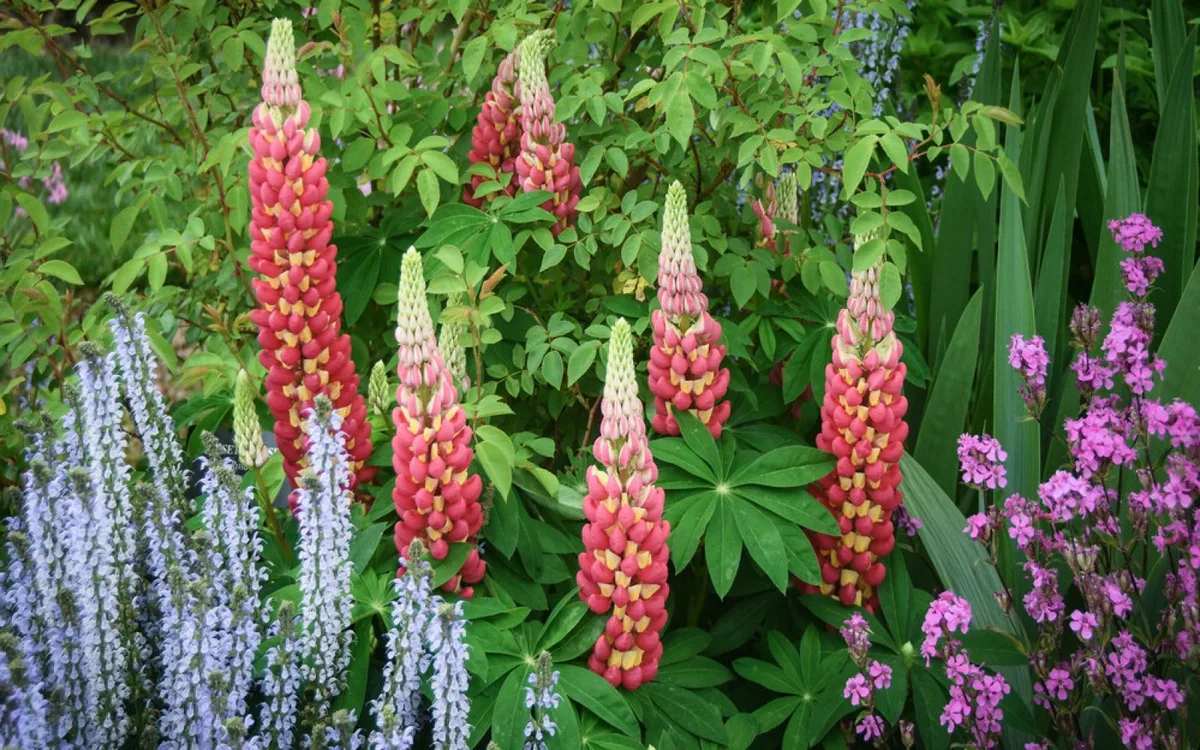
Vigorous, clump-forming perennial about 1.35m tall, with large, palmately divided mid-green leaves. In early to mid-summer produces upright spires about 50cm tall, of closely packed, vivid yellow flowers, fading outwards to pale yellow with pale yellow wings
Scientific classification
- Species
- lupin 'Judy Harper' (Lupinus 'Judy Harper')
- Genus
- Lupinus
- Family
- Fabaceae
- Order
- Fabales
- Class
- Magnoliopsida
- Phylum
- Magnoliophyta
- Harmful if eaten. Wear gloves and other protective equipment when handling
- Toxicity
- Herbaceous Perennial
- Plant type
- 1-1.5 metres
- Height
- 0.5-1 metres
- Spread
- Deciduous
- Foliage
- Clump forming · Columnar upright
- Habit
- Spring · Summer · Autumn
- Season of interest
- Full sun · Partial shade
- Sunlight
- Information to be completed
- Ideal temperature









lupin 'Judy Harper' pictures
Toxicity
Harmful if eaten. Wear gloves and other protective equipment when handling
lupin 'Judy Harper' care guide
- Moderate watering, keeping soil lightly moist during active growth
- Watering
- Full sun · Partial shade
- Sunlight

Watering
Moderate watering, keeping soil lightly moist during active growth
Fertilizing
 Fertilizing
Light low-nitrogen feed once in spring and again before flowering
Pruning
 Pruning
Deadhead to encourage a second flush of flowers
Propagation
 Propagation
Propagate by seed in early to mid-spring or by basal stem cuttings in mid to late spring
Growing
 Growing
Grow in light and slightly acid, well-drained or sandy soil in full sun or light shade. May need staking, see staking perennials. Ideal for container cultivation where soil conditions are not suitable. See lupin cultivation
Common pests and diseases
Diseases
May be susceptible to lupin anthracnose, Powdery mildews and a virus
Pests
May be susceptible to lupin aphid, slugs and snails
Explore the plant health library →




