
horsehead philodendron
Also known as: fiddle-leaf philodendron; panda plant
P. bipinnatifidum is an evergreen shrub with long-stalked leaves to 1m in length, pinnately divided into narrow, undulate, dark green lobes. Purple and cream spathes 30cm in length appear occasionally
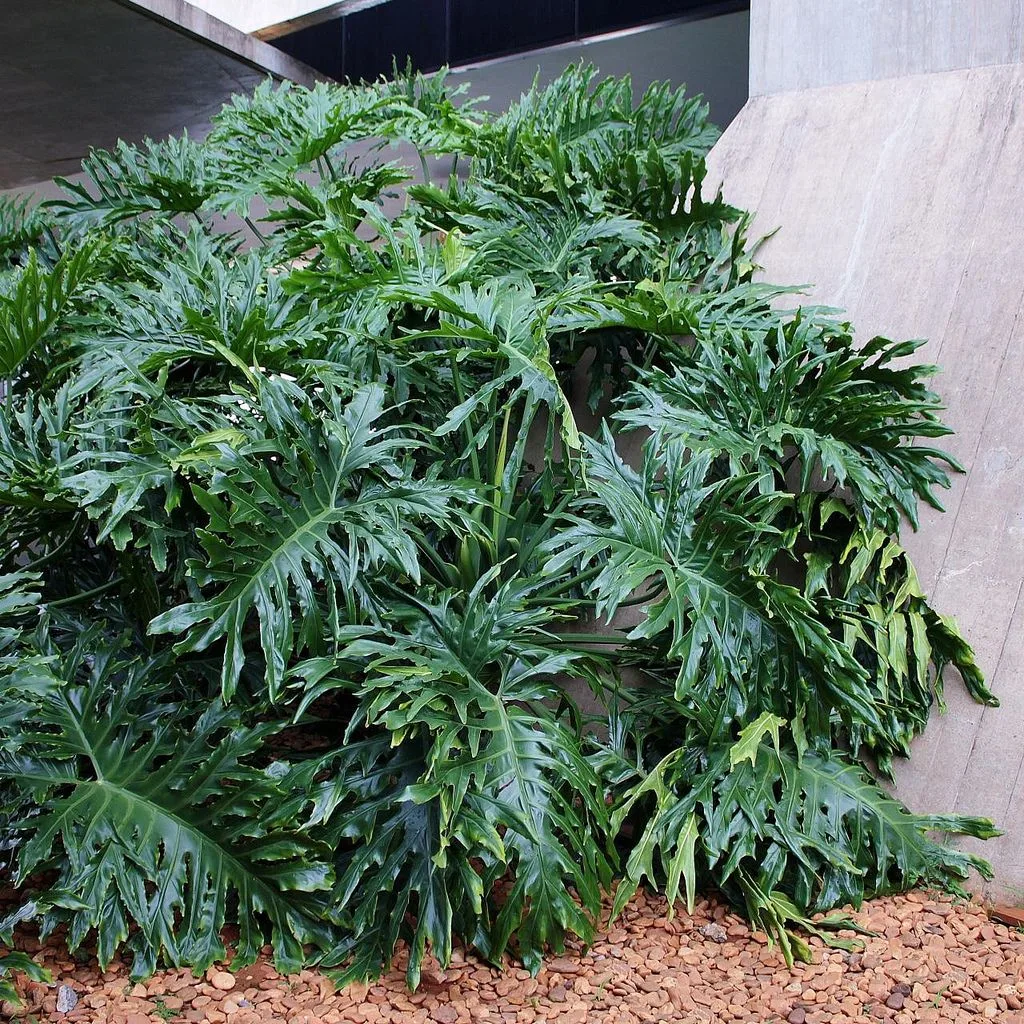
Scientific classification
- Species
- horsehead philodendron (Philodendron bipinnatifidum)
- Genus
- Philodendron
- Family
- Araceae
- Order
- Alismatales
- Class
- Liliopsida
- Phylum
- Magnoliophyta
- Harmful if eaten, skin/eye irritant/allergen. Wear gloves and other protective equipment when handling]
- Toxicity
- Conservatory Greenhouse · Shrubs
- Plant type
- 2.5-4 metres
- Height
- 2.5-4 metres
- Spread
- Evergreen
- Foliage
- Bushy
- Habit
- Spring · Summer · Autumn · Winter
- Season of interest
- Partial shade
- Sunlight
- 18 – 27 °C
- Ideal temperature









horsehead philodendron pictures
Distribution of horsehead philodendron
Distribution map
- Native
- Introduced
- Cultivated
Source:WCVP v16 · Royal Botanic Gardens, Kew · CC BY 3.0 · Boundaries:WGSRPD / TDWG
Toxicity
Harmful if eaten, skin/eye irritant/allergen. Wear gloves and other protective equipment when handling]
horsehead philodendron care guide
- Moderate regular watering, allowing brief slight drying between soakings
- Watering
- Partial shade
- Sunlight
- 18 – 27 °C
- Ideal temperature

Watering
Moderate regular watering, allowing brief slight drying between soakings
Fertilizing
 Fertilizing
Balanced perennial feed every four weeks from spring through summer
Pruning
 Pruning
Routine pruning is unnecessary; shorten overlong shoots to fit the available space. Prune in spring.
Propagation
 Propagation
Propagate by seed surface sown at 19 to 24°C in spring or layer in spring
Growing
 Growing
Grow under glass in a loam-based potting compost in bright filtered light with shade from hot sun, mist daily. When in growth water moderately and apply a balanced liquid fertilizer monthly. Water sparingly at other times
Common pests and diseases
Diseases
Generally disease-free
Pests
May be susceptible to scale insects and glasshouse red spider mite
Explore the plant health library →




