
petunia [Cascadias Yellow Eye]
Also known as: Information to be completed
A free-flowering, shortly trailing annual to 40cm tall, with fragrant white flowers 6cm wide, with greenish-yellow mid-vein to each lobe
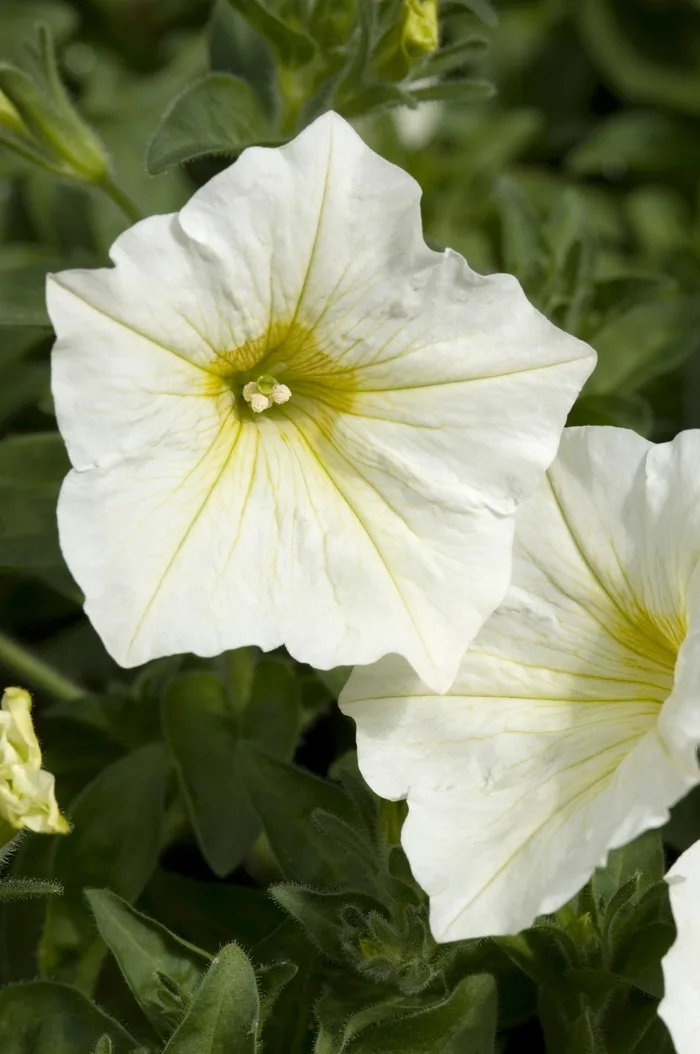
Scientific classification
- Species
- petunia [Cascadias Yellow Eye] (Petunia Cascadias Yellow Eye ('Dancasye'))
- Genus
- Petunia
- Family
- Solanaceae
- Order
- Solanales
- Class
- Magnoliopsida
- Phylum
- Magnoliophyta
- Information to be completed
- Toxicity
- Annual Biennial
- Plant type
- 0.1-0.5 metres
- Height
- 0.1-0.5 metres
- Spread
- Deciduous
- Foliage
- Trailing
- Habit
- Spring · Summer · Autumn
- Season of interest
- Full sun
- Sunlight
- Information to be completed
- Ideal temperature









petunia [Cascadias Yellow Eye] pictures
petunia [Cascadias Yellow Eye] care guide
- Keep compost lightly moist, never fully drying out while blooming
- Watering
- Full sun
- Sunlight

Watering
Keep compost lightly moist, never fully drying out while blooming
Fertilizing
 Fertilizing
Weak flowering feed every two to three weeks in active bloom
Pruning
 Pruning
Deadhead as needed
Propagation
 Propagation
Propagate by seed sown at 13-18°C in autumn or mid-spring
Growing
 Growing
Grow in loam-based potting compost under glass in full light. Water freely when in growth and apply a high potassium fertiliser every two weeks. Outdoors grow in light, well-drained soil in full sun with shelter from wind. Deadheading will prolong flowering
Common pests and diseases
Diseases
Generally resistant to mildew. May be troubled by fungal foot rot and a virus, including alfalfa mosaic virus, tomato spotted wilt, tobacco mosaic virus and potato viruses
Pests
Aphids and slugs may be troublesome
Explore the plant health library →




