
African mask plant
Also known as: African mask plant, Amazonian elephant ear, Amazonian taro
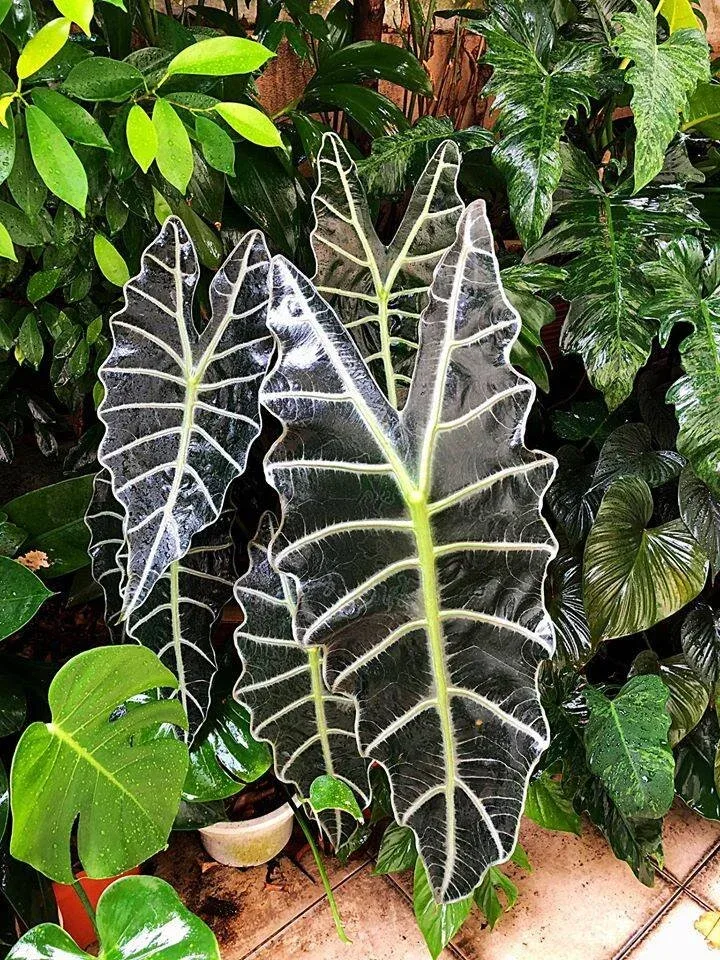
Alocasia amazonica is a compact, clump-forming evergreen perennial with striking arrow-shaped leaves that are dark green with prominent white or silvery veins. The leaf blades are glossy, leathery, and have wavy margins, while the undersides are often purple-tinged. It typically reaches 30–60 cm in height, with a similar spread, making it an ideal specimen for indoor containers. The plant's bold foliage provides a tropical aesthetic and serves as the main ornamental feature.
Scientific classification
- Species
- African mask plant (Alocasia amazonica)
- Genus
- Alocasia
- Family
- Araceae
- Order
- Alismatales
- Class
- Liliopsida
- Phylum
- Magnoliophyta
- All parts contain calcium oxalate crystals and are toxic if ingested, causing irritation and swelling; keep away from children and pets.
- Toxicity
- Houseplants · Foliage
- Plant type
- 0.3 - 0.6 metres
- Height
- 0.3 - 0.6 metres
- Spread
- Evergreen
- Foliage
- Upright · Clump forming
- Habit
- Spring · Summer · Autumn
- Season of interest
- Bright indirect light
- Sunlight
- 20 – 30 °C
- Ideal temperature









African mask plant pictures
Distribution of African mask plant
Distribution map
Southeast Asia (hybrid origin)
Toxicity
All parts contain calcium oxalate crystals and are toxic if ingested, causing irritation and swelling; keep away from children and pets.
African mask plant care guide
- Keep soil moist and mist leaves regularly
- Watering
- Bright indirect light
- Sunlight
- 20 – 30 °C
- Ideal temperature

Watering
Keep soil moist and mist leaves regularly
Fertilizing
 Fertilizing
Every two weeks with diluted liquid fertilizer during growing season
Pruning
 Pruning
Remove yellowed or dead leaves at the base as they appear to maintain a tidy appearance. In early spring, cut back any leggy or damaged growth to encourage fresh foliage.
Propagation
 Propagation
Propagate by division during repotting in spring; carefully separate offsets or rhizome sections, each with at least one leaf and root, and pot them in moistened potting mix. Alternatively, stem cuttings can be rooted in water or sphagnum moss at 25°C with high humidity; roots typically appear within 3–4 weeks.
Growing
 Growing
Grow in a warm, humid environment with bright, indirect light; avoid direct sunlight which can scorch the leaves. Use a well-draining, peat-based potting mix and keep the soil consistently moist but not waterlogged, allowing the top inch to dry slightly between waterings. Fertilize every 2–4 weeks during the growing season (spring to early autumn) with a balanced liquid fertilizer at half strength. In winter, reduce watering and stop feeding; maintain temperatures above 15°C and increase humidity by misting or using a pebble tray.
Common pests and diseases
Diseases
Susceptible to root rot and leaf spot caused by overwatering or poor drainage; ensure pots have drainage holes and avoid waterlogged conditions.
Pests
Common pests include spider mites, mealybugs, and aphids; regularly inspect leaf undersides and treat with insecticidal soap or neem oil if infested.
Explore the plant health library →




