
Pompon Chrysanthemum
Also known as: Pompon Chrysanthemum, Button Chrysanthemum, Florist's Chrysanthemum
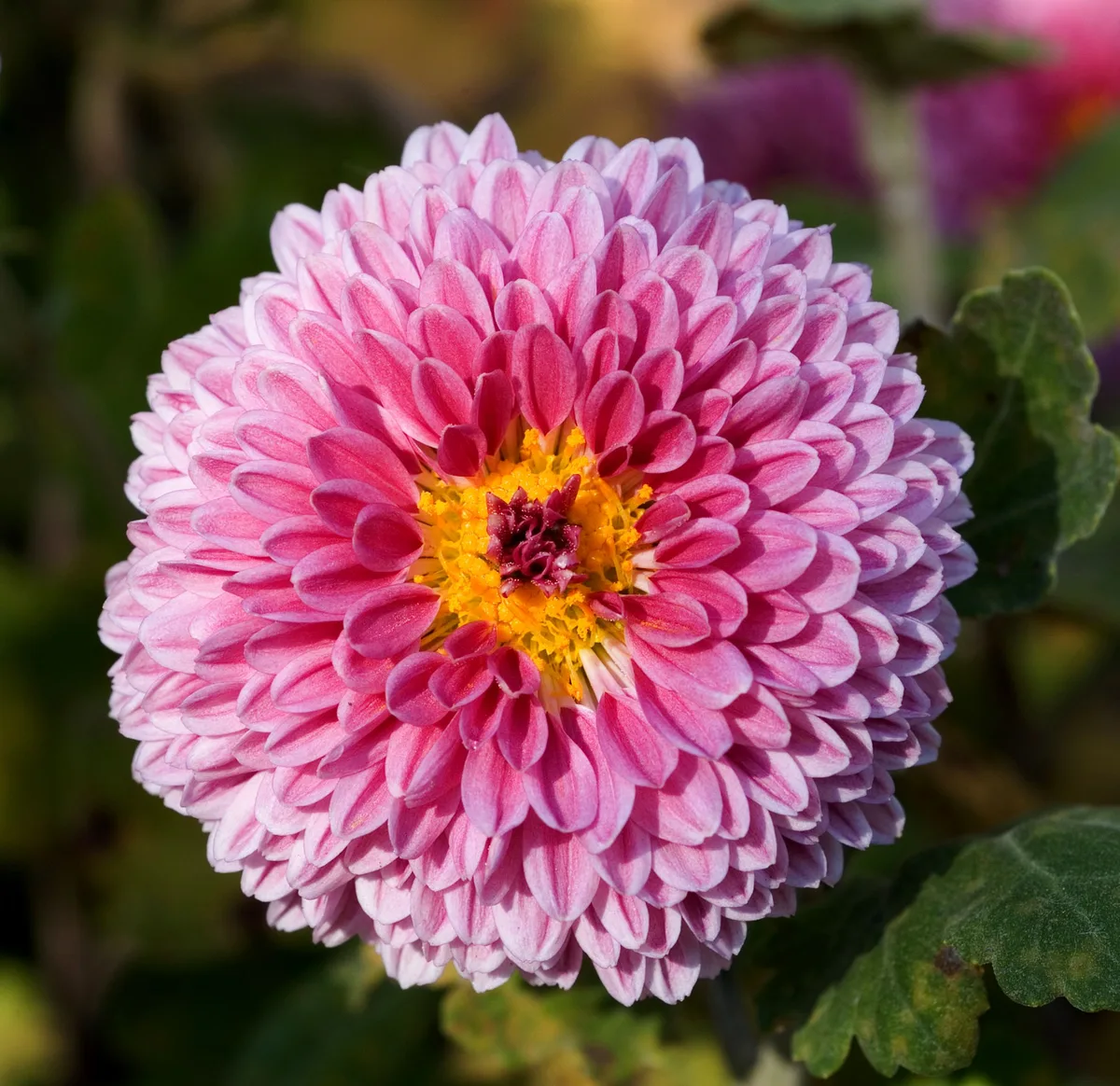
Chrysanthemum morifolium, commonly known as Pompon Chrysanthemum, is a compact, bushy perennial with dark green, lobed leaves. It produces numerous small, globular flower heads in shades of yellow, bronze, pink, red, or white, each composed of many tiny florets. The flowers appear in abundance from late summer to autumn, creating a dense, colourful mound. Its neat, rounded growth habit makes it ideal for formal bedding or container displays.
Scientific classification
- Species
- Pompon Chrysanthemum (Chrysanthemum morifolium)
- Genus
- Chrysanthemum
- Family
- Asteraceae
- Order
- Asterales
- Class
- Magnoliopsida
- Phylum
- Tracheophyta
- Non-toxic to humans and pets.
- Toxicity
- Perennial · Bedding
- Plant type
- 0.3 - 0.6 metres
- Height
- 0.3 - 0.5 metres
- Spread
- Deciduous
- Foliage
- Upright · Bushy
- Habit
- Autumn
- Season of interest
- Full sun
- Sunlight
- 15 – 25 °C
- Ideal temperature









Pompon Chrysanthemum pictures
Distribution of Pompon Chrysanthemum
Distribution map
East Asia (China, Japan, Korea)
Toxicity
Non-toxic to humans and pets.
Pompon Chrysanthemum care guide
- Water when soil surface feels dry
- Watering
- Full sun
- Sunlight
- 15 – 25 °C
- Ideal temperature

Watering
Water when soil surface feels dry
Fertilizing
 Fertilizing
Weekly with dilute fertilizer during growing season
Pruning
 Pruning
Deadhead spent flowers regularly to prolong blooming. After flowering, cut back stems to 10-15 cm above ground; in spring, remove any dead or weak shoots.
Propagation
 Propagation
Propagate by stem cuttings taken in spring or early summer; insert cuttings into moist, well-drained compost at 15-18°C (59-64°F) with high humidity. Alternatively, divide established clumps in spring every 2-3 years.
Growing
 Growing
Grow in full sun in fertile, well-drained soil with moderate moisture. Pinch out growing tips in early summer to encourage bushy growth and more flowers. Water regularly during dry periods, but avoid waterlogging. Apply a balanced liquid fertilizer every two weeks from midsummer until flower buds show colour. In colder regions, lift tubers (if grown as perennials) and store frost-free in winter, or treat as annuals.
Common pests and diseases
Diseases
Susceptible to powdery mildew, gray mold (Botrytis), and leaf spot. Good air circulation and avoiding overhead watering help reduce disease incidence.
Pests
Common pests include aphids, leaf miners, and spider mites, especially under glass or in dry conditions. Regular monitoring and early treatment are recommended.
Explore the plant health library →




